

When an off-road machine starts feeling weak, burning more fuel, or throwing intake-related warnings, we don’t guess—we check the basics first. A clogged intake path is one of the fastest ways to lose power and add wear, and the warning signs often show up days or weeks before a breakdown. In this guide, we’ll walk through 12 clogged air filter symptoms we can spot in real working conditions, how to confirm the filter is dirty, and what to do next to protect uptime.
What Does an Air Filter Do?
An air filter sits in the intake system and traps dust, grit, and debris before air reaches the engine. Diesel engines need a steady flow of clean air for proper combustion; when airflow is restricted or dirt bypasses the filter, performance drops, and internal wear rises. On many machines, the intake system also includes housings, seals, clamps, and sometimes a restriction indicator—so the filter is only one part of the protection.
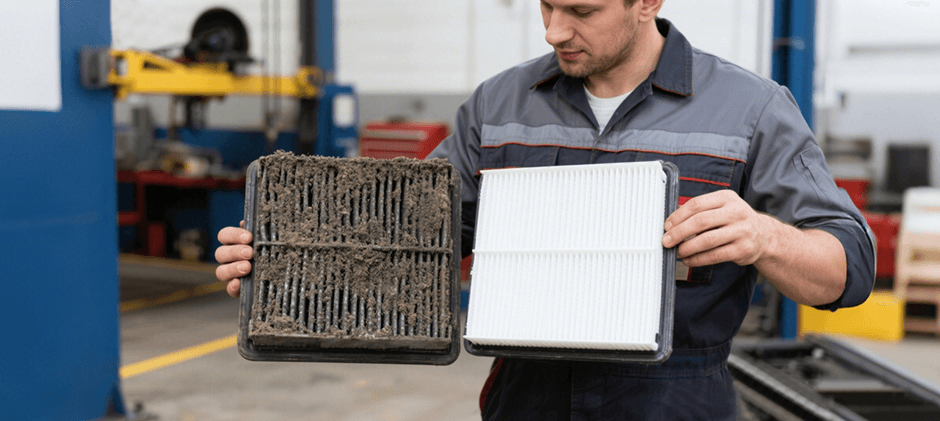
12 Clogged Air Filter Common Symptoms
Below are the 12 most common clogged air filter symptoms we see on excavators, wheel loaders, skid steers, dozers, tractors, generators, and other off-road equipment. Some symptoms overlap with fuel or sensor issues, so we’ll also explain why each symptom happens and what to check next.
1) Noticeable loss of power under load
When the air filter is restricted, the engine can’t pull in enough oxygen at higher demand. We often feel this as a machine that used to “dig through it” but now bogs down sooner.
What to check
- Does the power drop get worse as RPM rises?
- Any intake restriction warning or indicator?
- Filter element condition and intake ducting for collapse or blockage
2) Slower throttle response
A restricted air filter can make the engine slow to respond because the air-to-fuel balance becomes harder to control during quick load changes—common in cycles like pushing, loading, or rapid boom and travel moves.
Why it matters
- Operators often compensate by pushing harder, which can raise temps and soot output.
3) Higher fuel consumption
This is one of the most expensive clogged air filter symptoms. If the engine is “working harder to breathe,” it often needs more fuel to hold torque, especially on machines that spend hours per day under steady load.
What you watch
- Fuel used per hour climbs
- The same job takes longer, so total daily fuel increases
4) Black or darker exhaust smoke during acceleration or heavy work
Restricted airflow can lead to incomplete combustion. That often shows up as darker exhaust under load changes—especially when the engine is asked to build torque quickly but can’t get enough air.
Important note
- Occasional smoke can have many causes, but if it improves right after a filter change, the air filter is a prime suspect.
5) Rough idle or unstable idle
At idle, a restricted air filter can still upset combustion stability. You may notice:
- RPM “hunting”
- Small surges
- Engine vibration that wasn’t there before
If the idle gets worse and the filter looks loaded with dust, we treat that as a strong pattern.
6) Hard starting
Hard starting isn’t always an intake problem, but it can be a practical clue—particularly if the air filter is severely loaded or wet/contaminated. The engine may crank longer because it can’t get clean, consistent airflow at cranking speed.
Next checks
- Inspect the filter for heavy restriction, mud, or moisture
- Verify the intake snorkel/path isn’t blocked
7) Engine “coughing,” popping, or unusual intake/combustion noises
When airflow is restricted, combustion can become uneven during throttle changes. Operators sometimes describe it as:
- “chuffing”
- “coughing”
- popping under load transitions
These noises are not something you ignore—because they often come with poor combustion and higher soot.
8) Warning lights / derate tied to intake or performance
Modern off-road engines watch airflow and boost behavior closely. If the controller sees the engine can’t meet the expected air mass, it may log faults or reduce power to protect the system.
Common scenario
- Warning appears during long pushes, uphill travel, or sustained hydraulic demand
- Light goes away at idle, then returns under load
9) Higher engine operating temperature
A restricted air filter can raise exhaust temperature and overall thermal load because combustion becomes less efficient. In the field, you might see:
- Coolant temp creeping up on hot days
- Fan running more often or at a higher speed
- Less “margin” before overheating
This symptom is especially important because overheating is a fast route to downtime.
10) The turbocharger feels weak (slow boost build) on turbo machines
Turbocharged off-road engines rely on strong airflow. A clogged air filter can:
- Reduce the air available to compress
- Make boost build slower
- Increase turbo effort for less result
What to check
- Intake restriction indicator
- Filter condition
- Cracked/loose intake boots (a leak can mimic restriction symptoms in some cases)
11) Visible heavy dirt loading on the filter—or dust trails that suggest sealing issues
Sometimes the symptom isn’t in the cab; it’s in the airbox.
- If the air filter media is dark, packed, or caked, it may be beyond service life.
- If you see dust trails past the sealing surface, that can mean the filter wasn’t seated correctly, the gasket is damaged, or the housing is warped.
Why is this serious
- Restriction hurts performance, but dust bypass hurts engine life.
12) The machine just “doesn’t feel right” in cycle time
This is a practical, real-world symptom: the machine still runs, but production slips. If we’re doing the same material, same operator, similar weather—and cycle time gets worse—intake restriction is one of the first low-cost checks.
Quick Summary Table
| Symptom | Common intake-related cause | Fastest confirmation |
|---|---|---|
| Power loss under load | Restriction in the air filter media | Check restriction indicator + inspect filter |
| Higher fuel burn | Engine compensating for low airflow | Compare fuel/hour vs. baseline; inspect filter |
| Dark exhaust under the throttle | Incomplete combustion from low air | Inspect filter + verify intake path isn’t blocked |
| Rough idle | Unstable air supply | Inspect filter; check housing seal |
| High temps | Lower combustion efficiency | Inspect filter; verify cooling fan not masking root cause |
| Weak boost feel | Turbo starved for air | Inspect filter + intake boots/clamps |
Replace now or keep running?
If you confirm the air filter is restricted, we generally don’t “run it until the weekend” unless the jobsite reality forces it. The cost of lost fuel and reduced production usually outweighs the cost of the filter—especially in dusty work where a machine can ingest massive volumes of air per minute.
At this stage, it often makes sense to plan parts as a system, not as a single item:
- The right intake air filter for your equipment type: air filter
- The correct filter for the engine intake specifically: engine air filter
- If poor filtration has already caused broader wear or you’re doing catch-up maintenance, it’s smart to line up related components from: engine parts
And for operators who spend long shifts in dust, smoke, or fine particulate, don’t ignore cab HVAC performance—your comfort and visibility matter for safe production. If the vents feel weak or the cab smells dusty, check the cabin air filter
We also recommend setting service intervals based on your environment (not just a generic hour number). If you want a practical guide on setting a replacement schedule, this filter change interval resource helps: air filter replacement interval guide
How Can You Tell if Your Air Filter Is Dirty?
We like a simple, repeatable process that works on most off-road machines—even when the jobsite is busy.
Step-by-step checks
- Check the restriction indicator (if equipped).
If it shows high restriction, you treat it as a strong signal—but you still inspect visually, because indicators can stick. - Open the housing and inspect the primary filter.
Look for:- Heavy dust packing, dark discoloration, caked debris
- Wet spots or oil contamination
- Torn pleats, holes, crushed media
- Deformed gasket or sealing lip
- Inspect the housing and sealing surfaces.
A good air filter can still fail the machine if the housing seal leaks or the filter isn’t seated. - Check the intake path (snorkel, ducts, pre-cleaner, screen).
Blockages upstream can mimic a clogged filter. - Review operating context.
Dust level, idling time, repeated short moves, and nearby sweeping/grading can all shorten filter life.
FAQs
Why Fuel Efficiency Suffers With a Clogged Air Filter
Fuel efficiency drops because the engine can’t get enough clean air for ideal combustion. With a restricted air filter, the engine may run richer than it should under load, and it often works harder to make the same torque. On off-road equipment, that shows up as higher fuel burn per hour and longer cycle times—both raise cost per yard/ton moved.
Does every vehicle suffer from the same from a clogged filter?
No. Different machines use different intake layouts, filter sizes, and control strategies. A high-horsepower loader in a dusty quarry may show clogged air filter symptoms quickly, while a light-duty tractor in cleaner conditions may show them later. Turbocharging, duty cycle, and how often the machine idles also change how the symptoms appear.
What’s the worst that happens if I ignore it?
Worst case, restriction and/or dust bypass can shorten engine life and trigger expensive failures. Restriction alone can cause poor combustion, higher temps, soot issues, and derates. If the filter is damaged or the sealing is poor, dirt can enter the intake and accelerate wear on cylinders, pistons, rings, turbo components, and bearings. The repair path then moves far beyond a simple air filter swap.
Can I just clean my air filter instead?
Sometimes—but only if the filter is designed to be serviced and the cleaning method matches the manufacturer’s instructions. Many heavy equipment primary elements are not meant to be “washed,” and improper cleaning can damage the media or create pinholes that let dust through. If the filter is wet, oil-soaked, torn, or heavily packed, replacement is usually the safer choice for engine protection.
Conclusion
Most clogged air filter symptoms are easy to miss at first—slower throttle response, higher fuel burn, darker exhaust, or reduced power under load. But once they show up, the fix is usually straightforward: confirm restriction, inspect the housing and seals, and replace the air filter before dust bypass or overheating creates real damage. With affordable aftermarket options and broad compatibility, FridayParts helps keep filtration maintenance simple and keeps machines working.
