

When winter storms hit, the difference between a quick, clean plow and a slow, frustrating job usually comes down to one thing—using the right skid steer setup. Whether you’re a contractor clearing commercial parking lots or a farm operator managing rural access roads, choosing the right skid steer for snow removal and pairing it with proper skid steer snow tires will determine your efficiency, fuel usage, and safety.
In this guide, we’ll walk through how to evaluate skid steer types, hydraulic systems, and attachments to handle snow conditions effectively. You’ll also learn how to optimize your machine’s traction and performance for winter operations.
The Role of Skid Steers in Snow Work
Skid steers excel in winter because of their versatility. Compact, agile, and compatible with a range of attachments, they allow you to push, lift, or blow snow from driveways to industrial lots. However, not all models—or tire setups—perform equally in frozen conditions.
Three basic factors define how well a skid steer handles snow:
- The hydraulic flow rating (low-flow vs. high-flow)
- The drive system (wheeled vs. tracked)
- The traction setup, including skid steer snow tires or tracks
Each component influences power transfer, stability, and how effectively your attachment interacts with the snow surface.
High-Flow vs. Standard-Flow Skid Steers: Which Delivers Better Performance?
Hydraulic Flow 101
Hydraulic flow measures how much fluid your skid steer pumps through hoses to power attachments. It’s rated in gallons per minute (GPM).
-
Standard-Flow (Low-Flow): 18–25 GPM
Ideal for plows, pushers, and small augers that rely on mechanical tilt or lift functions.
-
High-Flow: 30–45 GPM
Needed for powered attachments like heavy snow blowers that use hydraulic motors to throw snow long distances.
Choosing the Right Flow for the Job
| Work Type | Recommended Flow | Attachment Example |
|---|---|---|
| Driveway or light lot clearing | Low-flow | Snowplow blade, snow pusher |
| Deep or wet snow handling | High-flow | Dual-stage snow blower |
| Mixed year-round work | High-flow | Cold planer, stump grinder |
If your winter tasks focus primarily on snow plowing or pushing, standard-flow machines are typically enough. But if you need to throw snow or run powered blowers, the investment in a high-flow system quickly pays off.
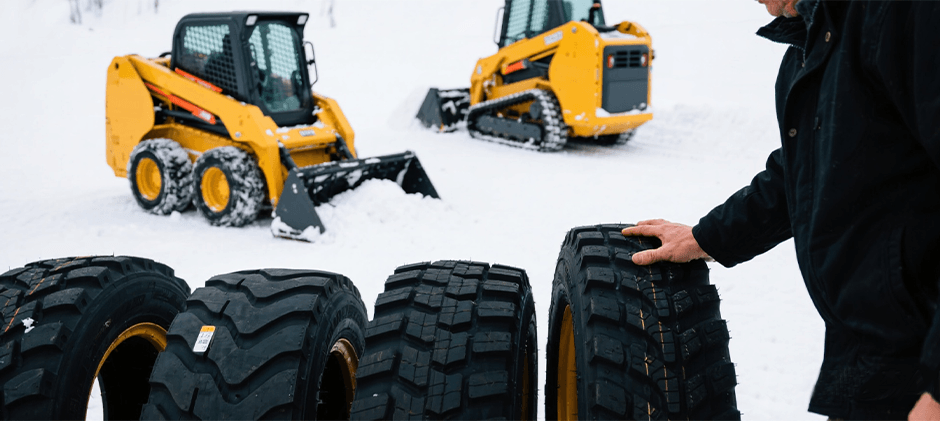
Wheels vs. Tracks in Snow Conditions
Wheeled Skid Steers
Wheeled skid steers are faster on paved surfaces and easier to maintain. However, standard tires struggle on icy or deep snow surfaces unless upgraded to skid steer snow tires. If you need parts for your wheeled skid steer, you can check our page to find the right parts for upgrades.
Advantages:
- Quicker travel between sites
- Lower fuel consumption
- Easier maintenance during winter
Limitations:
- Lower traction on ice
- Prone to spinning in soft snow
If your snow removal projects involve concrete, asphalt, or packed snow roads, a wheeled skid steer with winter-rated tires is a cost-effective choice.
Tracked Skid Steers
For heavy snow accumulation, tracked skid steers outperform wheeled ones due to their wider footprint and even ground pressure. Tracks reduce sinking and improve control during turns on slick surfaces. Upgrading your tracked skid steer parts promptly will also allow your equipment to operate with greater efficiency.
Advantages:
- Excellent flotation on deep snow
- Superior stability on slopes
- Smoother power delivery
Limitations:
- Slower travel speed
- Challenging undercarriage maintenance in sub-zero weather
In extreme cold or mixed terrain, rubber track systems specifically designed for snow offer excellent grip, but for paved parking lots, the flexibility of skid steer snow tires often wins for practicality.
Why Skid Steer Snow Tires Matter?
Even with the right hydraulic power and frame size, your traction system determines how much of that power reaches the ground. That’s where skid steer snow tires make all the difference.
Winter tires for skid steers are designed with deeper tread lugs and special rubber compounds that stay pliable in sub-freezing temperatures. Unlike all-purpose tires that harden and lose grip, snow-specific compounds maintain flexibility and traction.
Key Features of Quality Skid Steer Snow Tires:
- Directional Tread Pattern: Improves forward traction and slush clearance.
- Open Shoulder Design: Allows snow to evacuate efficiently, reducing slippage.
- Cold-Resistant Rubber: Maintains elasticity for improved grip.
- Tapered Lugs: Provide lateral stability during turns on icy surfaces.
| Tire Type | Best Use Case | Performance Highlights |
|---|---|---|
| Standard Industrial | Mixed terrain | Good durability, low traction on ice |
| All-Terrain | Year-round | Moderate snow handling |
| Dedicated Snow Tires | Winter operations | Maximum traction & soft compound rubber |
For operators running multiple attachments in winter, replacing worn treads with specialized snow tires ensures consistent traction and safety throughout the season.
When upgrading, sourcing from a trusted aftermarket supplier specializing in heavy-equipment components ensures correct fitment and high-quality rubber compounds. For instance, vendors that focus on skid steer parts deliver compatible, durable solutions across major brands, allowing you to upgrade your tires, hydraulic hoses, and cutting edges efficiently.
Attachments That Boost Snow Removal Efficiency
Pairing your skid steer with the right attachment setup maximizes value. Here’s how popular snow attachments compare:
| Attachment Type | Function | Hydraulic Requirement | deal for |
|---|---|---|---|
| Snow Blade | Pushing snow forward or sideways | Low-flow | Small to medium jobsites |
| Box Pusher | Controls snow direction & volume | Low-flow | Large parking lots |
| Snow Blower | Throws snow long distances | High-flow | Deep snow areas |
| Angle Broom | Sweeps light snow or debris | Moderate flow | Sidewalks, paved areas |
Pro-Tip for De-icing Operations: For operators using SaltDogg TGS series spreaders on their equipment, the variable speed controller is the key to material efficiency. Ensuring your controller is responsive allows for precise salt application, reducing waste and protecting the pavement surfaces you just cleared.
If switching between attachments mid-job is common, choose a quick-attach system. It allows you to alternate between plowing and blowing without downtime.
Operator Comfort and Visibility in Winter
Winter work hours often mean low visibility, cold temperatures, and long shifts. A productive skid steer should support the operator through:
- Cab heating systems to prevent frost and maintain alertness
- LED lighting kits for early-morning or nighttime snow removal
- Wide cab glass areas with minimal blind spots
Cab quality may not directly affect mechanical performance, but fatigue reduction improves safety and job completion rates in harsh conditions.
Maintenance and Seasonal Preparation
Snow removal exposes machinery to salt, moisture, and repeated freeze–thaw cycles. Proper maintenance ensures reliable starts and prevents corrosion.
Maintenance Checklist:
- Inspect hydraulic lines for cracks or brittleness.
- Keep tire or track tension within manufacturer specs.
- Clean undercarriage each shift to remove ice buildup.
- Check battery voltage and antifreeze protection levels.
- Replace damaged or worn accessories early—belts, hoses, seals.
Don’t forget to check electrical connectivity: If you are using Western or Fisher Fleet Flex attachments, inspect your 4-pin controller cable. Corrosion in the connector pins can cause intermittent control issues or total plow failure during a storm.
Preventive steps save downtime and help your off-road machinery survive multiple winters with minimal wear. If you need snow removal equipment parts, please browse our product page. We have compiled a selection of accessories that you might need for upgrades during the winter season to assist you with equipment maintenance.
Which Skid Steer Configuration Is Best for You?
Let’s summarize your options based on project profiles:
| Job Type | Ideal Skid Steer | Recommended Tire Type | Power Flow |
|---|---|---|---|
| Driveway plowing | Small frame, low-flow | Snow tires | Standard |
| Commercial lot clearing | Medium frame | Snow or all-terrain | Standard |
| Deep snow removal | Large frame | Tracks or snow tires | High-flow |
| Mixed surface (gravel + paved) | Medium frame | Aggressive tread tires | Standard |
Ultimately, the “best” skid steer for snow removal depends on matching job demands to machine flexibility. A smaller, low-flow machine with snow tires can outperform a high-flow monster if it’s used on the right surface.
Conclusion
When winter operations start, control and traction become everything. Invest in the right setup—a balanced combination of hydraulic power, snow-rated tires, and attachment efficiency—and your skid steer can handle anything the season delivers. At FridayParts, we help off-road equipment owners stay ready with aftermarket skid steer snow tires, replacement parts, and accessories designed for reliability. Whether you maintain lots, barns, or city streets, our inventory ensures your fleet stays productive, safe, and budget-friendly all winter.
