

Bobcat warning lights help you know when something is wrong, when maintenance is needed, or when a system is turned on. If you know these symbols, you can react faster, avoid bigger damage, and stay safe on the job site. This guide explains the most important bobcat warning light symbols meaning in simple words.
What Do the Colors of Bobcat Warning Lights Mean?
The color is your first hint. Bobcat uses colors to show how serious the problem is.
Why Do Red Lights Demand an Immediate Stop?
Red means stop now. A red light indicates a serious problem that requires your immediate attention. Continuing to operate the machine can cause catastrophic damage or create a severe safety risk.
When you see a red light, your immediate action depends on the specific warning symbol. The two most critical red warnings are for engine temperature and oil pressure, and they require different responses.
If the light is Engine Coolant Temperature:
This symbol looks like a thermometer in water.
- Immediately stop any heavy work.
- Park the machine in a safe location.
- Lower the attachment to the ground.
- Let the engine idle for a few minutes. This allows the cooling system to circulate coolant and the fan to run, which helps the engine cool down gradually and safely.
- After it has cooled slightly, shut down the engine.
- Investigate the cause (low coolant, blocked radiator, etc.) before restarting.
If the light is Engine Oil Pressure:
This symbol looks like an old oil can.
- SHUT THE ENGINE OFF IMMEDIATELY as soon as it is safe to do so.
- Every second the engine runs without proper oil pressure causes severe damage. Do not hesitate.
- After shutting down, check the engine oil level.
- Do not restart the engine until you have identified and fixed the cause of the low pressure.
What Should You Do for a Yellow Warning Light?
Yellow (amber) means warning—fix soon.
This is often a problem that is not an emergency yet, or it may be a service reminder.
If you see a yellow light:
- Finish the current small task if the machine feels normal.
- Avoid heavy loads.
- Check the manual and plan a quick inspection.
What Are Blue and Green Lights For?
Blue and green lights are usually just information.
They often mean a system is ON, not broken.
Examples:
- high beams
- work lights
- a feature for an attachment
5 Critical Engine Warning Symbols You Can’t Ignore
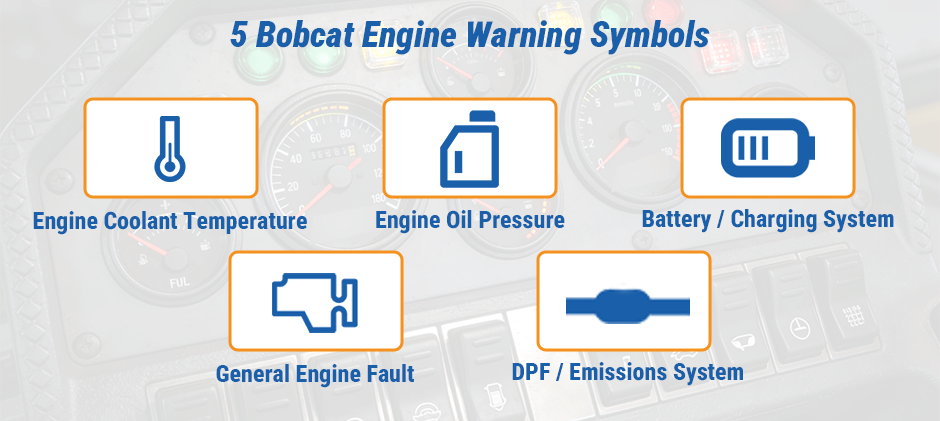
Engine warnings matter most because engine damage can get expensive very fast.
1. Engine Coolant Temperature: This symbol often looks like a thermometer in water. It means the engine is too hot.
- What to do: Stop work. Let the engine cool. Then check the coolant level, leaks, and the radiator for dirt or blockage.
2. Engine Oil Pressure: This symbol looks like an old oil can. It means the oil pressure is too low.
- What to do: Shut the engine off immediately. Check the oil level. Do not restart until you know why the pressure is low.
- “Ignoring an oil pressure light is the fastest way to turn a working engine into a boat anchor. It’s a non-negotiable shutdown.”
3. Battery / Charging System: A battery symbol means the charging system may not be working.
- What to check: loose or broken belt, bad alternator, weak battery, dirty battery terminals. Fix it soon so you don’t get stuck with a dead machine.
4. General Engine Fault: Often shown as an engine outline (“check engine”). The computer found a problem.
- What to do: Read the fault code on the display (if your model shows it). Use the manual to understand the code.
5. DPF / Emissions System: A DPF light means the machine needs to clean the filter (regeneration) or there is an emissions issue.
- What to do: Follow the manual for regeneration. If the light flashes or shows with a check engine light, stop and diagnose—there may be a bigger problem.
How Do You Handle Hydraulic System Warnings?
Hydraulics move the machine and power attachments. If hydraulics are unhealthy, performance drops, and parts can fail.
What Happens When Hydraulic Oil Overheats?
A high hydraulic oil temperature symbol means the hydraulic oil is too hot. Hot oil does not protect parts well and can damage hoses, seals, and pumps.
What to do:
- Stop heavy work.
- Lower the attachment to the ground.
- Let the machine idle to cool down (if the manual recommends it).
- Check the hydraulic oil level and look for a blocked hydraulic cooler (mud/dust).
What Does a Hydraulic Pressure Drop Indicate?
A hydraulic pressure warning light means the pressure is not where it should be.
Common causes:
- a big hydraulic leak
- a weak pump
- a clogged hydraulic filter
What to do: Stop using hydraulics to prevent damage. Look for visible leaks and damaged hoses. Check the filter/service indicators if your machine has them.
How to Troubleshoot Bobcat Warning Lights
A calm, step-by-step check is usually the fastest way.
What Are the First Steps When a Light Appears?
1. Look at the color.
- Red: stop safely and shut down.
- Yellow: caution—inspect soon.
2. Notice how the machine feels.
- Is it overheating, losing power, making noise, smoking, or leaking?
3. Check the display for fault codes (if available).
4. Use your operator’s manual.
- Warning lights can vary by model, so the manual is the best reference.
When Should You Call a Professional?
Call a technician if:
- You did the basic checks, and the light stays on
- Multiple warning lights come on at the same time
- You see the controller/electrical codes, you can’t confirm
- The machine shuts down or goes into limp mode
A pro has the tools to read deeper codes and test sensors, wiring, and pressure.
3 Tips to Prevent Warning Lights from Appearing
Simple habits prevent many warnings.
- Perform Daily Fluid Checks: Check engine oil, coolant, and hydraulic oil before work.
- Monitor Machine Performance: Pay attention to new noises, smoke, slow hydraulics, or power loss. Small changes often show up before a warning light.
- Keep the Machine Clean: Clean the radiator and hydraulic cooler so air can flow through. Keep battery terminals clean and tight.
Keep Your Bobcat Running with Quality Parts
Good maintenance keeps most warning lights off. But if a warning light points to a bad part—like a sensor, filter, belt, alternator, or hydraulic component— order the right part from FridayParts to fix it quickly to avoid bigger damage. Use parts that fit correctly and match your machine’s needs, and always follow the operator’s manual for your exact model.
