

The camshaft controls when your engine valves open and close. It directly affects combustion efficiency. If the camshaft becomes worn or damaged, machine performance will drop, and the engine may even fail. So, Is cam shaft repair? Or do you have to replace the whole thing? Keep reading to find out if repair is possible, how it’s done, and roughly how much it costs.
Signs and Causes of Cam Shaft Failure
A common sign of camshaft failure is a ticking or tapping noise from the top of the engine. The noise gets faster as engine speed increases. You may also notice loss of power, rough idling, or even backfiring. These symptoms mean the valvetrain is no longer working properly.
One of the most common causes is poor lubrication. Without clean oil, the extreme pressure between the cam lobes and lifters creates intense friction and heat, leading to rapid wear.
Then there is oil contamination. dust and tiny metal particles easily get into the engine oil. This dirty oil acts like liquid sandpaper, scratching and pitting the camshaft lobes over time.
The other major cause is bad installation or mechanical wear. One of the most common mistakes is reusing old lifters with a new camshaft. Worn lifters can quickly damage the new camshaft, causing another failure almost right away.
Can a Cam Shaft Be Repaired?
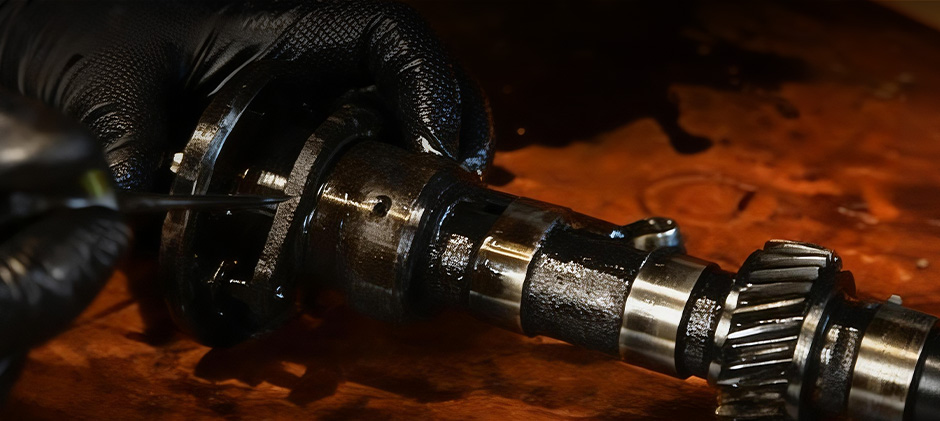
Can you repair a failed camshaft, or do you have to replace it? Usually, it is possible to repair it, but only if the core is still in good shape. We called it rebuilt. To know if a camshaft can be rebuilt, you check a few i things first.
The Camshaft Must Be Straight
If it’s bent or warped at all, it can’t be used. Camshafts are strong, but a broken timing gear or internal engine damage can bend them.
Lobe Wear Can’t Be too Bad
If there’s only light scratching, minor pitting, or light wear, you can repair it. The mechanic just needs to make sure there is enough material. But if the lobes have deep grooves or large pieces of metal broken off, the camshaft can’t.
The Case Hardening Depth Must Be Acceptable
The camshaft is not hard metal all the way through; it has a hard, wear-resistant outer layer and a relatively soft metal inside. Such a design can make the outer layer resistant to wear and the inner layer can withstand impact and not easily break.
In the repair of camshafts, grinding treatment is often required. But grinding will remove part of the hardened layer on the surface. If the wear is already very deep, grinding it again may wear away the entire hardened layer and expose the softer core material inside. Once the soft metal is exposed, the lifter will quickly wear out the camshaft upon contact. Therefore, it is necessary to confirm whether the hardened layer is thick enough and worth repairing. This is invisible to the naked eye and requires special equipment for detection. It cannot be judged by looking at the appearance alone.
If the camshaft passes these three tests, it can proceed to the remanufacturing process.
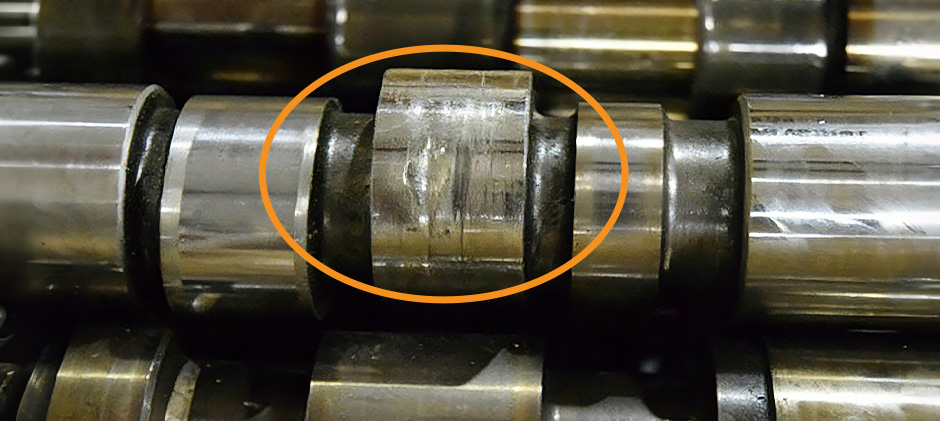
Minor and Repairable Camshaft Lobe Wear
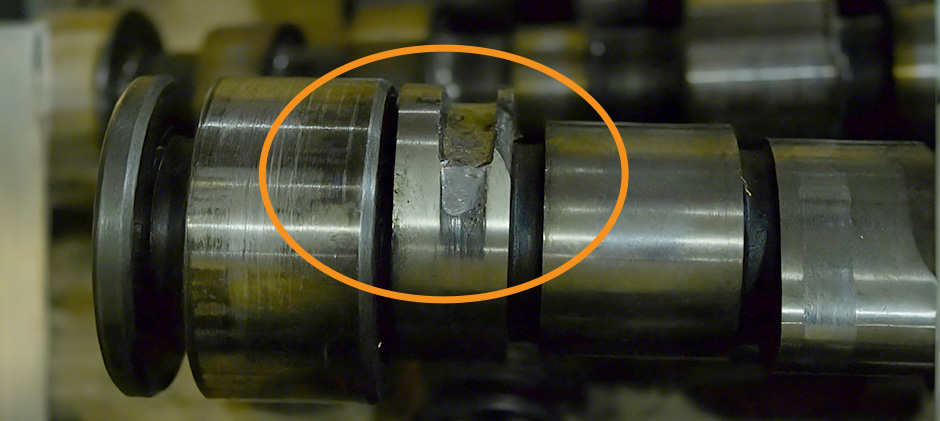
Camshaft Lobe Damage Requiring Replacement
How Much Does a Cam shaft Repair Cost?
The cost to remanufacture a camshaft is separate from replacement, ranging from $400 to $1,500. This is only the machine shop work, not installation. The final bill depends largely on how badly the camshaft is damaged.
- For minor surface wear, a simple regrind is enough, which is the most affordable option at $400 to $800.
- If the lobes show heavy pitting, deep scoring, or material loss, however, they require specialized hard-facing welding before being precision-ground back to the correct profile. This more involved process raises the cost to $800–$1,500 or higher.
- Larger, longer camshafts from high-displacement engines such as Caterpillar C15 or Cummins ISX also cost more to fix, as they require more setup time and cover a much greater surface area.
Replacement Cost
For most commercial operations, when a machine is down for weeks, the lost income is far more than the few hundred dollars saved by repairing parts. So in real life, even though rebuilding the original camshaft is possible, replacing it is often the cheaper and easier option overall.
Camshaft Parts Cost
The camshaft itself usually costs $800 to $4,000+. For common 6-cylinder engines, prices are relatively low. But for large V12 or V16 engines, camshafts are much bigger and longer, so the cost is much higher.
Labor Cost
Replacing a camshaft requires a lot of disassembly. Depending on the engine design (in-block camshaft or overhead camshaft), the mechanic may need to remove the cylinder head, the timing system, the timing cover, the radiator, many other components. Labor time is usually 15 to 40+ hours. At $120 to $200 per hour, labor alone can easily reach $1,800 to $8,000.
Total Estimated Replacement Cost: $3,000 – $12,000+
Related Parts That May Need Replacement
To make sure a camshaft repair lasts, you can’t just replace the camshaft by itself.
The camshaft works as part of a system, and when it fails, other parts may fail too. Replacing these parts at the same time saves time, labor, and money later.
- Lifters / Followers: All lifters that touch the camshaft should be replaced. Old lifters are already worn in and won’t match the new cam lobes, which can quickly damage the new cam.
- Camshaft Bearings: These support the camshaft as it spins. They often get metal debris in them and suffer from oil problems too, so replace them.
- Pushrods (if your engine has them): Take them out and roll them on a flat surface. If any are bent, replace them.
- Rocker Arms: Check for wear where they touch the valve and where the pushrod sits.
- Timing Gears / Timing Set: Look for chipped, broken, or badly worn teeth on the cam and crank gears. Bad timing parts can cause serious engine damage.
- Seals and Gaskets: Any seal or gasket you remove should be replaced — like the head gasket, timing cover gasket, and front crank seal — to stop oil and coolant leaks later.
Conclusion
If you choose to repair the camshaft, expect the whole process to take a few extra days. You’ll need to wait for the machine shop to inspect it, do the surface work, and ship it back. That downtime can add up.
In many cases, the price difference between repairing and buying new parts isn’t that big, but new parts give you reliability, warranty, and certainty, especially when you can get them faster. That often makes replacement the better choice for working machines.
If you’re dealing with camshaft problems, check out FridayParts for affordable, durable camshafts, lifter kits, and related parts — with guaranteed compatibility to get your equipment back to work quickly.
