

Brake fluid sits in your equipment’s brake system, out of sight and often out of mind. Many operators and owners completely ignore it, focusing on more obvious maintenance like oil changes. But neglecting brake fluid changes creates serious safety risks and expensive repair bills. Let’s look at exactly what happens when you skip this critical maintenance.
Why Brake Fluid Goes Bad Over Time?
Unlike engine oil that gets contaminated with combustion byproducts, brake fluid degrades through a completely different process. Understanding this helps you appreciate why regular changes matter.
- Hygroscopic Nature: Brake fluid is hygroscopic, meaning it absorbs moisture from the air. Even in a sealed brake system, tiny amounts of moisture enter through microscopic pores in rubber hoses and seals. Over time, it can absorb 3-4% water by volume. This moisture contamination fundamentally changes how brake fluid behaves.
Fresh brake fluid has an extremely high boiling point – typically 400-500°F for DOT 3 or DOT 4 fluid. But as water content increases, the boiling point drops dramatically. Fluid with just 3% water content might boil at 300°F or lower. Why does this matter? Your brakes generate tremendous heat through friction. If brake fluid boils, it turns to gas, creating compressible vapor in your brake lines. This causes a spongy pedal feel or complete brake failure – a terrifying scenario when operating heavy equipment.
- Chemical Breakdown: Beyond moisture absorption, brake fluid itself breaks down chemically over time. Heat cycling, age, and exposure to system contaminants degrade the additives that prevent corrosion and maintain proper viscosity. The fluid becomes less effective at protecting metal components and lubricating moving parts in calipers and wheel cylinders.
- Contamination Buildup: As brake components wear, tiny metal particles, rust, and rubber debris accumulate in the fluid. Dirty brake fluid carries this contamination throughout the system, accelerating wear on precision components. The fluid gradually turns from clear or amber to dark brown or black as contamination increases.
At FridayParts, we see the results of neglected fluid on heavy equipment all the time. The damage is preventable with regular maintenance, but once it occurs, repairs get expensive fast.
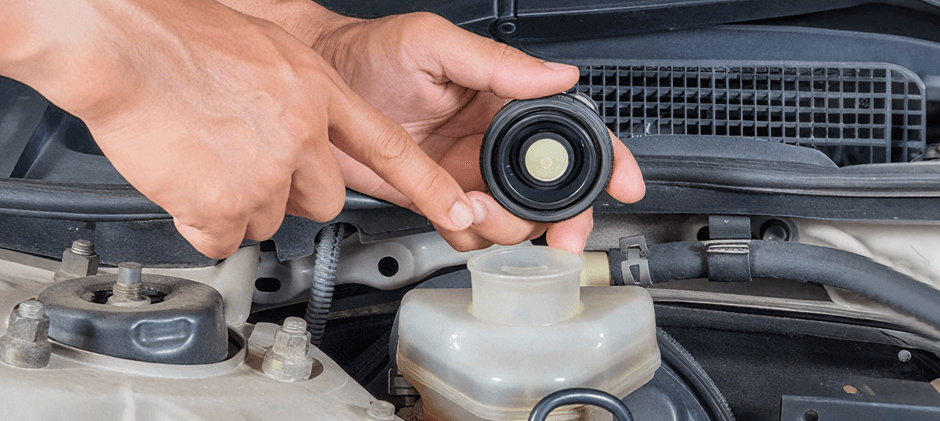
What Happens When You Don’t Change Brake Fluid?
Let’s walk through the progressive damage that occurs when brake fluid sits unchanged for years. These problems build on each other, starting small and escalating to complete failure.
- Reduced Braking Performance: The first symptom you’ll notice is degraded brake performance. The pedal might feel slightly softer or require more pressure to achieve the same stopping power. This happens because moisture-contaminated fluid compresses more easily than fresh fluid and may start forming vapor pockets at normal operating temperatures.
Stopping distances increase even if the difference isn’t dramatic enough to be immediately noticed. Your equipment takes a few extra feet to stop – not a big deal in a parking lot, but potentially catastrophic when hauling a load downhill or operating in traffic. This gradual performance loss is dangerous because you adapt to it without realizing your brakes are failing.
- Brake Fade: During heavy braking – like descending long grades with a loaded machine – old brake fluid really shows its weakness. As temperatures rise, the moisture-laden fluid begins vaporizing. Vapor is compressible; liquid is not. When you press the brake pedal, instead of transmitting force directly to the brake pads, you’re compressing vapor bubbles. The pedal goes to the floor with little braking effect.
This phenomenon, called “brake fade,” is terrifying. Your pedal feels mushy or goes all the way down with minimal stopping power. Pumping the pedal might temporarily restore braking as vapor condenses and moves out of critical areas, but the problem returns quickly. In severe cases, you experience total brake failure. This is how accidents happen with “brakes failed” as the cause.
- Internal Corrosion: Water in brake fluid causes rust and corrosion inside brake components. This affects several critical parts. Brake calipers contain steel pistons or sleeves. When rust forms, pistons stick or don’t retract properly after braking. Stuck pistons cause brake drag, overheating, premature pad wear, and reduced fuel economy.
Wheel cylinders in drum brake systems suffer similarly. Corrosion causes internal leaks and seized pistons. The master cylinder, heart of your brake system, develops internal corrosion that creates leaks and pressure loss. ABS modulator valves with precision internal components corrode and malfunction, requiring extremely expensive replacement.
All this internal damage is invisible from the outside. By the time symptoms appear, significant damage has occurred. Replacing a master cylinder, all four calipers, or an ABS module costs hundreds or thousands of dollars – far more than routine brake fluid changes.
- Brake Line Failure: Steel brake lines corrode from the inside out when water-contaminated fluid sits in them for years. External brake lines might look fine while the insides are rusted and weakened. Eventually, a line ruptures, causing sudden complete brake failure – one of the most dangerous mechanical failures possible.
Rubber brake hoses deteriorate faster with old fluid, becoming soft and spongy. These hoses might bulge under pressure instead of transmitting force properly, causing poor pedal feel and reduced braking. In worst cases, deteriorated hoses burst, again causing sudden brake loss.
- Expensive Component Replacement: When corrosion and damage from old brake fluid become severe enough, you’re facing a major brake system overhaul. This means replacing the master cylinder, all calipers or wheel cylinders, brake lines if corroded, possibly the ABS module, and completely flushing the system. This repair can easily cost 2,000−2,000-2,000−5,000 on heavy equipment, sometimes more.
Compare this to a brake fluid change costing 80−80-80−150 every 2-3 years. Neglecting this simple maintenance turns a minor expense into a massive one. We see this pattern constantly – operators skip cheap preventive maintenance, then face expensive repairs years later.
How Often Should You Change Brake Fluid?
So what’s the right brake fluid change interval? The answer varies by manufacturer and application, but general guidelines apply.
- Manufacturer Recommendations: Most equipment manufacturers recommend brake fluid changes every 2-3 years, regardless of mileage or operating hours. This time-based interval reflects moisture absorption that occurs even when the equipment sits idle. Check your owner’s manual for specific recommendations for your machine.
Some manufacturers specify shorter intervals for severe service – frequent heavy braking, dusty conditions, or equipment that operates near water. These conditions accelerate moisture absorption and contamination. Heavy equipment used in demanding applications should lean toward the shorter end of recommended intervals.
- Real-World Best Practices: For most equipment, changing brake fluid every 2 years provides excellent protection. This frequency keeps moisture content low and prevents significant corrosion. If you operate in humid environments or near saltwater, annual changes make sense.
Some operators test fluid condition and change it based on results rather than arbitrary time intervals. Brake fluid test strips measure moisture content and provide a simple pass/fail result. Fluid with more than 3% moisture content should be changed. Electronic testers provide precise moisture readings and are worth the investment if you maintain multiple machines.
- Signs It’s Time for Change: Even without testing equipment, certain signs indicate brake fluid needs changing now. If your fluid is dark brown or black instead of clear amber, it’s contaminated and should be changed. If the pedal feels soft or spongy, or if you’ve experienced brake fade, change the fluid immediately.
Anytime you open the brake system for repairs – replacing calipers, wheel cylinders, master cylinder, or brake lines – change all the fluid. Fresh fluid after repairs prevents introducing contamination and ensures clean fluid with proper properties.
- Warning: Some operators think they can extend intervals if the equipment doesn’t get used much. Wrong! Moisture absorption occurs whether you drive the equipment or it sits parked. In fact, infrequent use can be worse because regular operation generates heat that temporarily drives out some moisture. Equipment that sits often needs more frequent brake fluid changes, not less.
Different Types of Brake Fluid
Not all brake fluids are the same. Using the correct type matters for performance and safety.
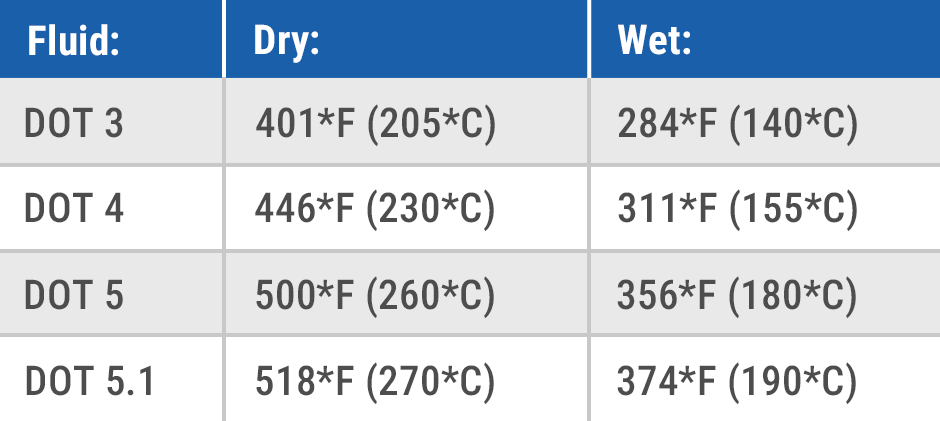
- DOT 3 Brake Fluid: DOT 3 is a glycol-based fluid commonly used in many vehicles and equipment. It has a dry boiling point (fresh fluid) of around 401°F and a wet boiling point (3% moisture) of around 284°F. DOT 3 is hygroscopic and should be changed regularly. It’s less expensive than higher-performance fluids.
- DOT 4 Brake Fluid: DOT 4, also glycol-based, has higher boiling points than DOT 3 – typically 446°F dry and 311°F wet. It’s more resistant to boiling under heavy use and is specified for many modern vehicles and heavy equipment. DOT 4 costs slightly more than DOT 3 but provides better performance.
- DOT 5 Brake Fluid: DOT 5 is silicone-based, not glycol-based. It doesn’t absorb moisture, which sounds great. However, any water that enters the system doesn’t dissolve in DOT 5 fluid – instead, it forms pools at low points, where it causes localized corrosion. DOT 5 also doesn’t lubricate components as well and isn’t compatible with ABS systems. Most modern equipment doesn’t use DOT 5.
- DOT 5.1 Brake Fluid: Despite the similar name, DOT 5.1 is glycol-based like DOT 3 and DOT 4, not silicone-based like DOT 5. It offers even higher boiling points than DOT 4 – around 518°F dry and 374°F wet. It’s used in high-performance applications and some heavy equipment with advanced braking systems.
- Compatibility and Mixing: DOT 3, DOT 4, and DOT 5.1 are compatible and can be mixed (though it’s not ideal). DOT 5 is NOT compatible with other types and must never be mixed with them. Always use the brake fluid type specified by your equipment manufacturer. Using the wrong type can damage seals, reduce braking performance, or cause brake failure.
Check your owner’s manual or the brake fluid reservoir cap – it usually specifies which fluid to use. When changing fluid, stick with the correct type. At FridayParts, we can help you identify the right brake system components and fluids for your specific equipment.
How to Change Brake Fluid?
Changing brake fluid isn’t as simple as draining and refilling like engine oil. The brake system must remain sealed and free of air bubbles. Here’s an overview of the process.
- DIY vs. Professional Service: Brake fluid changes require some mechanical skill and the right tools. You’ll need fresh fluid, a wrench to open bleeder valves, clear tubing, a catch container, and possibly a brake bleeder tool or helper to pump the pedal. If you’re mechanically inclined and comfortable working on brake systems, DIY is feasible.
However, many operators prefer professional service for brake work due to safety implications. Mistakes during brake bleeding can introduce air, reduce braking performance, or cause injury if fluid contacts eyes or skin (it’s corrosive and toxic). Professional service ensures proper bleeding technique and safety.
- Bleeding Process Overview: The basic process involves forcing old fluid out through bleeder valves at each wheel while adding fresh fluid at the master cylinder reservoir. Start with the wheel furthest from the master cylinder (usually rear passenger side) and work toward the closest (usually front driver side). This sequence ensures all old fluid is purged.
At each wheel, attach tubing to the bleeder valve with the other end submerged in a container of clean fluid. Open the bleeder, have a helper press the brake pedal slowly, close the bleeder before they release the pedal, and repeat until clean fluid appears. Keep the reservoir topped off during this process – never let it run empty or you’ll introduce air.
Modern equipment with ABS requires special procedures to bleed the ABS modulator valves. This often requires a scan tool to cycle the ABS pump during bleeding. Without proper ABS bleeding, air trapped in the modulator causes a spongy pedal feel and reduced braking. This is another reason professional service makes sense for complex brake systems.
- Safety Precautions: Brake fluid is toxic and corrosive. Wear gloves and safety glasses. If fluid contacts skin, wash immediately with soap and water. If it gets in the eyes, flush with water for 15 minutes and seek medical attention. Keep brake fluid away from painted surfaces – it removes paint quickly.
Dispose of old fluid properly at a recycling center or hazardous waste facility. Don’t pour it down drains or on the ground. Most auto parts stores and service shops accept used fluid for recycling.
Can You Test Brake Fluid Condition?
Instead of changing brake fluid on a fixed schedule, you can test its condition and change it based on results. This approach saves money while ensuring safety.
- Test Strips: Fluid test strips are inexpensive (around $10 for a package) and simple to use. Dip the strip in the fluid for a few seconds, then compare the color change to a chart. The strip measures moisture content. Results showing 3% or higher moisture indicate it’s time for a change.
Test strips provide a quick pass/fail assessment. They’re perfect for checking multiple machines quickly or for operators who want objective data instead of arbitrary intervals. We recommend testing annually and changing fluid when moisture exceeds 3%.
- Electronic Testers: Electronic brake fluid testers cost 30−30-30−100 and provide digital readouts of moisture percentage. They’re more precise than test strips and easier to read. For operations maintaining multiple machines, an electronic tester pays for itself quickly by preventing unnecessary fluid changes while catching contaminated fluid early.
- Visual Inspection: While not as accurate as testing, visual inspection gives clues about the fluid condition. Fresh brake fluid is clear and amber-colored. As it ages and absorbs moisture, it darkens to brown and eventually black. If your fluid is dark brown or black, change it regardless of other factors – it’s contaminated.
Check the fluid reservoir periodically. If you see particles floating in the fluid or sediment at the bottom, the system has internal contamination requiring professional attention. Clean it should be clear without visible debris.
The Real Cost of Neglecting Brake Fluid
Let’s put some numbers on the costs of ignoring brake fluid maintenance versus staying on top of it.
- Preventive Maintenance Cost: A professional brake fluid flush typically costs 80−80-80−150 for most equipment. DIY costs are just the fluid price, usually 15−15-15−30 for enough to flush the system. Done every 2-3 years, we’re talking 40−40-40−75 annually for professional service, or under $15 annually DIY.
- Repair Costs from Neglect: When old fluid damages components, repair costs skyrocket. A master cylinder replacement runs 200−200-200−500 including parts and labor. Replacing all four brake calipers costs 600−600-600−1,200. If brake lines have corroded and need replacement, add another 300−300-300−800. ABS module replacement is particularly painful at 1,000−1,000-1,000−2,500 or more. Total cost for brake system overhaul due to corrosion damage: 2,000−2,000-2,000−5,000 easily, sometimes exceeding $10,000 on complex heavy equipment.
- Accident Costs: Beyond monetary repair costs, consider the potential costs of an accident caused by brake failure. Equipment damage, cargo damage, injury liability, insurance increases, and potential loss of life – these costs are immeasurable. Proper brake maintenance is a fundamental safety practice.
- The math is simple: spend $150 every few years on fluid changes, or risk thousands in repairs plus potential accident costs. It’s not even close. Fluid changes are among the highest-value maintenance tasks you can perform.
FAQs About Brake Fluid Changes
Can I just top off brake fluid instead of changing it?
No, topping off doesn’t remove moisture or contamination already in the system. It only adds fresh fluid to contaminated old fluid, slightly diluting the problem without solving it. If your fluid level is low, find out why – either you have a leak or your brake pads are worn enough to extend caliper pistons further, using more fluid. Address the root cause, then do a complete fluid flush.
What happens if I mix different types of brake fluid?
Mixing DOT 3, DOT 4, and DOT 5.1 (all glycol-based) is generally safe, though not ideal. However, never mix DOT 5 (silicone-based) with any glycol-based fluid – this causes serious problems, including seal damage and brake failure. Always use the type specified by your equipment manufacturer for best results and safety.
How do I know if my brake fluid is bad?
Test with fluid test strips or an electronic tester for definitive results. Visually, dark brown or black fluid (should be clear amber) indicates contamination. A soft or spongy brake pedal, brake fade during heavy use, or difficulty stopping suggest fluid problems. If in doubt, have it tested or just change it – the cost is minimal compared to the risks.
Does brake fluid really absorb moisture in a sealed system?
Yes, absolutely. While the brake system is mostly sealed, rubber brake hoses are slightly permeable to water vapor. Moisture gradually penetrates these hoses over months and years. Additionally, every time you open the reservoir cap for inspection, you expose the fluid to humid air. This is why fluid needs periodic changing, even if your equipment sits unused.
Can old brake fluid cause ABS problems?
Definitely. ABS systems have precision valves and pumps that are highly sensitive to contamination. Particles in old fluid can jam these valves, causing ABS malfunction or failure. Corroded ABS components from moisture-laden fluid are extremely expensive to replace. Regular brake fluid changes protect your ABS and avoid these costly repairs.
Summary
Brake fluid sits quietly in your equipment’s brake system, doing critical work without attention or recognition – until it fails. Then suddenly everyone cares about brake fluid, usually when staring at a hefty repair bill or worse, after an accident. Don’t let this happen to you. This simple, inexpensive maintenance task protects one of your equipment’s most critical safety systems. Change your brake fluid every 2-3 years, test it annually if you prefer data-driven maintenance, and never ignore signs of brake problems. Your safety and wallet will thank you. For quality brake system components and support, trust FridayParts to keep your equipment stopping safely and reliably
