

Many seals prevent leaks and protect sensitive systems from contamination. The crankshaft seal is one of these key components—it protects the crankshaft. Although the crankshaft seal has a simple design, it wears out over time and can cause serious problems, such as oil leaks. That’s why it’s important to recognize the warning signs of an aging or failing crankshaft seal and replace it early.
What Is the Crankshaft Seal?
The crankshaft turns the up‑and‑down movement of the pistons into spinning power that runs your machine. This heavy metal shaft spins thousands of times every minute. It goes from inside the engine block to the outside, so we need something to keep engine oil from leaking out. That’s what crankshaft seals are for. Most off‑road engines have two crankshaft seals:
- Front crankshaft seal. This seal is at the front of the engine, behind the main pulley or harmonic balancer. People often call it the timing cover seal because it fits inside the front timing cover.
- Rear crankshaft seal. Most people just call it the rear main seal. It’s at the back of the engine, where the crankshaft connects to the flywheel or flexplate. Because of its position and the stress it takes, this seal fails more often.
These seals are strong, precision rings. They’re usually made of tough rubber like Nitrile or heat‑resistant Viton, with a metal outer case.
What Does the Crankshaft Seal Do?
Crankshaft oil seals have two crucial functions:
Prevent engine oil from leaking into the crankcase. When the crankshaft rotates, it throws oil everywhere. The oil seal acts like a barrier. This keeps the crankshaft and its bearings lubricated at all times, reducing friction.
Prevent pollutants from entering the engine. This is equally important in dusty operating sites. Seals prevent dust, mud, water, and other debris from entering the engine crankcase. Prevent oil pollution and prevent rapid engine wear.
Signs of a Crankshaft Seal Leak
If a crankshaft seal goes bad, it’s going to leak oil. You just need to find where the leak is and fix it properly before it’s too late. Here are signs to watch for:
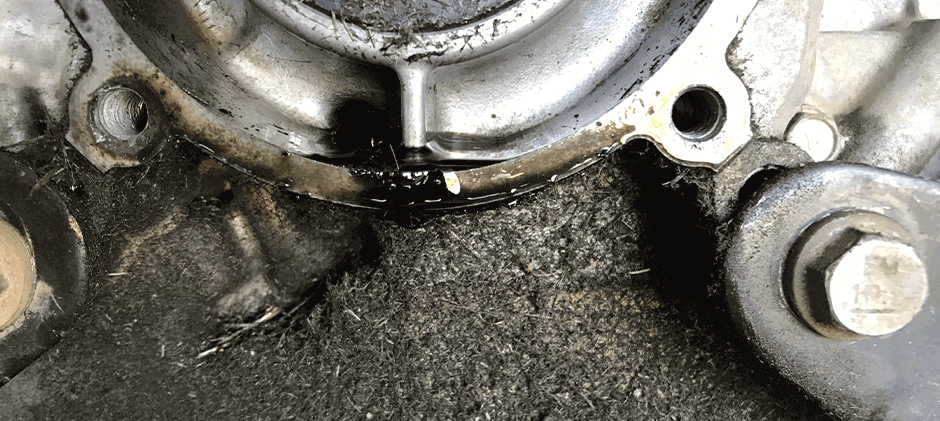
- Oil drips: If the front crankshaft seal is leaking, oil will drip from the front of the engine, near the main pulley. You might even see oil getting slung around the engine bay by the spinning belts. If the rear crankshaft seal is leaking, oil will drip from the bottom of the transmission housing — that’s where the engine and transmission connect.
- Greasy mess under the engine: Leaks usually start slowly, before you even see big drips. The oil picks up dust and dirt. If you see a thick oily layer under the engine, on the oil pan, or on the transmission housing, the seal is probably gone.
- Oil level drops fast: If the leak is bad, the engine oil will drop way faster than normal. If you’re adding oil more often, you definitely leak to check.
- Clutch trouble (manual transmissions): On manual transmissions, a leaking rear seal can get oil on the flywheel and clutch. That makes the clutch slip, especially under heavy loads. You’ll feel shaking or grabbing when you use the clutch.
How Do I Put in a Crankshaft Seal So That It Wouldn’t Leak?
Replacing a crankshaft seal needs to be done carefully. The seal is small, but getting to it can be a lot of work. If you install it badly, it will leak for sure — and you’ll have to do the whole job again. You have to follow the right steps. Here’s how to install it so it won’t leak:
Clean the Sealing Surfaces Really Well
After you take out the old seal, the most important thing is to clean the housing and the crankshaft surface where the seal sits. Use a gentle cleaner and a soft cloth to remove all old oil, dirt, and leftover sealant. The surfaces must be completely clean and dry.
Check the Crankshaft for a Wear Groove
On machines with lots of hours, the old seal can wear a small groove into the crankshaft. If you can feel it with your fingernail, a new seal in the same spot will probably leak. You have two choices: put on a crankshaft wear sleeve (a thin metal sleeve that gives a new smooth surface), or install the new seal a little higher or lower so it runs on a clean, unworn part.
Lubricate the New Seal
Never put a seal in dry. Lightly coat the inner lip with clean engine oil or assembly lube. This lets it slide onto the crankshaft without getting damaged. A thin coat of oil on the outside also helps it go in smoothly. Pro tip: Put a little grease behind the inner lip where the spring sits. This stops the spring from popping out during installation.
Use the Right Tool
Don’t use a hammer and a random socket or piece of wood. That will damage the seal or make it go in crooked. Use a proper seal driver. It puts even pressure on the whole seal, so it goes in straight and at the right depth without damage.
Check for Other Problems
While you’re in there, think about why the old seal failed. One common cause is too much crankcase pressure. The PCV system is supposed to let this pressure out. If the PCV valve or breather filter is clogged, pressure builds up and pushes oil past the seal, even a new one. Always make sure the PCV system is clean and working properly.
Cost to Replace a Crankshaft Seal
When you look at the cost, you have to split it into two parts: the part itself and the labor. The crankshaft seal is pretty cheap. Depending on your machine, a new seal usually costs between $20 and $80.
The real expense is the labor to get to the seal. Changing the front seal might take a few hours. But replacing the rear main seal often means removing the transmission or even the whole engine. That’s a lot of work.
That’s exactly why you shouldn’t skimp on the seal quality. Saving a few dollars with a cheap, low-quality seal is a big risk. If it fails early, you’ll have to pay for all that labor all over again.
Summary
Crankshaft seals keep your crankshaft properly lubricated and prevent overheating caused by friction. Overheating can lead to serious engine damage and expensive repairs. Replacing your seals is easy at FridayParts. Just visit FridayParts.com on your phone, use the search bar, and select your equipment’s brand, model, and engine.
All our crankshaft seals come from the most trusted manufacturers in the industry, so you’re guaranteed high-quality parts. We offer fast, reliable shipping. Check out our wide range of crankshaft seals now!
