

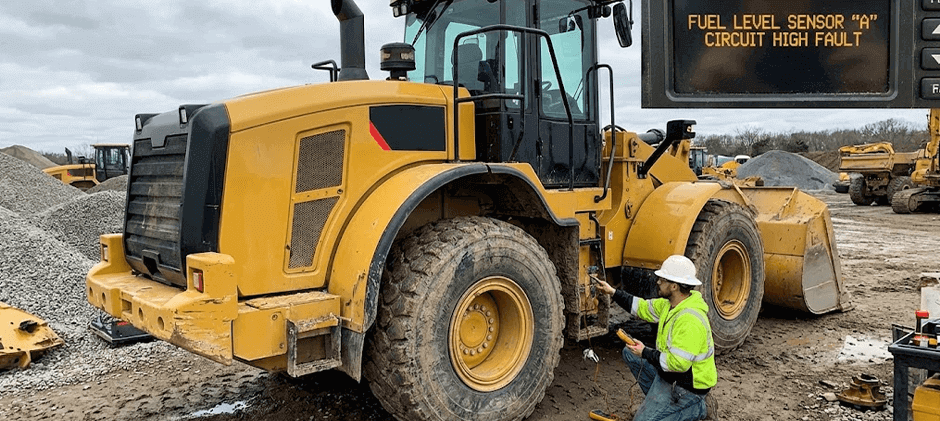
Fuel level sensor “A” circuit high relates to the fuel level sensor circuit. When the sensor signal voltage is higher than the normal operating range, the machine’s control module (ECM/ECU or machine controller) records this fault. This is a common circuit-type fault and has the same diagnostic meaning across different brands and models of heavy equipment.
What Is a Fuel Level Sensor Circuit High Input?
Simply put, this fault means the machine’s computer is receiving a fuel level signal that is too high. In modern heavy equipment, the control unit (ECU) constantly monitors the voltage signal from the fuel level sensor. Normally, different fuel levels produce different voltage values. When the signal goes above the normal range, the system records a “circuit high input” fault.
Most fuel level sensor systems use a 5V reference signal. If the ECU detects a signal voltage close to or at 5V for a period of time, it sees this as abnormal and triggers a fault code. Many people think this always means the sensor is bad. In real repairs, the problem is often the wiring. Broken wires, short circuits, loose connectors, or corrosion are more common causes. So in most cases, these fault points to a circuit problem, not a failed sensor.
How Fuel Level Sensors Work?
A fuel level sensor in heavy equipment is a simple electromechanical device. It works like a variable resistor (potentiometer) and sits inside the fuel tank.
- The float sits on top of the diesel fuel. It is usually made of plastic or brass. As the fuel level goes up or down, the float moves with it.
- The float is connected to a metal arm. When the float moves, the arm pivots up or down.
- At the other end of the arm is a small metal contact, called a wiper. The wiper slides along a resistive strip. One end of the strip is grounded. The other end receives voltage.
- As the wiper moves, the resistance in the circuit changes. The ECU reads this resistance (or the voltage change). It then converts it into the fuel level you see on the gauge.
A “Circuit High” fault happens when this system stops working normally. If the signal wire breaks, or the resistive strip wears out and creates an open spot, the circuit becomes open. The ECU sees this as infinite resistance. It reads the signal as maximum voltage. This triggers the “Circuit High” code and often makes the fuel gauge show “Full”, even when the tank is not full.
The Possible Causes
Even though this fault is because electrical problem, the real cause can be electrical or mechanical. Excavators, loaders, and dozers work in mud, dust, water, and vibration. Because of this, wiring and connectors fail most often. Below are the most common causes, listed from most likely to least likely.
- Damaged wiring harness: Vibration, mud, and debris can rub through wires. Moisture causes corrosion. Wires can break. A broken signal wire creates an open circuit, which is the most common trigger.
- Corroded or loose connectors: Connectors on the fuel tank or at the ECU often get water inside. Pins corrode and turn green or white. This causes poor contact or an open circuit.
- Poor ground connection: The sensor and tank must be well grounded to the chassis. If the ground strap is rusty, loose, or broken, the signal becomes unstable. Readings can go high.
- Failed fuel level sensor: The sensor can fail. The resistive strip can wear out. The float can absorb fuel and sink. The arm can bend or stick.
- Instrument cluster or ECU failure: This is rare. The problem may be in the cluster or the ECU. Check this only after all other causes are ruled out.
In real repairs, most electrical sensor faults come from wiring or connectors, not the sensor. Always start with a visual inspection of the wiring and plugs.
Common Symptoms of Fuel Level Sensor “A” Circuit High
The signs of this fault are usually impossible to miss, as they directly impact your ability to monitor a critical fluid level.
- Illuminated Check Engine Light: This is the most obvious indicator. Your machine’s monitor will display a warning icon and/or the specific fault code.
- Fuel Gauge Reads Full Constantly: Because a “Circuit High” fault mimics the signal of a completely full tank (maximum resistance), your gauge will likely be pegged at 100%, even if you know the tank is nearly empty.
- Fuel Gauge Fluctuates Erratically: In some cases, if the wire is intermittently making and losing contact, the gauge might swing wildly between full, empty, and other readings.
- Low Fuel Warning Fails to Activate: A dangerous side effect is that the system believes the tank is full, so the low fuel warning light will not illuminate when you are actually about to run out of fuel.
Ignoring these symptoms puts you at risk of running dry, which can lead to engine damage from fuel starvation and require a time-consuming process to bleed air from the fuel system.
How to Fix the “Fuel Level Sensor ‘A’ Circuit High” Fault?
Fixing this problem needs a step-by-step approach. You will need basic hand tools and a digital multimeter.
Safety and Prep
Park the machine on level ground. Turn it off. Disconnect the battery. This prevents shorts. Work in a well-ventilated area because you are near the fuel system.
Visual Check
Follow the wiring from the top of the fuel tank to the ECU, if you can reach it.
- Look for damaged wires.
- Check for pinched, rubbed, or cut insulation.
- Unplug the connector at the fuel tank. Look for green or white corrosion.
- Check for moisture inside the plug.
- Find the ground strap from the tank or sender to the frame. Make sure it is tight. Make sure there is no rust.
Test with a Multimeter
Sensor
- Unplug the sensor. Set the multimeter to resistance (Ohms, Ω).
- Touch the probes to the signal and ground pins on the sensor.
- Move the float arm slowly, or rock the machine gently.
- The resistance should change smoothly.
- If the meter shows “OL” at any point, or the value does not change, the sensor is bad.
Wiring
- Disconnect the sensor and the ECU.
- Check the continuity of the signal wire end to end.
- Then check for a short to ground.
- Measure resistance between the signal wire and the chassis.
- The meter should show “OL”.
- If you see a number, the wire is shorted.
Fix the Problem
- Wires or connectors are damaged: repair them. Use weatherproof connectors and heat shrink. Clean corroded plugs with electrical contact cleaner. Replace them if needed.
- The ground is bad: remove the ground strap. Clean both contact points to bare metal. Bolt it back on tightly.
- The sensor is bad: replace it. This usually means removing the sender unit from the top of the fuel tank.
Conclusion
Shop high-quality fuel level sensors on our website and enjoy easy, hassle-free ordering. Just enter your machine brand and model in the search bar to find a fully compatible fuel level sensor in seconds.
