

The coolant mixed with oil can ruin your engine completely. These two fluids are kept totally separate inside the engine, so coolant in oil is a really bad sign. Repairs are usually complicated and expensive. Here are the most common causes, symptoms, how to check for it, and what you should do next.
How Does Coolant in Oil Affect Your Engine?
The engine oil is designed to lubricate engine internal components, thereby reducing mutual wear and damage due to friction. Coolant, on the other hand, is designed to prevent the engine from overheating.
If coolant seeps into the oil, the engine’s internal lubrication performance will be greatly reduced and parts wear will increase.
If engine oil mixes into the coolant reservoir, the coolant becomes sticky and dirty, the heat dissipation effect is significantly reduced, and the engine overheats.
How to Tell if Coolant is in Oil?
Your machine will usually show clear warning signs. Just watch for these symptoms.
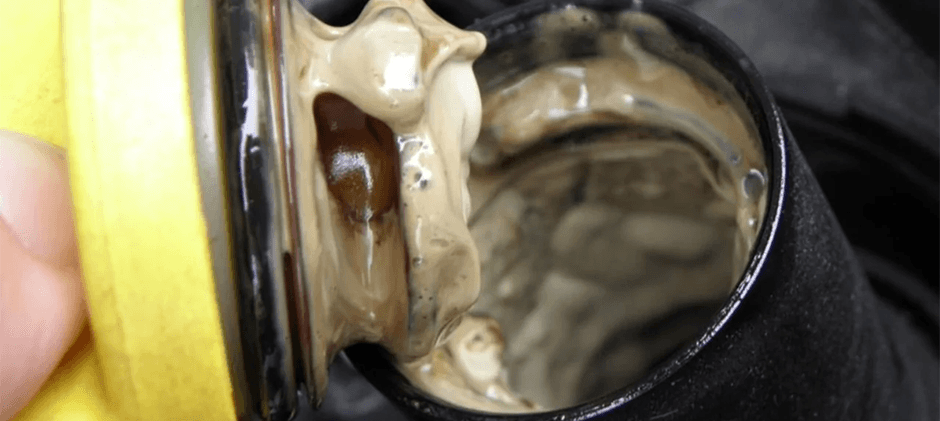
- Coolant in Oil Color: Check the oil itself. When you pull out the oil dipstick, normal oil is clean and dark. So, what does coolant in oil look like? If coolant is mixed in, it forms a thick, creamy sludge. You’ll see a milky, foamy, light-brown gunk — often on the bottom of the oil filler cap too.
- Losing coolant with no leaks: If you keep adding coolant but never see wet spots or puddles under your machine, it’s leaking inside — most likely into the oil.
- White sweet-smelling smoke: Thick white smoke coming out with a sweet smell is a classic sign. That sweet smell is from the antifreeze burning inside the engine.
- Engine overheating: If the temperature gauge keeps going up, the dirty, oily coolant can’t cool the engine properly anymore.
- Oil level too high: If the oil on the dipstick is above the full line, the extra liquid is probably coolant that leaked into the oil pan.
- Oil floating in coolant: Check the coolant tank. If you see a dark, oily layer on top, the seal between oil and coolant is broken.
What Causes Coolant to Mix with Oil?
1. Broken Head Gasket
The head gasket is a layer of sealing material sandwiched between the engine block and the cylinder head. Its function is simple: to seal the combustion chamber and completely separate the oil circuit and cooling water circuit without mixing them. If the head gasket ages, the engine overheats, or it is crushed by too much force, a channel will appear between the oil and coolant, and the two liquids will mix directly together.
2. Oil Cooler Malfunction
This is particularly prone to breaking on engineering and off-road equipment. The oil cooler is like a small radiator that uses coolant to cool the oil. It contains pipes for organic oil and coolant respectively. Once the inside rusts and cracks and the seal breaks, the high-pressure liquid will rush to the low-pressure side. When the engine is working, the oil pressure is high, and there is still excess pressure in the cooling system after stalling, so both sides may leak fluid to each other.
3. Leakage of Cylinder Liner Seal
Many heavy-duty diesel engines use replaceable cylinder liners, especially wet liners that touch coolant directly. They are sealed with O-rings at the bottom. When these O-rings wear out or become brittle, coolant leaks straight into the crankcase and oil pan.
4. Cracking of Cylinder Head or Cylinder Block
It’s not the most common, but when it happens, it’s serious. Most of the time, it is because the engine is severely overheated, or it is shut down directly when the temperature is high without idling to cool down. The huge temperature difference causes the cast iron cylinder block or cylinder head to be “cracked”. As long as the crack just connects the water and oil paths, coolant will continue to leak into the engine oil.
How to Fix Coolant Mixing with Engine Oil?
- Find the cause: Don’t start taking things apart right away. Get a proper check. A mechanic can pressure-test your cooling system to find internal leaks.
- Replace the broken part: Once you know what’s wrong, swap the faulty part. That usually means a new head gasket, oil cooler, cylinder liner seals, or even a new cylinder head.
- Flush both systems completely: Oil system: Drain all the bad oil. Use an engine flush to clean out leftover sludge and gunk. Cooling system: Drain the dirty coolant. Flush the whole system with water or cleaner to remove oil residue.
- Refill with new fluids: Fit a new oil filter. Add fresh engine oil that meets your machine’s specs. Top up the cooling system with the right coolant.
Preventive Maintenance
The best way to avoid this issue is to prevent it from happening at all.
- Check fluids: Look at your oil and coolant before you start work. Don’t just check the levels — check what they look like too.
- Use your machine correctly: Always warm up the engine before you work it hard. Let it idle for a few minutes before you turn it off so it can cool down properly. This helps prevent damage from sudden temperature changes.
- Watch your gauges: Keep an eye on the temperature gauge. If it starts going up, stop and check right away — don’t keep working.
- Maintain the cooling system regularly: Check hoses for cracks or soft spots, make sure clamps are tight, and keep the radiator clean so air can flow through well.
- Use good-quality parts: When you repair the engine, always use strong, high-quality gaskets, seals and parts.
Wrapping Up
Coolant in your engine oil is never a good sign. It almost always means something inside has failed. You can get all the parts you need at FridayParts — from head gaskets to all kinds of engine components. Keep your equipment running smoothly with high-quality parts.
