

Dealing with a problem in your machine’s aftertreatment system can feel like a big hassle, especially when you hear fancy terms like “catalytic converter”. We’re here to cut through the confusion. This guide will lay out how much it costs to replace a catalytic converter on your heavy equipment, talk about what pushes the price up or down, and help you spot the signs that yours is going bad. That way, you can make the right call and get your machine back up and running in no time.
What Is a Catalytic Converter?
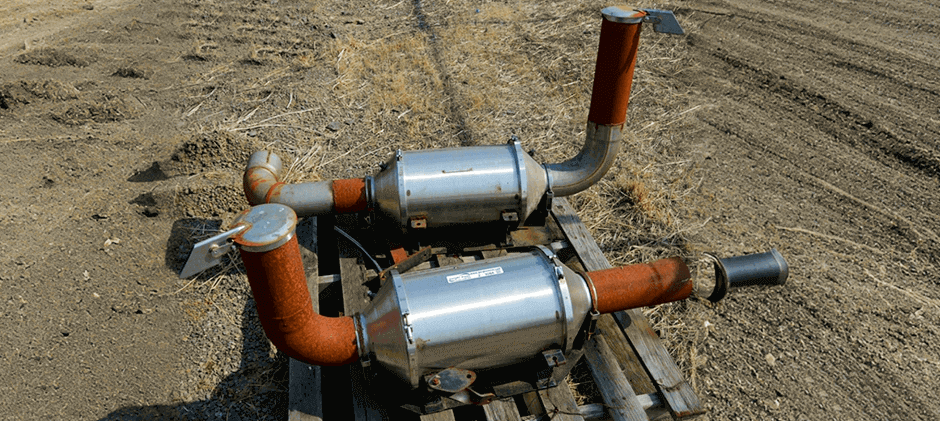
For modern diesel off-road machines, a catalytic converter is just one piece of a bigger, more complex setup called an exhaust aftertreatment system. Older or simpler machines might only have a single catalytic converter. But most new equipment built to meet today’s emissions rules uses a multi-step system. Its main job is to clean engine exhaust before it goes into the air. Think of it not as one part, but a team of parts working together. Here are the key ones in your machine’s exhaust line:
- Diesel Oxidation Catalyst (DOC): The DOC is the part that’s most like a regular catalytic converter. It’s usually mounted right after the turbo. Hot exhaust gases flow through its honeycomb structure, which is coated with metals like platinum and palladium. A chemical reaction happens here: it turns carbon monoxide (CO) and unburned fuel (HC) into carbon dioxide and water.
- Diesel Particulate Filter (DPF): The DPF usually comes after the DOC. Its main function is to capture soot particles in the black exhaust. It works similarly to a high-temperature filter and is able to capture all soot. It will definitely get clogged over time. Therefore, it requires a process called regeneration—simply put, burning off the captured soot at high temperatures to remove the filter and get it working again.
- Selective Catalytic Reduction System (SCR): SCR systems are specifically designed to handle nitrogen oxides (NOx). The system sprays urea solution (DEF) into the exhaust gas. When the exhaust passes through the SCR catalyst, NOx is converted into nitrogen and water—two substances that are already present in the air around us.
What Factors Affect Catalytic Converter Replacement Cost?
A few key things decide how much you’ll pay to replace a catalytic converter. Knowing them helps you stick to your budget.
OEM vs. Aftermarket Parts
OEM parts come straight from your machine’s brand maker. They fit perfectly, just like the original. But they cost a lot more. Aftermarket parts are made by other companies. Good-quality ones work as well as (or even better than) OEM parts—and they’re way cheaper. Usually, you’ll save 40-60% on the part itself.
Machine Brand, Model, and Engine Size
It’s simple: bigger machines have bigger engines that put out more exhaust. A large excavator or wheel loader needs a way bigger, tougher DOC/DPF than a small skid steer. The bigger the part, the more precious metals it has—and the higher the price.
Labor Costs and Job Toughness
Labor prices vary by area and shop. Heavy equipment mechanics usually charge $100–$250 an hour. How hard the job is matters a lot, too. A simple swap that bolts right in might take just a couple of hours. But if the part is in a tight spot, or you need welding and custom work, labor time will shoot up fast.
Emissions Rules (EPA & CARB)
New off-road diesel engines have to meet strict emissions standards—like the EPA’s Tier 4 Final. That means you can’t just slap on any part. The replacement has to be certified to keep your machine compliant. If you’re in a state with stricter rules (like California, which follows CARB), using an uncertified part can get you failed inspections and big fines.
Moving from these factors, the cost can change dramatically depending on the type of machine you operate.
Catalytic Converter Replacement Cost by Equipment
Because of their large size, complex structure, and high temperature and long-lasting use, the price of these discharge post-treatment parts is usually much more expensive than ordinary parts. The table below gives the approximate cost of replacing major after-treatment components (such as DOC / DPF assemblies), including parts and labor. It should be noted that these prices are just a common reference range for the North American market, and actual costs may vary depending on the brand, model, and repair location.
| Equipment Type | Parts Cost | Labor Cost | Total Cost |
|---|---|---|---|
| Skid Steer | $1,500 – $3,500 | $200 – $500 | $1,700 – $4,000 |
| Tractor | $2,500 – $5,000 | $300 – $700 | $2,800 – $5,700 |
| Wheel Loader | $4,000 – $8,000 | $400 – $1,000 | $4,400 – $9,000 |
| Excavator | $7,000 – $15,000+ | $600 – $1,500 | $7,600 – $16,500+ |
As you can see, this fix costs a pretty penny. That’s why catching the red flags early is key.
Bad Catalytic Converter Symptoms
Your machine will almost always let you know when something’s off with its aftertreatment system. Catching these red flags early can let you get away with just a cleaning or small fix—instead of having to replace the whole part. Keep an eye out for these:
- Check Engine or Warning Lights: You might see a specific DPF light, a DEF alert, or just the general engine malfunction light pop on.
- Loss of power: Modern engines will kick into “derate” or “limp mode” to protect themselves when there’s a serious aftertreatment issue. Your machine will feel sluggish and won’t have the muscle for heavy loads.
- DPF frequently regenerates: If your machine keeps automatically starting the regeneration program, the probability is that the DPF is sooted. Can’t clean it myself anymore.
- Fuel / DEF consumption increases: Once the aftertreatment system is blocked or not working properly, it will increase back pressure on the engine. The engine had to work harder, and fuel consumption naturally increased. If there is a problem with the SCR system, the consumption of DEF will also become particularly high.
- Smoke coming out of the exhaust pipe: This reprocessing system was originally designed to remove smoke. If there is white smoke, black smoke or blue smoke coming out, there must be something wrong. Either the soot doesn’t burn cleanly, or the engine oil and coolant are leaking into the exhaust pipe.
- Has a strange smell: The smell of rotten eggs (the smell of sulfur) means that the catalyst cannot convert the gas in the exhaust properly. If you can still smell the unburned diesel, there is a high probability that the DOC is faulty.
Why Are Catalytic Converters So Expensive to Replace?
Catalytic converters carry a high price tag mainly due to the rare metals they contain. Their core is a ceramic honeycomb structure, with a coating of precious metals such as platinum, palladium, and rhodium. These metals efficiently convert harmful exhaust gases into harmless substances. Since they are scarce and costly, the overall cost of the part is naturally high.
Wrapping Up
So, how much does a catalytic converter replacement cost? It depends on several factors. Labor costs and parts costs must be considered. If you prefer to perform the repair yourself, FridayParts offers direct-fit catalytic converters for replacement. Guaranteed reliable quality and regulatory compliance. Affordable prices—browse now!
