

A leaking piston pump can turn a solid workday into slow cycles, weak travel, overheated oil, and messy cleanups. The hard part is not “finding a seal kit”—it’s choosing the right one for your exact pump build, fluid, and job conditions. In this guide, we’ll walk through why seals fail, how we select a replacement kit with fewer wrong orders, how we identify pump model/specs when tags are unclear, and the common mistakes that cause repeat leaks.
Why Do Piston Pumps Need Seals Replaced?
A hydraulic piston pump depends on seals to keep pressure where it belongs and keep contamination out. In off-road machinery (excavators, loaders, dozers, tractors, and similar equipment), seals live in a tough world: vibration, heat, dust, pressure spikes, long idles, and frequent load changes. Over time, sealing edges lose their shape, elastomers harden, and small damage becomes a leak path.
Here’s what seals are doing inside and around a piston pump:
- Holding high pressure at ports, plugs, and internal passages
- Separating suction and pressure zones so the pump can build flow and pressure
- Protecting bearing and rotating areas from dirt and moisture
- Preventing air from being pulled in on the inlet side (a common cause of noise and foamy oil)
When seals start to fail, the first “symptom” may not be a visible leak. You often see case drain rising, slow response, or extra heat before the machine starts dripping.
What deterioration looks like (what you usually find during teardown)
These are practical signs that a seal is done and should not be reused:
- Loss of elasticity (crumbly feel)
- Hardening, swelling, or glazing
- Cuts, grooves, or scratches on the sealing lip
- Extrusion (material pushed out of the groove)
- Cracks and splits
- Burned surface marks
Those signs matter because they point to why it failed—heat, wrong material, contamination, misalignment, or pressure spikes—so you don’t repeat the same failure right after install.
How to Select a Replacement Seal Kit?
This is the part that saves the most time and money. You select hydraulic piston pump repair parts by matching (1) pump identity, (2) seal kit scope, (3) material compatibility, and (4) size/geometry—in that order.
Step 1: Confirm what you’re sealing (external vs internal kit scope)
Not all “seal kits” include the same items. Before you buy anything, you decide what the repair actually needs:
- External seal kit (common for on-machine leak repairs)
Typically covers shaft seal, cover O-rings, plugs, and common static seals.
- Complete reseal / overhaul seal kit
Adds more internal O-rings, back-up rings, gaskets, and sometimes special profile seals, depending on pump design.
If the pump has high hours, metal in oil, or abnormal case drain, a “quick external kit” may stop the drip, but won’t fix internal wear. That’s not a seal kit problem—it’s a diagnosis problem.
Step 2: Match by pump model and build code (not just machine model)
Two pumps that “look the same” can use different seal sizes and materials based on:
- Displacement variant
- Porting style
- Control type
- Shaft type
- Series revision
That’s why you treat the pump model/build code like a fingerprint. If you skip it, you risk ordering a close kit—but not the correct.
Step 3: Choose seal material based on hydraulic fluid and temperature
Material choice is where many off-road machines get burned—especially when the machine works in heat, runs long duty cycles, or uses a fluid that isn’t the basic mineral type.
Common seal materials you’ll see in kits include:
- NBR (nitrile): good general choice for many mineral oil systems; limited at high heat
- FKM: handles higher temperatures and many chemicals better; often chosen for hot running conditions
- EPDM: used for certain fluid types; not a “universal upgrade.”
You don’t “upgrade” material blindly. You match material to:
- The hydraulic fluid type used in the machine
- Expected operating oil temperature range
- Exposure to water, cleaning chemicals, or weathering (for external seals)
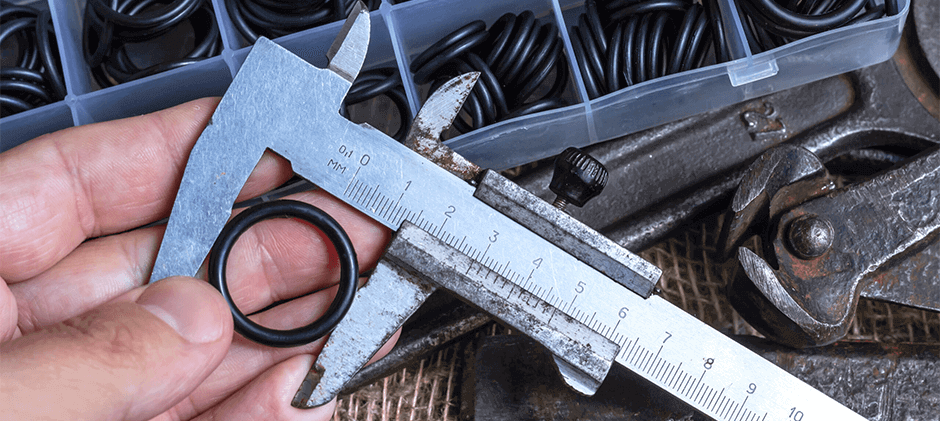
Step 4: Confirm sizes using the grooves, not the old seals
Old seals may have swollen, flattened, or shrunk from heat and fluid exposure. If you measure the used O-ring on the bench, you can order the wrong cross-section.
A better method:
- Clean the housing and groove
- Measure groove ID/OD and depth
- Confirm cross-section from the groove geometry and kit spec
Step 5: Buy from a supplier that supports off-road machinery fitment
When you’re trying to reduce downtime, sourcing matters. A catalog focused on heavy equipment helps because it’s organized around the parts that fail in the field—O-rings, gaskets, pump seals, injector seals, and control valve seals.
If you’re looking for heavy-equipment-focused options, this category is designed around off-road machinery applications: seal kits.
How to Identify Your Piston Pump Model and Seal Kit Specifications?
When everything is clean and the nameplate is readable, this is easy. When the machine is old and the tag is scratched, you use a layered approach.
1) Start with the pump nameplate (best case)
Look for:
- Model/series
- Displacement
- Rotation direction (sometimes)
- Serial number
- Build or configuration code
Tip: Take a straight-on photo and a second photo at an angle. Glare often hides one line of the code.
2) If the tag is missing: use cast marks + port layout + mounting pattern
When you can’t trust a tag, you document physical identifiers:
- Mounting flange type and bolt pattern
- Shaft type (splined, keyed, tapered) and shaft diameter
- Port positions, thread types, and any stamping near ports
- Control type and connector style (if present)
- Case drain port location
Then you compare that to the machine’s parts breakdown or service manual. On many off-road machines, the machine serial range also helps narrow which pump revision was installed.
3) Confirm seal kit “specs” beyond size
Seal kit specifications are not only dimensions. You confirm:
- Material (NBR/FKM/EPDM as required)
- Back-up rings’ presence and orientation (for high-pressure static seals)
- Shaft seal style (single lip vs double lip; dust lip presence)
- Included gaskets and cover seals (some pumps use formed gaskets, others use O-rings)
4) Use failure clues to confirm what to replace
Before ordering, you ask: What failed and why? Common clues:
- Leak at shaft area: shaft seal, wear sleeve condition, shaft runout, breather issues
- Leak at cover/ports: static O-rings, damaged groove, over-torque distortion
- Foamy oil + whine: inlet air leak (static seals on suction side), cracked fitting, loose clamps
- High case drain: may indicate internal wear beyond seals
Quick reference table (what you record before ordering)
| What you record | Why it matters | Where to find it |
|---|---|---|
| Pump model + build code | Drives the correct kit match | Nameplate/documentation |
| Shaft type + size | Determines shaft seal type | Measure the shaft / visual check |
| Port thread + location | Avoids wrong cover seals | Pump housing near ports |
| Hydraulic fluid type | Drives seal material choice | Maintenance records/label |
| Operating heat/load profile | Impact on material and life | Job conditions |
| Failure location | Targets the correct kit scope | Visual inspection |
This is also where the right supplier saves time. If you can match your equipment model and part number, you can usually avoid delays and reorders—especially when you’re buying heavy-equipment-focused seal kits rather than generic assortments.
Common Pitfalls to Avoid
These are the mistakes you see most often when off-road machinery owners or shop teams reseal a piston pump.
1. Ordering by machine model only
The machine model is helpful, but pump variants change across serial ranges and past repairs.
2. Measuring old seals instead of grooves
Heat and fluid change seal size. Groove measurements are more reliable.
3. Mixing materials in one pump
Mixing random O-rings from a drawer with part of a kit can create uneven compression and early leaks.
4. Ignoring hydraulic fluid compatibility
A seal that works in one fluid can fail early in another. Material choice is not optional.
5. Skipping cleanliness
Dirt in a groove can cut a new seal during assembly. Clean bench, lint-free wipes, and capped lines matter.
6. Reusing “almost good” seals
If it came out, it gets replaced. Reuse is false savings on a high-pressure pump.
7. Over-torquing covers and fittings
Over-torque can distort covers, pinch seals, and create leaks that look like “bad parts.”
8. Not checking mating surfaces
A new seal won’t fix a scratched bore, a grooved shaft, or corrosion pitting. Inspect and repair the surface first.
Conclusion
Selecting a replacement seal kit for a piston pump is mostly about correct identification and correct material choice. We match the pump model/build code first, then pick the kit scope, verify material compatibility with the machine’s hydraulic fluid and temperatures, and confirm sizes from the grooves—not the old seals. Avoid shortcuts like guessing by appearance or reusing seals. Done right, a reseal restores reliability and cuts downtime on off-road machinery. FridayParts can assist you with replacing your equipment parts by providing heavy equipment seal kits and related hydraulic pump parts.
