

Seeing JLG Fault Codes display can stop the job fast and lead to serious damage eventually. This guide is for off-road machinery owners who want a clear, safe way to know what the code means, what to check first, how to start troubleshooting without guessing, and how to fix it with ease.
Why Can’t I Just Clear the Code?
A JLG fault code is a message from the machine’s control unit (ECU). It means the ECU currently detects a problem.
You usually can’t clear an active code because the ECU continues to check the machine. If the problem is still there—like a bad sensor, low fluid, or a damaged wire—the code will come right back.
Think of it like a smoke alarm: you can silence it for a moment, but if there’s still smoke, it will beep again.
3 Steps to Check the JLG Machine?
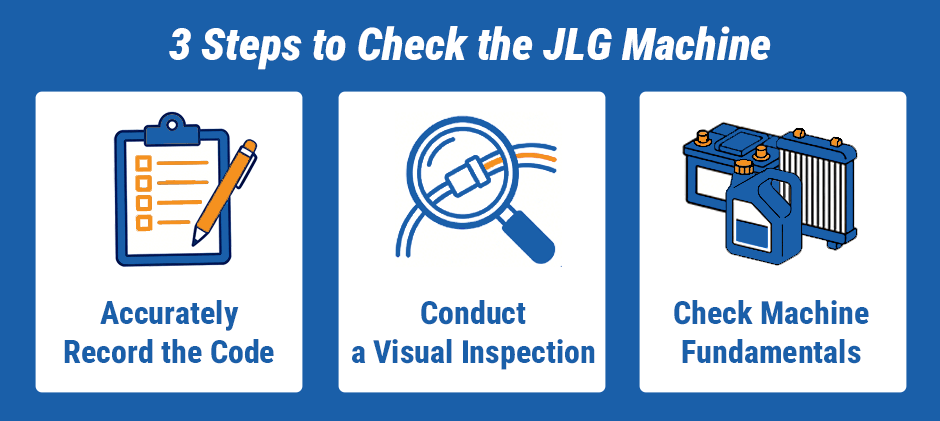
Before you buy parts, do these simple checks. They often fix the issue, or at least help you narrow it down.
1. Accurately Record the Code
Write the code down exactly as you see it.
Example: “11-02” is not the same as “11-03.”
One small change can point to a different problem.
If your display shows extra info (like “active” or “history”), write that down too.
2. Conduct a Visual Inspection
Many problems are easy to spot if you look closely.
Check the area related to the code and look for:
- Loose or unplugged connectors
- Wires that are cut, rubbed, or pinched
- Broken sensors or damaged parts
- Hydraulic leaks (wet hoses, puddles, oily dirt)
If you find a loose plug or damaged wire, fixing that may clear the code.
3. Check Machine Fundamentals
Start with the basics. These simple issues cause a lot of fault codes:
- Battery terminals clean and tight
- Main ground connection is tight (battery to frame)
- Fluid levels correct (engine oil, hydraulic oil, coolant)
- Radiator and coolers are clean (not packed with dirt or grass)
Clear Statement: A weak battery or a bad connection is one of the most common reasons you see many “random” fault codes at the same time.
3 Common JLG Code Categories
JLG codes are grouped by system. That helps you know where to look first. Most JLG fault codes fall into three main groups.
1. Engine System Codes (e.g., 11-02 Low Oil Pressure)
Engine codes can be serious. Some can shut the machine down to protect the engine.
A low oil pressure code is a stop-now warning. Running an engine with low oil pressure can destroy it quickly.
What to do:
- Shut the engine off and let it sit for a minute.
- Check the engine oil level with the dipstick. Add oil if it’s low.
- Look for oil leaks under the machine and around the engine.
- If the oil level is normal, the problem could be:
- a faulty oil pressure sensor
- damaged wiring/connector to the sensor
- a real engine oil pressure issue (more serious)
A common next step is to check the sensor connector and wiring, and test/replace the sensor if needed.
Important Statement: Never keep operating a machine with an active low oil pressure warning. It can lead to major engine damage.
2. Hydraulic System Codes (e.g., 44-07 Hydraulic Oil Overheating)
Hydraulic codes often point to oil level, oil temperature, pressure, or cooling problems.
If the code says the hydraulic oil is overheating, the system may be working too hard or not cooling well. Hot oil can wear out pumps, motors, and seals.
What to do:
- Check the hydraulic oil level in the reservoir.
- Check the hydraulic oil cooler. Clean out mud, grass, and debris so air can flow.
- Make sure the engine cooling fan is working correctly.
- Look at the hydraulic oil condition:
- Dark oil, milky oil, or a burnt smell can mean the oil is bad
- It may be time to change the hydraulic oil and filters
3. Electrical and Sensor Codes (e.g., 61-02 Low System Voltage)
Electrical codes are common. They can also be tricky because one weak electrical point can cause many different warnings.
A low system voltage code can be caused by:
- a weak battery
- poor cable connections or bad ground
- a failing alternator or charging system
- damaged wiring
What to do:
- Clean and tighten the battery terminals.
- Clean and tighten the main ground cable from the battery to the machine frame (this is a common problem spot).
- Have the battery load-tested. A battery can look fine at rest, but fail when the machine is working.
- Check charging voltage with a multimeter:
- engine running, measure at the battery
- A healthy system is usually about 13.5 to 14.5 volts
What to Do After the Repair?
Most of the time, when you fix the real problem, the active fault code will clear by itself.
Here’s what usually happens:
- You repair the issue (tighten a connector, fix a wire, replace a sensor, correct the fluid level).
- You restart the machine.
- The ECU rechecks the system.
- If readings return to normal, the warning will disappear.
Some codes may stay saved as “history” or “inactive” in the ECU. That’s normal. They won’t turn on the warning light or stop the machine, but they can help with future troubleshooting.
In Summary
Fixing JLG fault codes is not about deleting a number directly, but fixing the root cause. If you follow this guide, record the code, inspect what you can see, and check the basics first, you’ll solve many problems faster and avoid bigger financial losses.
When replacement is necessary, you can also turn to FridayParts for help. We offer high-quality aftermarket JLG parts, perfectly compatible with your machine. Shop now.
