

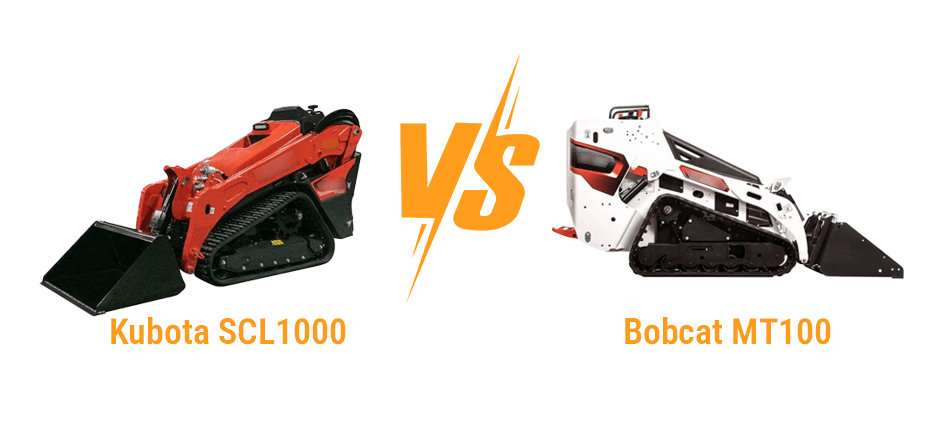
When it comes to high-efficiency mini track loaders designed for tight workspaces, the Kubota SCL1000 and Bobcat MT100 top nearly every operator’s shortlist. Both machines are compact, powerful, and easy to transport, but which one delivers better value, performance, and operator comfort in real-world off-road or construction conditions? This guide compares their technical differences, usability, and reliability to help you choose the right mini loader with confidence.
About Kubota SCL1000
Compact and powerful, the Kubota SCL1000 is designed around efficiency in confined areas and everyday reliability. Featuring a 24.8 HP Kubota diesel engine and a 1,000 lb rated operating capacity (ROC), it’s great for trenching, grading, or material transport across rough terrain.
It uses pilot-controlled joysticks that provide precise control response, especially useful when operating hydraulic attachments. With a 13.8 GPM hydraulic flow, it supports constant-pressure tools like augers or trenchers smoothly.
Serviceability is another strong point — Kubota designed the SCL1000 for quick access to filters, diagnostics, and major components. However, many operators note the front radiator layout directs heat toward the user, which can lead to fatigue on longer summer routines.
Overall, the SCL1000 is best for precision-driven tasks where hydraulic power and maneuverability take priority over operator comfort.
About Bobcat MT100
The Bobcat MT100 continues Bobcat’s compact track loader tradition of strength and operator-focused control. Running the same 24.8 HP Tier-4 diesel engine with a 1,000 lb ROC, it’s built for heavy lifting, loading, and repeated work cycles in confined construction zones.
The loader’s standout feature is its mechanical joystick system, which gives direct, responsive control and maintains smooth bucket actions even under load. Bobcat placed high focus on ergonomics — the operator platform includes split hip pads and a reference bar, reducing strain and stabilizing movement during operation.
Its sealed hydraulic hoses inside the lift arms protect against debris and impact, giving the MT100 extra reliability in forestry or gravel-heavy environments. Combined with the Bob-Tach® mounting system or optional Common Industry Interface (CII), the MT100 integrates seamlessly with dozens of attachments, making it a favorite for mixed-equipment fleets.
What Are the Differences?
While both loaders share nearly identical performance numbers, they differ sharply in control philosophy, comfort, and maintenance accessibility.
| Feature | Kubota SCL1000 | Bobcat MT100 |
|---|---|---|
| Engine Power | 24.8 HP Kubota Diesel | 24.8 HP Tier-4 Diesel |
| Rated Operating Capacity | 1,000 lbs | 1,000 lbs |
| Hydraulic Flow | 13.8 GPM | 12 GPM |
| Height to Hinge Pin | 84.7 in | 80.9 in |
| Control Type | Pilot joystick | Mechanical joystick |
| Grease Points | 16 | 10 |
| Cooling System | Front radiator (operator-facing) | Rear-mounted radiator |
| Hose Routing | Partial exposure near base | Internal within lift arms |
| Operator Design | Solid front pad | Split hip pads with bar |
| Attachment Interface | Common Industry Interface | Bob-Tach® or CII |
Performance Breakdown
- Kubota Strength: Stronger hydraulic output and smoother joystick control. Ideal for precision jobs and tool attachments that need steady oil flow.
- Bobcat Strength: Reduced cycle times and higher daily productivity. Faster lift-dump-return motion and simpler maintenance access.
- Comfort and Heat Management: Bobcat wins here — its rear radiator keeps the operator cool and reduces fatigue.
Which One Is Better?
There’s no single winner — it depends on your operation type:
- Choose the Bobcat MT100 if your work involves long daily cycles, tight maneuvering, or multiple tool swaps. It minimizes downtime with fewer grease fittings and faster service intervals.
- Go for the Kubota SCL1000 if your workflow demands fine control over attachments or heavy hydraulic performance.
When you consider machine support and parts longevity, maintenance becomes a deciding factor. That’s where sourcing reliable aftermarket components makes the difference. You can keep either machine running smoothly with quality components and filters available from Kubota parts and Bobcat parts.
How to Choose the Right One?
Picking between the two comes down to how your equipment works, who operates it, and how often it’s serviced.
1. Work Environment
If your job sites shift between landscaping, agriculture, or tight construction areas, the SCL1000’s control finesse fits well. For debris-heavy or dusty lots, Bobcat’s enclosed hose system offers vital protection.
2. Attachments and Compatibility
Both use the Common Industry Interface (CII), but Bobcat’s Bob-Tach system provides stronger locking and wear compensation, making it a better fit if you frequently change attachments.
3. Maintenance Routine
Bobcat’s organized layout and fewer grease points (10 vs. 16) simplify service, saving time. Kubota offers easy hood access and good filter arrangement, but may need slightly longer inspection intervals.
4. Budget and Longevity
Initial cost differences are narrow, but parts availability and maintenance costs define long-term value.
FridayParts helps operators save significantly with the wide availability of aftermarket Kubota and Bobcat parts, including fuel injectors, starter motors, filters, and hydraulic pumps — ensuring maximum uptime and minimum repair delay.
Conclusion
Whether you choose the Kubota SCL1000 or Bobcat MT100, performance means nothing without consistent maintenance. The best way to protect your investment is by using high-quality, compatible components. At FridayParts, we stock a wide range of durable and affordable parts for both brands — from filters and sensors to fuel systems and hydraulic kits. Keep your machine performing at its peak with trusted Kubota parts and Bobcat parts designed to fit, function, and last.
