

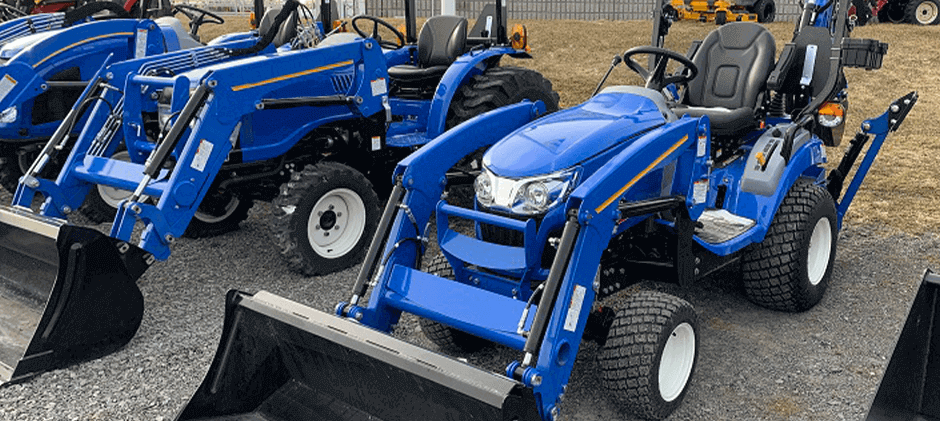
The New Holland Workmaster 25S is a 25-horsepower sub-compact tractor built for small properties (about 1–3 acres). It runs on a dependable 3-cylinder Yanmar diesel engine and comes with a 2-range hydrostatic transmission, 4WD, and a 100LC loader with a skid-steer quick-attach system. It’s easy to use, has a flat-deck design, and works well for mowing, dirt work, and landscaping. We’ve looked at real owner feedback and common technical questions to put together this practical guide to the most common New Holland Workmaster 25S problems. You’ll learn how to spot the symptoms and what simple steps you can take to fix them.
Concerns Over Build Quality and Premature Wear
Before we get into specific mechanical problems, let’s talk about something owners keep complaining about: premature wear on some non-core parts. The engine and transmission are usually pretty tough, but many owners have had issues with smaller parts that don’t last as long as the rest of the machine. Common problems include:
- Light mounting bolts are coming loose
- Retaining pins and clips are wearing out in less than a year
- Factory belts are failing for no clear reason
Replacing a few pins or a belt isn’t a big repair, but it gets annoying really fast. This just shows that some smaller, supporting parts aren’t built to last as long as the main powertrain. The best fix? Swap these weak parts for better-quality aftermarket ones. They’re made of durable materials and offer lower prices.
Excessive Vibration
One thing everyone talks about with the Workmaster 25S is the vibration, especially at low engine speeds. You’ll feel an annoying buzz through the steering wheel and frame. It only smooths out once you get the RPM above 2,200.
Your first thought might be something serious, like bad motor mounts, but this is usually just normal for how this tractor’s engine is designed. The Workmaster 25S uses a 3-cylinder engine. By nature, 3-cylinder engines have a different balance and firing order than 4‑ or 6‑cylinder engines. That’s why vibration is more noticeable at idle and low RPMs.
While some vibration is just part of the engine design, if the vibration suddenly gets way worse or changes, you definitely need to check the motor mounts and driveline.
Troubleshooting Steps:
- Check Motor Mounts: Even if the vibration is normal, you should still visually inspect the motor mounts. Look for cracked, collapsed, or oil-soaked rubber. A bad motor mount will make vibration much worse and send it straight to the tractor frame.
- Check Your Implement: Make sure the vibration isn’t coming from an unbalanced or poorly attached implement — like a mower deck with a damaged blade.
- Adjust How You Run the Tractor: The easiest fix is to run the engine at a slightly higher RPM, usually half throttle or more. That’s where the engine runs smoother, and most owners just do this normally.
Engine Overheating
An overheating engine is a big deal and can cause serious damage if you ignore it. If you see steam coming from the hood or the temp gauge goes into the red, shut the tractor down as soon as it’s safe.
On the Workmaster 25S, the cause is often pretty simple: airflow problems. When you use the tractor for mowing or in dusty conditions, it pulls in a lot of air — along with dust, grass, chaff, and debris — straight toward the radiator. When that stuff builds up, it blocks airflow and the engine can’t cool properly.
Troubleshooting Steps:
- Check the Radiator Screen: This is the most common reason this tractor overheats. If the screen is clogged, it blocks all the air that cools the engine. Turn off the engine, let it cool down a bit, then clean the screen really well.
- Clean the Radiator Fins: Even if the screen is clean, dust and dirt can get into the radiator fins. Use compressed air and blow from the engine side toward the front — the opposite way air normally flows. This removes debris instead of pushing it in deeper. You can also use a garden hose from the back, but never use a high-pressure washer. It will bend the thin fins and break the radiator permanently.
- Inspect Coolant System: If the radiator is clean, check the coolant level in the reservoir and radiator — only when the engine is completely cool. If the level is okay, start the engine with the radiator cap off and watch if coolant circulates. If nothing moves when the engine warms up, you probably have a stuck thermostat.
- Check the Fan Belt: Make sure the fan belt is tight and in good shape. A loose belt will slip, so the fan can’t pull enough air through the radiator.
Repeatedly Blowing the SOL/INST/PTO Fuse
If your engine suddenly dies, but the starter still cranks and won’t start, it’s usually an electrical problem. On the Workmaster 25S, the most common cause is the 10‑amp fuse marked “Sol/Inst/PTO”.This one fuse protects the fuel shut-off solenoid, the instrument cluster, and the PTO electric clutch. When this fuse blows, the engine dies right away. If you put in a new one and it blows again, you have a short circuit or something drawing too much power.
Troubleshooting Steps:
- Check the PTO Clutch: Unplug the wire connector for the PTO clutch. Put in a new fuse, turn the key to the ON position — don’t start the tractor. If the fuse doesn’t blow, your PTO clutch coil is shorted and needs replacing.
- Check the Fuel Shut-Off Solenoid: If the fuse still blows with the PTO unplugged, plug the PTO back in. Find the connector for the fuel shut-off solenoid on the injection pump and unplug it. Install a new fuse and turn the key on. If the fuse is okay now, the solenoid is bad.
- Check the Wiring Harness: If the fuse blows even with both parts unplugged, the issue is in the wiring harness. Look closely at all the wires in that circuit. Check for places where the insulation is worn through and touching the metal frame. Pay extra attention to where the wiring goes through or is fastened to the frame.
Once you find the bad part, use a strong, reliable replacement. FridyParts has a great selection of high-quality electrical parts, like solenoids and switches, to get your tractor’s electrical system working properly again.
Forward Pedal Goes Limp
If your forward hydrostatic pedal suddenly goes soft and feels limp, and the tractor barely moves forward — but reverse works totally fine — here’s what’s going on. You might worry it’s an expensive hydrostatic transmission failure, but the fix is usually way simpler and cheaper. Since reverse works normally, your hydrostatic pump and motor are almost certainly good. The problem is almost always in the linkage that connects the forward pedal to the transmission.
Troubleshooting Steps:
- Check for Obstructions: First, look carefully around the forward pedal. A rock, stick, or mud might be blocking it from moving fully.
- Inspect the Control Linkage: Get under the tractor and follow the metal rod from the forward pedal to the lever on the hydrostatic transmission. Look for these issues:
- Disconnected Pins: A cotter pin might have broken or fallen out, so the linkage isn’t connected to the pedal or transmission lever.
- Bent Rod: The rod could be bent, so it can’t move the transmission lever all the way forward.
- Worn Bushings: Check the pivot points on the pedal and linkage. Worn or missing bushings create too much slack, so your pedal doesn’t fully control the transmission.
- Check the Return Spring: A broken or loose return spring on the pedal can make it feel limp and not go back to neutral properly.
Low Power to the Transmission
When the tractor feels low on power, the transmission looks like it’s working hard, but the machine barely moves—especially under load. A lot of people think the hydrostatic transmission is failing, but the first thing you should check is the engine. If the engine doesn’t have enough power, it can’t properly drive the hydrostatic pump. That makes it feel like the transmission is weak when the real problem is the engine, not the transmission.
Troubleshooting Steps:
- Check Engine Filters First: Before assuming a transmission problem, always start with the two most common power-robbers: the air filter and the fuel filter. A clogged air filter starves the engine of oxygen, while a clogged fuel filter restricts fuel flow. Both will cause significant power loss that feels like a weak drivetrain. These are inexpensive and easy to replace.
- Verify Engine RPM: Ensure you are operating the tractor at the proper working RPM. Hydrostatic transmissions are designed to work most efficiently when the engine is running at or near its rated PTO speed, typically at a high throttle setting.
- Check Hydrostatic Fluid: Verify that the hydrostatic transmission fluid is at the correct level and is in good condition. Low or old, degraded fluid can cause poor performance and overheating of the transmission.
- Inspect Linkage Adjustment: As with the limp pedal issue, ensure the control linkage is properly adjusted and not limiting the transmission’s range.
Before you consider an expensive transmission repair, make sure your engine is breathing and getting fuel properly. A new air filter element or fuel filter is a small investment that can completely restore your tractor’s performance.
Fix Common New Holland Workmaster 25S Problems
Fixing your New Holland Workmaster 25S doesn’t have to be a headache. Start with the simplest fixes, and you can usually find and repair most common problems yourself. At FridyParts, we believe you shouldn’t have to choose between quality and price. We carry a huge selection of high-quality aftermarket parts for many heavy equipment brands, including New Holland. Keep your New Holland Workmaster 25S running strong.
