

Choosing the right battery for your tractor or heavy machine shouldn’t be confusing. Using the wrong one can cause no-start problems and lost working time. This simple guide — with an easy-to-read tractor battery size chart — shows you how to find the correct battery every time. You’ll also learn what all those numbers mean, so you can pick the right battery and get back to work faster.
Why Does the Right Battery Size Matter?
The right battery size is important for both performance and safety. A battery that is too small or the wrong shape can vibrate loose, damaging the cables, posts, or battery tray. Even worse, it might not have enough power to start your engine — especially on cold mornings.
As many experienced mechanics say: “The right battery fit isn’t just about size — it’s about power, safety, and reliability.” (Related Reading: Tractor Battery Maintenance: Winter Care for Reliable Spring Starts)
What Do Battery Specifications Mean?
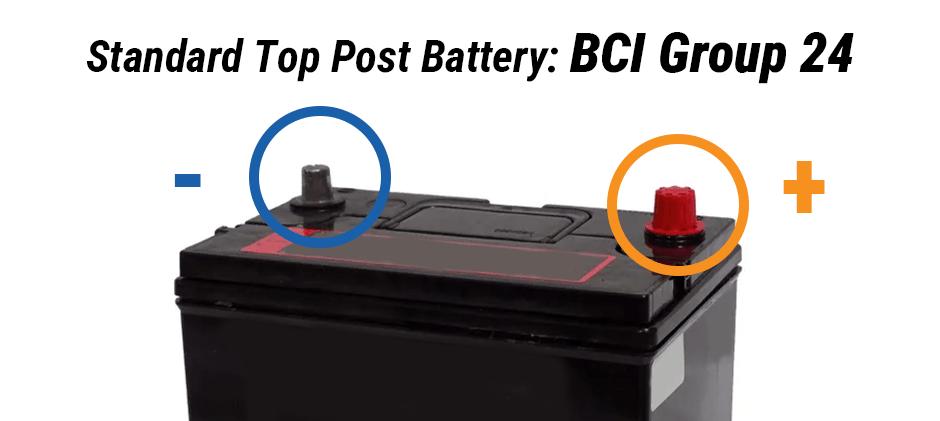
Every battery has numbers and letters on its label.
Here’s what the four main specifications mean — once you understand these, picking a battery becomes simple.
1. BCI Group Size
BCI Group Size is the most important number.
It tells you the battery’s physical size (length, width, and height) and the position of the positive (+) and negative (−) terminals.
If the group size doesn’t match your original battery, the new one may not fit in the tray or connect properly.
2. Cold Cranking Amps (CCA)
Cold Cranking Amps (CCA) measure how much power your battery can deliver in very cold weather (0°F / –18°C).
Diesel engines — like those in tractors and excavators — need higher CCA because they have higher compression.
If you work in cold climates, choose a battery with a strong CCA rating for reliable starts.
3. Reserve Capacity (RC)
Reserve Capacity (RC) tells you how long the battery can run your essential electrical systems if the alternator fails. (Related Reading: Bad Alternator vs Bad Battery: How to Tell the Difference?).
A higher RC is better for machines with cabs, lights, or electronics, because it keeps your systems running if the charging system stops temporarily.
Think of RC as your “backup power supply.”
4. Terminal Configuration
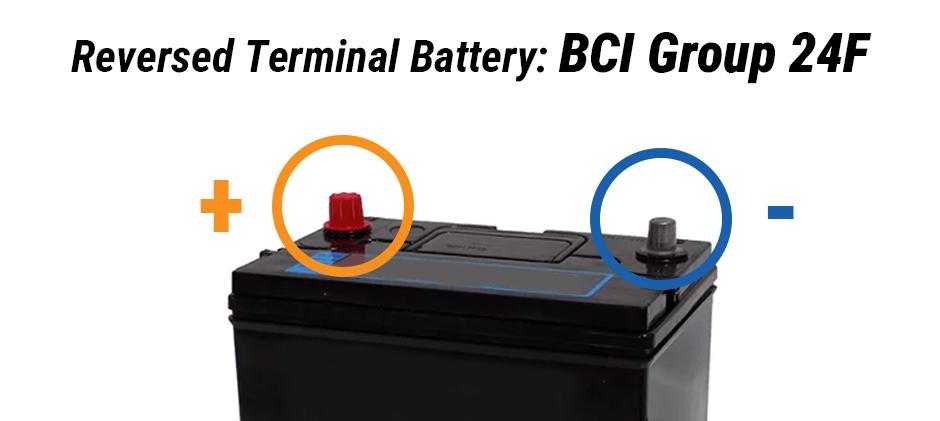
Terminal configuration determines where the positive and negative posts are placed.
Some tractors — especially Kubota, Massey Ferguson, and similar brands — use reversed layouts, marked with an “F” or “R” (for example, 24F or 51R).
Always double-check that the positive terminal on the new battery is on the same side as your old one.
If not, your cables might not reach.
The Universal Tractor & Heavy Equipment Battery Size Chart
Below is a quick chart showing the most common battery group sizes for off-road and agricultural machinery.
Use it as a starting point to find a battery that fits your tractor or equipment.
| BCI Group Size | Common Machine Type | Typical Applications & Brands |
|---|---|---|
| U1 / U1R | Lawn & Garden Tractors | Ride-on mowers, small tractors (John Deere, Cub Cadet). |
| 51R | Sub-Compact Tractors | Machines with limited space (Kubota BX Series, Massey Ferguson GC). |
| 24 / 24F | Compact & Utility Tractors | Popular size for many utility models (John Deere 2–4 Series, Kubota L Series). |
| 27 / 27F | Large Utility & Small Ag Tractors | Tractors with cabs or higher electrical needs (Case IH Farmall, larger John Deere models). |
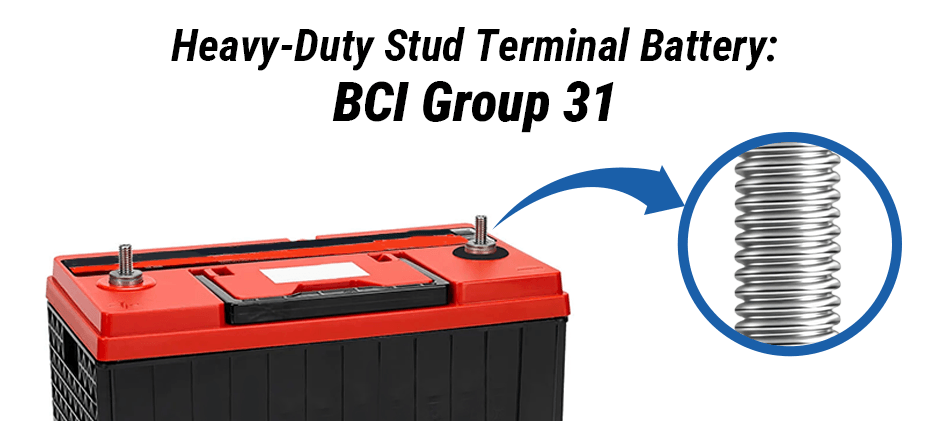
| 31 | Heavy Ag & Construction | Large tractors, excavators, and skid steers often use stud terminals (Kubota M Series, CAT, Komatsu). |
How to Find Your Correct Battery Size in 3 Steps
Follow these three simple steps to make sure you get the correct replacement battery every time.
1. Check Your Owner’s Manual
The manual lists the correct BCI Group Size and the minimum CCA your machine requires.
This is the most reliable source of information.
2. Inspect the Old Battery
Your current battery label tells you everything — the group size (like 31S or 24F) and CCA.
Take a quick photo before replacing it, so you always have the numbers handy.
3. Measure and Match
If your old label is unreadable, use a tape measure.
Note the length, width, and height of the tray and check the terminal placement.
Then find a battery with the same size and layout — this guarantees a proper fit.
Final Thoughts
Finding the right battery isn’t complicated once you know what to look for:
- Match the BCI Group Size
- Check the CCA rating for your climate
- Verify the terminal layout
Following this simple guide — and using the chart above — ensures you always get a perfect fit, strong starts, and dependable performance from your machine. When it’s time to replace your battery, choose one that meets your machine’s specs and fits securely. Explore the FridayParts wide battery accessories collections right now.
