

The red engine overheating light on your dashboard is a dangerous sign, which means your engine is running too hot. When this occurs, you should pull over and stop immediately, or it will lead to costly damage. That’s what the guide is written for. This guide explains why engines overheat, how to fix the problem safely, and what you can do to prevent it from happening again.
What Should You Do in the First 60 Seconds?
Your actions in the first minute can save your engine.
Stay calm, and follow these steps in order while you find a safe place to stop.
1. Turn Your Heater to Full Blast.
While pulling over, turn your cabin heater to the highest temperature and maximum fan speed.
This helps move some of the heat from the engine into the cabin, working like a small backup radiator.
2. Stop the Machine and Shut It Down.
Park on a flat, safe spot and turn the engine off right away.
Every second the engine runs, while overheating causes more damage.
3. Do Not Open the Hood Right Away.
The engine bay will be extremely hot. Wait before opening it — steam or boiling coolant can cause severe burns.
4. Let the Engine Cool Completely.
Wait at least 30–60 minutes, or longer if needed.
Don’t rush or try to check anything until the engine feels cool to the touch.
“Patience now saves your engine later — opening it too soon can turn a small problem into a dangerous one.”
Is the Engine Overheating Light Really That Serious?
Yes — it’s one of the most serious warnings your machine can give.
An overheating engine can quickly cause
- Warped or cracked cylinder heads
- A blown head gasket
- A seized motor
Safety Tip
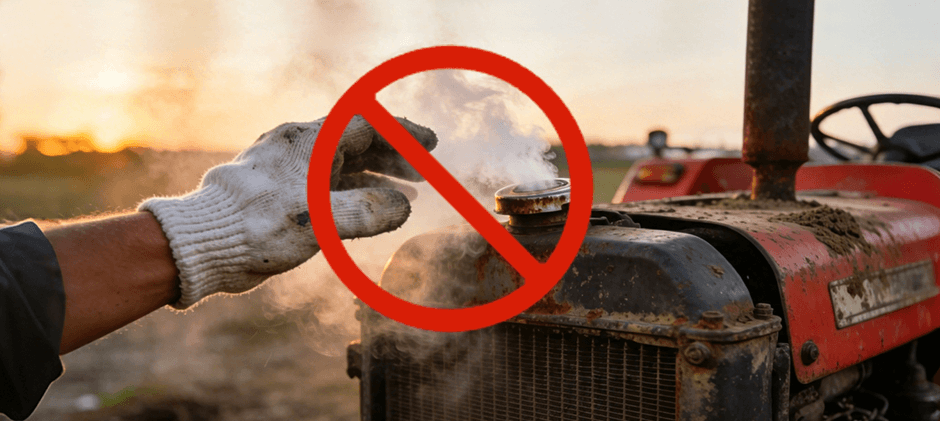
- Never open the radiator cap on a hot engine.
- The cooling system is under high pressure — opening it too soon can make boiling coolant spray out and cause serious injury.
Can You Drive with the High Temperature Light On?
No. You should never continue driving or working once the overheating light comes on.
Doing so can completely destroy your engine.
Some modern machines may enter a “limp mode,” which lowers power to protect the engine.
But this is only a temporary safety feature — not an excuse to keep going.
If the light is on, the only safe ride is on a tow truck, not under its own power.
Overheating Light vs. Temperature Light: What’s the Difference?
Understanding the lights helps you react correctly:
- Blue Temperature Light: This means the engine is still cold and warming up. It’s just information, not a warning.
- Red Overheating Light: This is the danger signal. It means the coolant is too hot. Stop immediately.
- Flashing Red Light: Some machines use a flashing red light for a serious fault — either the sensor or the cooling system itself is failing.
Stop and get professional help right away.
6 Common Reasons Your Engine Is Overheating
Once the engine has fully cooled down, you can safely look for the cause.
Most overheating problems come from one of these six reasons:
- The Coolant Level Is Too Low: This is the most common issue, often caused by a leak in a hose, radiator, or water pump.
- A Stuck Thermostat: The thermostat controls coolant flow. If it’s stuck closed, coolant can’t travel to the radiator, and the engine overheats fast.
- A Clogged or Blocked Radiator: Mud, grass, or dirt on the radiator fins blocks airflow. Rust or debris inside can block coolant flow, too.
- A Broken Fan or Slipping Belt: A damaged fan or a loose/broken drive belt will stop the cooling system from working.
- A Failing Water Pump: The water pump moves coolant through the engine. If it breaks, the coolant stops flowing, and the heat builds up quickly.
- A Faulty Sensor or Radiator Cap: In some cases, a bad temperature sensor gives a false reading, or a worn radiator cap fails to hold pressure, making the coolant boil sooner.
How to Safely Diagnose the Problem
Only check the system once the engine is completely cool.
Touch the metal parts to make sure they’re not hot before you start.
First: Check the Coolant Level and Look for Leaks
- Look at the coolant reservoir (the transparent plastic tank).
- If it’s low or empty, that’s a clear sign of a leak.
- Inspect the hoses, radiator, and water pump area for wet spots, drips, or dried coolant stains.
Second: Inspect the Radiator and Belts
- Make sure the radiator fins are clean — no mud or grass blocking airflow.
- Check all belts for cracks or looseness. A bad belt means the fan or pump might not be working properly.
Third: Check the Oil
- Pull out the engine oil dipstick and look at the oil.
- If the oil looks milky or foamy, coolant may be getting into the engine — a sign of a blown head gasket.
- If you see this, do not restart the engine.
How Can You Prevent the Engine from Overheating?
A few simple habits and regular checks can prevent most overheating problems:
- Perform Regular Checks: Before every work shift, check the coolant level and look under the machine for signs of leaks.
- Keep the Radiator Clean: Clear the radiator of mud, dust, and grass often to keep air flowing freely.
- Follow Your Service Schedule: Flush and refill the coolant as recommended.
It’s smart to replace the thermostat and radiator cap during scheduled maintenance to keep the system reliable.
When Should You Call a Mechanic?
Call a qualified mechanic if:
- The engine overheats again after restarting.
- You see milky oil, which points to a head gasket issue.
- You can’t find where the coolant is leaking.
- The machine sounds strange or needs to be towed.
A professional can run a pressure test or check the water pump, thermostat, and radiator for deeper problems.
Conclusion
The engine overheating light is your final warning to protect the machine. During the inspection processes, whenever you spot part damage, turn to FridayParts. We supply high-quality water pumps, thermostats, and more to keep your cooling system working safely.
