

When the red oil pressure light turns on in your excavator, tractor, or loader, stop the engine right away. If you keep running it, you could turn a small issue into a complete engine failure. This guide is here for you to avoid this problem. We will explain what to do immediately, why this warning occurs, and how to safely identify the cause.
What Should You Do Immediately?
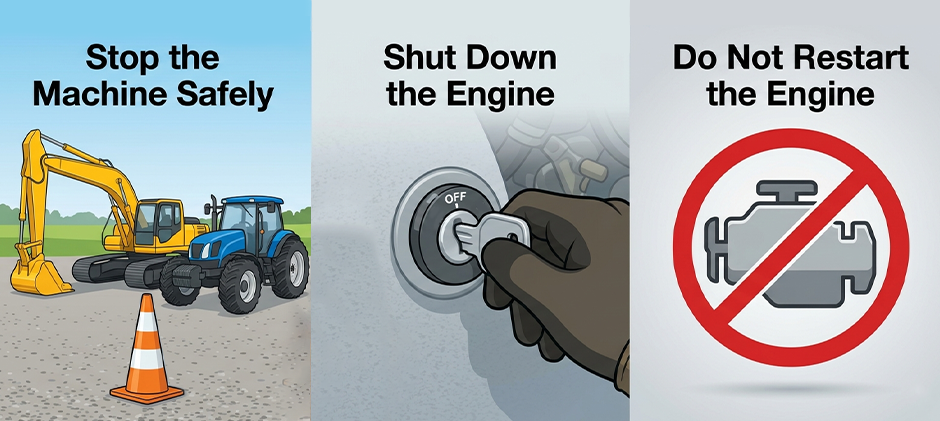
Your first actions matter most. Stay calm and follow these quick steps:
1. Stop the Machine Safely.
Pull your equipment to a flat, safe spot, away from active work areas or traffic.
2. Shut Down the Engine.
Turn the key off right away. Do not let the engine idle — every second without oil pressure causes damage.
3. Do Not Restart the Engine.
Don’t try to “see if the light goes out.” Starting again with no oil pressure can break your engine within seconds.
“Running a machine with no oil pressure is like asking it to work with no blood flow — failure happens fast and completely.”
Why Is the Oil Pressure Light So Serious?
Your engine needs oil pressure to keep its moving parts safe.
Oil acts like blood for the engine — it lubricates, cools, and cleans all the parts that move at high speed.
When oil pressure drops:
- Metal parts grind against each other.
- The engine gets hot very quickly.
- Bearings and pistons can seize and crack.
The result is total engine failure — a repair that can cost thousands. That’s why the light means stop immediately.
5 Common Reasons Your Oil Pressure Light Is On
Once the engine is off and it’s safe to look, you can find out what caused the light. In most cases, it’s one of these five reasons.
1. The Oil Level Is Too Low
This is the most common reason. If the oil level drops below the pickup tube, the pump sucks in air instead of oil, and pressure disappears.
It can happen because of leaks or normal oil loss over time.
2. The Engine Oil Is Worn Out or Incorrect
Oil wears out after long use. When it breaks down, it becomes too thin to hold pressure, especially when the engine is hot.
Using the wrong oil grade (for example, oil that’s too thin for your machine) can also cause low pressure and the warning light to appear.
3. A Clogged Oil Filter
Most filters have a small bypass valve that lets oil move even when clogged, but that oil will be dirty and unfiltered, which causes more wear inside the engine.
4. A Failing Oil Pressure Sensor
Sometimes, the problem is not the oil pressure — it’s the sensor that measures it.
If this sensor fails, it might send a false warning to your dashboard.
Although this is a “best-case” situation, never assume it’s false without checking the real pressure first.
5. A Worn-Out Oil Pump
This is the most serious cause. The oil pump keeps oil moving through the engine.
If it wears out or breaks, the engine gets no oil — and will fail quickly. Replacing a damaged pump requires a professional repair.
How to Diagnose the Problem (With the Engine OFF)
With the engine turned off and cooled down, you can follow a safe and simple path to find the cause.
Always start with the easiest and least costly checks.
Step 1: Check the Oil Level and Condition
- Let the engine cool down for 10–15 minutes.
-
Grab the dipstick, wipe it clean, reinsert it, and then pull it out again. It’s important to know how to read the engine oil dipstick correctly.
- Check the oil level:
- If it’s below the “Low” or “Add” mark, that’s probably why the light came on.
- Check the oil quality:
- Milky or foamy? This means coolant is mixing with oil — a serious internal leak. Don’t restart the engine.
- Gritty or full of particles? The oil is dirty or full of metal dust — a sign of engine wear.
- Burnt smell? The oil is too old or overheated.
If the oil level is low, refill it with the correct oil grade. Look under the machine for leaks.
If the oil looks dirty or smells bad, change both the oil and filter before restarting.
Step 2: Consider the Easiest Fix (the Sensor)
If your oil level is correct and the oil looks clean, the oil pressure sensor might be the issue.
Step 3: Make a Safe Decision Based on Your Findings
After checking the oil level and condition, you have critical information. Use it to decide what to do next, always prioritizing engine safety.
A: The Oil Level Was Very Low.
- Finding: The dipstick showed the oil level was significantly below the “Low” mark, but the oil itself looks clean.
- Action: After refilling the oil to the “Full” mark, you have addressed the most likely cause. This is the only scenario where a cautious restart is justifiable.
- How to Restart Safely: Start the engine, but be prepared to shut it down instantly. If the light goes out within 2-3 seconds and the engine sounds normal (no knocking, ticking, or grinding), you have likely solved the problem. If the light stays on or you hear any unusual noises, shut it down immediately and proceed to Step 4.
B: The Oil Was in Poor Condition.
- Finding: The oil was milky, gritty, or smelled burnt, even if the level was correct.
- Action: DO NOT RESTART THE ENGINE. A simple oil change will not fix an internal coolant leak (milky oil) or remove all metal particles (gritty oil). The engine needs a professional inspection. Proceed directly to Step 4.
C: The Oil Level and Condition Are Perfect.
- Finding: The oil is full and clean, leaving a faulty sensor or an internal mechanical issue as the likely cause.
- Action: You can choose to replace the oil pressure sensor, as it’s an inexpensive and common fix. However, do not start the engine yet. Even after replacing it, you cannot be 100% sure the problem wasn’t a more serious one. The safest path is to proceed to Step 4.
Step 4: When to Get a Professional Diagnosis
You should call a qualified mechanic for a professional diagnosis if:
- The oil pressure light stays on after a cautious restart (from Scenario A).
- You found the oil was contaminated (milky or gritty).
- The oil level and condition were perfect, and you want to be certain before starting the engine again.
A mechanic will perform a manual oil pressure test using a mechanical gauge. This test bypasses the sensor and measures the actual oil pressure coming from the pump. It is the only definitive way to confirm if your engine’s lubrication system is healthy or if there is a serious internal problem like a failing oil pump or a blocked oil passage.
Conclusion
The oil pressure light means stop now, which protects your machine from heavy damage and costly repairs. By checking the oil level, condition, and sensor step by step, you can spot the problem safely before it becomes serious. If your inspection shows that you need a new oil pump, oil filter, or pressure sensor, using high-quality parts built for your equipment will help ensure strong oil pressure and long engine life.
Explore FridayParts’ collection of engine lubrication system components to keep your machine running safely and reliably on every job.
