

If our tractor (or any diesel-powered off-road machine) is losing power, running hotter, or just “feels tired,” the cause is often simple: oil that’s past its useful life for the way we work. In this guide, we’ll lay out tractor oil change timing by hours and conditions, the warning signs that matter, and how engine type changes the schedule—so we can cut downtime and avoid preventable engine wear.
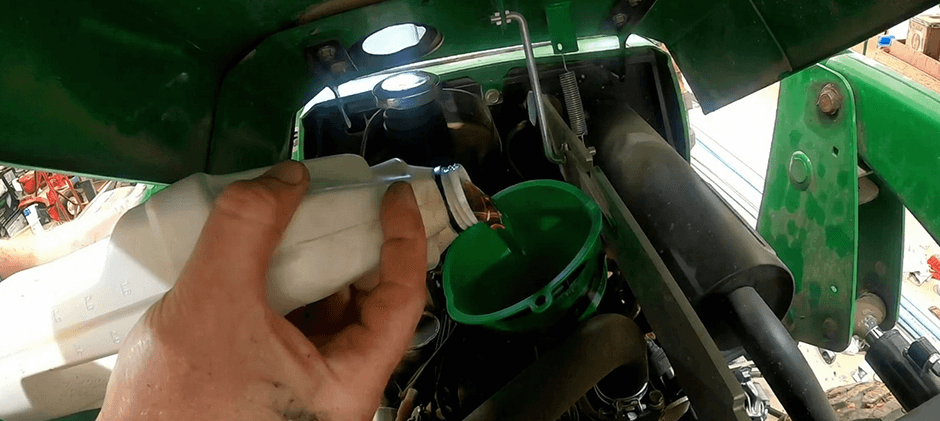
Why Tractor Need Timely Oil Changes?
Engine oil does three jobs at the same time: it lubricates, cools, and carries contaminants to the filter. In off-road work, that last job becomes the hardest. Compared with light on-road use, tractors and other off-road machines spend more time:
- Pulling heavy loads at low ground speed (high engine load, limited airflow)
- Working in dust, chaff, and dirt (more particles around seals and breathers)
- Idling or doing short runs (more soot and moisture buildup in the crankcase)
- Sitting between seasons (condensation and acid formation while parked)
Even “good-looking” oil can be worn out chemically. Heat and oxygen slowly break oil down (oxidation), and diesel engines naturally create soot. Add dust and moisture, and oil can lose its ability to hold contaminants in suspension. Once that happens, deposits form, oil passages can narrow, and wear increases at the exact places we can’t see—bearings, rings, cam surfaces, turbo bearings (if equipped), and valve train parts.
A timely oil change is cheaper than one bad week of downtime. For many owners, the real cost isn’t the oil—it’s lost work time, missed weather windows, and secondary damage from running with restricted oil flow.
Signs That Tractor Oil Needs Changing
Hours-based schedules are the backbone, but real-world conditions don’t always follow neat intervals. You should check the oil level and condition routinely, and act early when these signs show up.
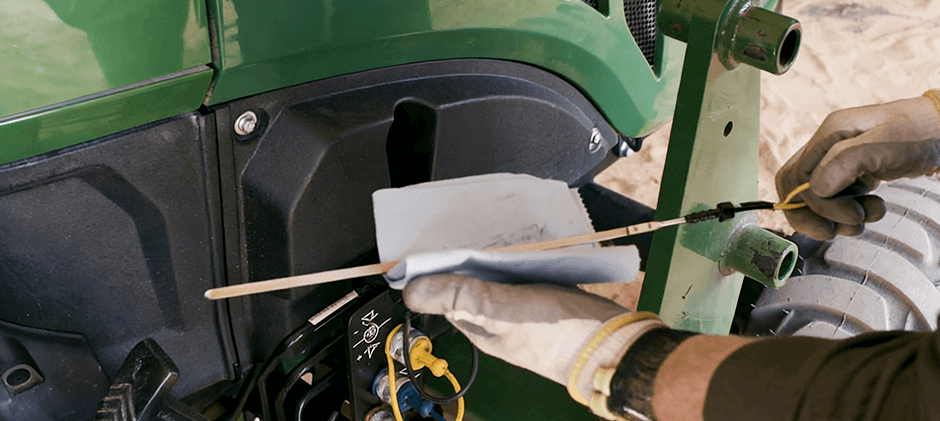
Quick checks you can do in minutes
Using a clean rag and the proper checking routine, we can spot issues before they become failures. A worn or hard-to-read dipstick can lead to chronic underfill or overfill, so replacing it is not “cosmetic.” If the markings are faded, the rod is bent, or the fit is loose, consider a new oil dipstick to keep readings consistent.
- Oil looks gritty when rubbed between fingers (possible dirt ingress)
- Oil is very black and thick, much earlier than usual (heavy soot loading)
- Fuel smell in the oil or rising oil level (fuel dilution; can reduce viscosity)
- Milky or foamy oil (possible water/coolant contamination—stop and diagnose)
- Lower oil pressure than normal (could be thinning oil, restriction, or wear)
- Noisier valve train / rougher operation after warm-up (oil film weakening)
- More frequent top-ups (consumption can rise when oil control worsens)
What “dark oil” really means
Dark oil alone doesn’t prove failure—diesel oil can darken fast. What matters is how fast it darkens for your machine and whether performance, pressure, or consumption changes at the same time. If we want to be precise, periodic oil analysis can confirm soot load, fuel dilution, and wear metals—especially for machines with long service intervals.
How Often Does Your Tractor Need an Oil Change?
There isn’t one “magic number,” but there are reliable patterns for off-road machinery.
A practical baseline schedule
Many operators use a framework like this:
- First oil change: around 50 hours on a new/rebuilt engine (break-in debris control)
- Ongoing changes: commonly every 200–250 hours
- Low-hour machines: at least once per year, even if hours are low (storage moisture/acid risk)
That’s the baseline—then you adjust for our environment and duty cycle.
Conditions that justify shorter intervals
If our machine spends a lot of time in any of the conditions below, you should shorten the interval or add oil analysis:
- Heavy dust/chaff (field work, dry lots, material handling)
- High idle time (loader work, intermittent tasks)
- Extreme heat or high sustained load
- Frequent cold starts and short runs (more condensation)
- Known fuel quality issues or high biodiesel blends (higher dilution risk)
Interval guide table
Use this as a planning tool, then confirm with the operator manual and real checks.
| Usage profile | Typical environment | Suggested oil change interval | What to watch |
|---|---|---|---|
| Light seasonal use | moderate dust, steady loads | 200–250 hours or 12 months | moisture from storage |
| Heavy tillage / constant pull | high load, hot oil temps | 150–200 hours | oxidation, consumption |
| Loader / stop-go work | high idle time, short cycles | 150–200 hours | soot + fuel dilution |
| Very dusty conditions | fine dust/chaff, frequent filter loading | 100–150 hours (or analysis) | grit, air leaks |
| Mixed fleet with varied duty | unpredictable | 200 hours + oil analysis sampling | Keep records consistent |
A simple maintenance log (hours, date, oil type, filter part number, top-off volume) pays back quickly. It helps us catch “silent” problems like rising consumption or a shortening interval trend.
The Role of Engine Type in Oil Change Frequency
Not all diesel tractor engines stress oil the same way. Engine design and emissions hardware can change how quickly oil loads up with soot, heat, and fuel.
1) Turbocharged vs naturally aspirated
Turbo engines can run at higher temperatures around the turbo bearings. Oil quality and cleanliness matter more, and missed changes can show up as smoking, higher consumption, or turbo wear over time. That doesn’t always mean drastically shorter intervals, but it does mean you should be stricter about oil specs and filter changes.
2) Modern emissions systems
Engines with EGR/aftertreatment designs often push more soot into the oil than older designs—especially if the duty cycle includes a lot of low-load operation. That can shorten effective oil life even if the hour meter says you’re “fine.”
3) Engine condition and age
As engines wear, blow-by rises, and oil contamination accelerates. An older engine that still “runs strong” might still need shorter intervals because:
- It puts more soot into the oil
- It may dilute oil with fuel more easily
- It may consume oil, increasing the risk of running low between checks
4) Oil selection and viscosity range
Oil change frequency isn’t only about time—it’s also about using the right oil type for diesel off-road service and ambient temps. If you’re unsure what oil grade/spec is best for our operating range, our internal reference is this diesel tractor oil selection guide, which helps narrow down what to look for when choosing oil for diesel tractor engines.
Bottom line: engine type doesn’t replace hour-based service, but it explains why two tractors with the same hours can have very different oil conditions.
Should You Change Your Oil on Your Own?
For many off-road owners, DIY oil changes are realistic—if you do them safely and consistently. The risk isn’t the basic drain-and-fill; it’s mistakes that create new problems (wrong oil, wrong filter, underfill/overfill, contamination, stripped threads).
DIY makes sense when:
- You have safe access (level ground, proper stands/ramps, spill control)
- You can dispose of used oil and filters responsibly
- You can follow the torque and fill specs from the operator manual
- You can keep a clean process (dust and dirt are the enemy)
A solid DIY checklist
- Warm the engine to operating temp (oil drains better), then shut down safely
- Clean around the fill and drain points before opening
- Drain fully; inspect the plug and sealing surface
- Replace the filter every time (don’t “stretch” it)
- Pre-lube the new filter gasket; install per spec
- Refill to the correct level; run briefly; re-check after a short rest
- Log hours/date and note any unusual findings (fuel smell, metal flakes, milky oil)
Don’t ignore the filter side of the job
A fresh filter is not optional. A restricted filter can reduce flow or bypass filtration when it matters most. If you’re stocking service items for multiple machines, it’s efficient to order an oil filter along with the oil change supplies so you’re not delaying the service because one part is missing.
Oil service often turns into other maintenance: a cracked seal, a damaged connector, a worn sensor, or a leaking line you only notice once panels are open. Keeping a reliable source for tractor parts helps us finish the job in one cycle instead of parking the machine mid-season. And if troubleshooting points deeper into the powerplant—fuel delivery issues, cooling components, or wear items—having access to compatible engine parts can turn a “weeks-long delay” into a planned repair.
Conclusion
Changing oil on schedule keeps off-road engines reliable, but the best interval depends on hours, dust, load, idle time, and storage. Watch for early warning signs, replace the filter every time, and adjust intervals for engine type and duty cycle. When it’s time to restock service items, FridayParts supports you as an aftermarket parts supplier with high-quality products at affordable prices, a vast inventory, and wide compatibility across many heavy equipment brands.
