

Knowing when to use 4 High vs. 4 Low helps your machine get better traction, avoid getting stuck, and reduce wear on drivetrain parts (transfer case, driveshafts, axles, differentials). This guide explains it in simple, easy language.
What Are the 4 High and 4 Low?
Your 4WD system is controlled by a transfer case. Think of it like a strong gearbox that sends power to the front and rear axles. 4H and 4L are two modes inside the transfer case, made for different jobs.
What is 4 High (4H)?
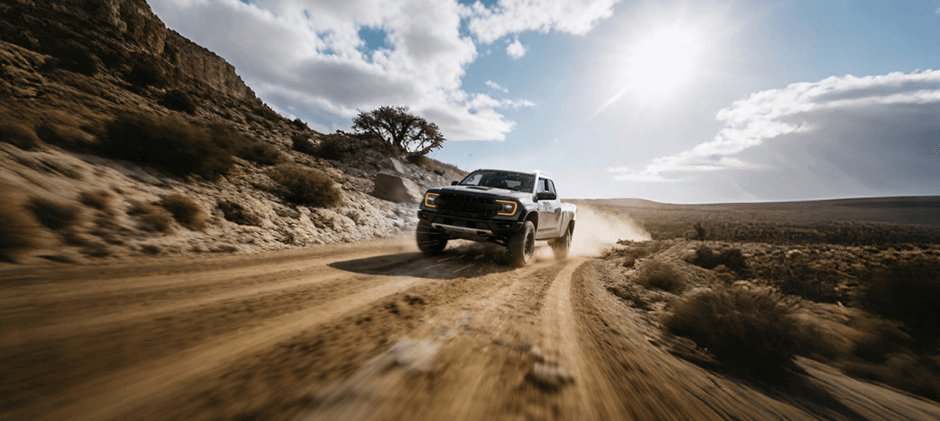
4H = more grip, normal driving speed.
In 4H, the transfer case locks the front and rear driveshafts together so the front and rear wheels pull together. This helps a lot on slippery ground.
The key point is the 1:1 gear ratio. In simple terms, it does not multiply torque. Your machine still uses its normal gears, so you can travel at normal working speeds while getting 4-wheel traction.
(Always follow your operator’s manual for speed limits.)
What is 4 Low (4L)?
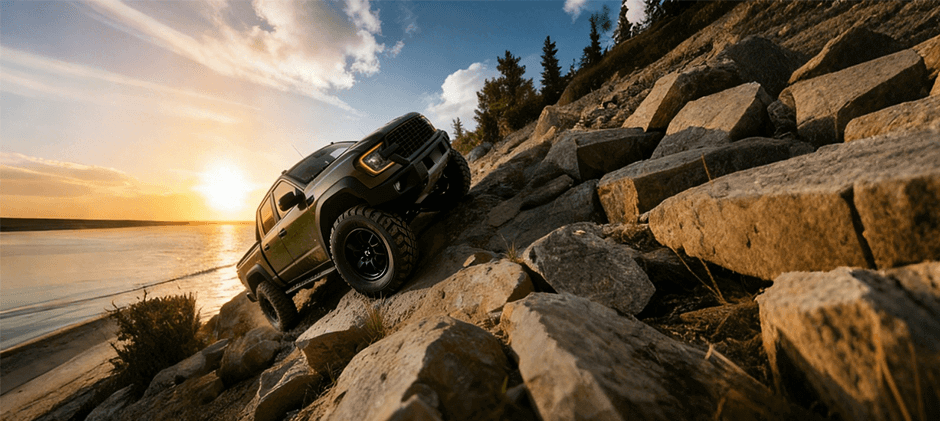
4L = slow speed, big pulling power, better control.
In 4L, the transfer case uses a lower gear set to create a reduction ratio, often around 2:1 to 4:1.
This means the engine’s power gets multiplied before it reaches the wheels. You gain more force, but you lose a lot of speed. 4L is for tough, slow work—not for driving around the site quickly.
Key Takeaway: Think of it like this: 4 High is for traction at speed, while 4 Low is for power and control.
4H vs. 4L Comparison
| Item | 4 High (4H) | 4 Low (4L) |
|---|---|---|
| Best for | Slippery ground with normal travel | Tough situations that need slow control + max force |
| Speed | Normal working speed (check manual) | Low speed only (often very slow) |
| Power/torque | Normal (no extra torque multiplication) | High (torque multiplied by gear reduction) |
| “When to use” examples | Mud, snow, sand, gravel roads; moving around the site | Steep hills; heavy pulling; recovery; rocks/ditches/logs |
| “Do not use” note | Avoid dry pavement | Avoid dry pavement; don’t use it for travel |
When Should You Use 4 High vs. 4 Low?
Here are simple real-world situations to help you choose the right mode.
3 Scenarios for Using 4 High
Use 4H when you need more grip than 2WD, but you still want to move at a normal pace.
- Operating on Slippery, Loose Surfaces: Mud, gravel, snow, sand—anything where tires can spin easily. 4H helps you keep moving and steer better.
- Hauling Moderate Loads on Uneven Ground: Carrying materials across mixed ground (field + hardpack + loose dirt). 4H improves stability and reduces wheel spin.
- Light to Moderate Off-Roading: Every day, work on rough trails, ruts, small hills, and uneven land. 4H is usually enough.
3 Scenarios for Using 4 Low
Use 4L when you need maximum force and slow, careful control.
1. Climbing or Descending Steep Grades
- Going up steep slopes: 4L gives you the torque to crawl without stalling.
- Going down steep slopes: 4L gives strong engine braking, helping you control speed without overheating brakes.
2. Pulling Extremely Heavy Loads or Vehicle Recovery: Pulling a heavy trailer out of deep mud, towing stuck equipment, or doing a hard recovery—4L gives you the extra muscle.
3. Navigating Technical Terrain: Crawling over big rocks, deep ditches, logs, or obstacles that need careful wheel placement. 4L helps prevent sudden jerky moves and gives better control.
What Are the Rules for Switching and Use?
Using 4WD the wrong way can cause expensive drivetrain damage. These rules matter.
How Do I Switch Between Modes Safely?
Always check your operator’s manual, but these are common rules:
Switching to 4 High: Many machines can shift from 2H to 4H while moving at low to moderate speed. Stay within the manual’s speed limit.
Switching to 4 Low:
- Come to a complete stop
- Shift the main transmission to Neutral (N)
- Then shift the transfer case into 4L
Simple rule: to go into 4L, stop first.
Why Shouldn’t I Use 4WD on Dry Pavement?
Do not use part-time 4WD (4H or 4L) on dry asphalt or concrete.
When you turn, the inside and outside wheels travel different distances. Part-time 4WD locks front and rear together, so the drivetrain “binds up” and builds stress (driveline bind/wind-up). Over time, this can damage:
- the transfer case
- driveshafts and U-joints
- axles and differentials
Ignoring these rules can lead to expensive repairs, including a full transfer case replacement.
Final Thoughts
Use 4H for slippery ground when you still need normal working speed; Use 4L for steep, heavy, or technical jobs where slow control and extra torque matter most.
Shift the right way (especially for 4L), and avoid using part-time 4WD on dry pavement to prevent driveline bind. Off-road work is hard on drivetrain parts, even when you operate correctly. If you’re seeing wear or planning preventative maintenance, FridayParts carries a wide range of drivetrain and 4WD-related components—such as U-joints, axle shafts, differential parts, and transfer-case components—to help keep your equipment moving.
