

Finding the best diesel fuel additive for winter prevents your equipment from leaving you stranded in freezing temperatures. When the cold hits, untreated diesel fuel quickly thickens and gels, clogging filters and stopping engines dead in their tracks. Include Power Service Diesel Fuel Supplement for cetane boosting, Hot Shot’s Secret EDT+ for extreme cold protection, and Howes Diesel Treat for safe water removal. We have evaluated the top options on the market to help you keep your fuel flowing, ensure faster cold starts, and protect your engine components all season long.
What Does a Winter Diesel Fuel Additive Do?
When it gets below freezing, diesel acts differently. Diesel has natural paraffin wax. When it’s warm, this wax stays liquid and burns for power. But in cold weather, those wax molecules stick together and turn into solid crystals. That’s fuel gelling. If the crystals get too big, they clog your fuel filters and fuel lines.
Winter diesel additives work on those wax crystals. They don’t take the wax out of the fuel. The chemicals coat the crystals instead, so they stay tiny enough to go right through the filter without blockages. This brings down the Cold Filter Plugging Point (CFPP) — the temperature where your filter will clog up. Good winter additives do more than stop gelling:
- Keeps fuel flowing easy in the cold, so your fuel pump works less hard.
- Raises cetane. Cetane tells you how fast diesel ignites. Higher cetane means faster, smoother cold starts and less wear on your battery and starter.
- Adds lubrication. Today’s ultra-low sulfur diesel (ULSD) doesn’t have the natural lube old diesel had. The additive puts that lubricity back to protect fuel pumps and injectors from friction damage.
Keep in mind, formulas vary between products. Some focus on removing water, while others are built to boost cetane or add lubricity.
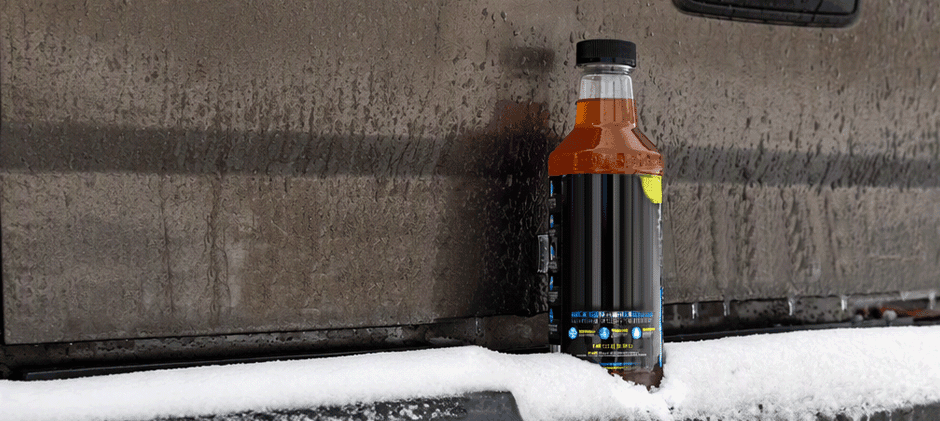
5 Best Diesel Fuel Additives for Winter
We have reviewed the top products on the market to help you find the best diesel fuel additive for winter. Here is a detailed look at how each formula performs.
1. Power Service Diesel Fuel Supplement + Cetane Boost
This product remains one of the most popular choices for cold-weather operation. It effectively lowers the CFPP by up to 36 degrees Fahrenheit, keeping fuel flowing in harsh conditions. What makes this formula stand out is its strong cetane boost. Independent testing shows it provides a measurable increase in cetane, which drastically improves cold-weather ignition. It also adds necessary lubricity to protect your fuel system. Furthermore, it does not contain potassium, meaning it will not cause false positives for coolant leaks during routine oil analysis.
2. Hot Shot’s Secret EDT+ Winter Defense
This is a premium, all-in-one solution designed for extreme cold. It prevents fuel gelling down to -40 degrees Fahrenheit by aggressively reducing wax crystal size. It also includes a dedicated cetane booster for faster combustion. Additionally, this formula features a strong lubricity agent to protect moving parts from the dryness of ULSD. It even includes de-icing chemicals to disperse moisture and prevent ice blocks from forming inside your fuel lines.
3. Howes Diesel Treat
If you deal with excess water in your fuel, this is a top contender. This formula acts as a demulsifier. Instead of mixing water into the fuel, it forces the water to separate from the diesel. The water then drops to the bottom of your water separator, where you can easily drain it before it freezes. It lowers the CFPP by up to 20 degrees Fahrenheit. While it does not offer a cetane boost, it naturally improves combustion quality. The manufacturer also offers a guarantee to pay for your tow if your fuel gels while using the product correctly.
4. AMSOIL Diesel 4-in-1 Fuel Additive
For those who want a single bottle to handle every potential fuel issue, this 4-in-1 formula delivers excellent results. It lowers the CFPP by up to 40 degrees Fahrenheit and boosts cetane by up to four points. It also cleans dirty injectors and adds a thick layer of lubricity to the fuel system. Because the formula is alcohol-free, it is completely safe for sensitive fuel system components and modern emissions systems, including the Diesel Particulate Filter (DPF).
5. Lucas Oil Anti-Gel Cold Weather Diesel Treatment
This treatment offers a highly concentrated formula for large fuel volumes. One quart can treat up to 150 gallons of fuel. It lowers the CFPP to prevent thickening and gelling across all types of diesel, including biofuels. Like other premium options, it is alcohol-free, ensuring it will not dry out rubber seals or damage delicate engine parts. It is a highly cost-effective option for fleet managers or owners storing large amounts of fuel on their property.
How to Choose the Right Diesel Fuel Additive for Winter?
Selecting the right product requires matching the chemical formula to your specific operating conditions. Here are the main factors we recommend evaluating:
- Cold-weather protection: Look at the temperature rating. If you operate in mildly cold areas, a standard anti-gel is fine. If you work in sub-zero temperatures, you need a formula that aggressively lowers the CFPP to -40 degrees Fahrenheit.
- Cetane boost: If your equipment struggles to turn over on cold mornings, prioritize a product with a high cetane boost. This will reduce white smoke and help the engine fire up immediately.
- Fuel lubricity: Older mechanical engines rely heavily on fuel for internal lubrication. Choose a formula that explicitly states it adds lubricity to combat the dry nature of modern ULSD.
- Engine compatibility: Modern diesel engines feature strict emissions controls, such as a DPF. You must choose an additive that burns clean. Formulas that leave behind heavy ash will quickly plug up a DPF, leading to frequent regeneration cycles and expensive repairs.
- Treat rate and cost: Always calculate the cost per treated gallon. A cheaper bottle might require you to pour in twice as much liquid, making it more expensive in the long run.
Do You Need a Diesel Fuel Additive in Winter?
Many equipment owners assume they do not need extra treatments because gas stations switch to a “winter blend” fuel as the weather gets colder. This winter blend is typically a mixture of standard #2 diesel and #1 diesel (which is closer to kerosene).
While winter blend fuel resists gelling better than summer fuel, it is not a perfect solution. If you live in an area that experiences sudden, extreme temperature drops, the station’s blend might not be strong enough to prevent gelling. Furthermore, if you have leftover summer fuel sitting in your tractor or storage tank, that fuel will absolutely gel when winter arrives.
Additionally, winter blend fuel has even less natural lubricity than standard summer fuel. Therefore, even if the station treats the fuel for gelling, adding your own winter treatment guarantees that your fuel system stays lubricated and your cetane levels remain high enough for reliable cold starts.
Conclusion
Get your machine ready before freezing weather hits. Don’t wait till the cold shows up. A good winter diesel additive drops your fuel’s cold filter plugging point, gets rid of damaging water, and gives your injectors the lubrication they need. Add a quality blend to your tank before temps plummet, and your engine will fire up easily and run steady all winter. Get all your heavy-duty parts at FridayParts to keep your equipment running through the cold season.
