

You’ve geared up, the trail is calling, and you’re ready for an epic day of off-road riding. You turn the key, but instead of a roaring engine, all you get is a weak, disappointing click and dead silence. That probably means your ATV battery is completely dead. Finding the perfect replacement is more than just grabbing any battery off the shelf. It requires matching the exact dimensions, capacity, and starting power your vehicle needs. Read on to learn how to size and choose the right battery to keep your ATV powered up and ready for adventure.
How Are ATV Batteries Sized?
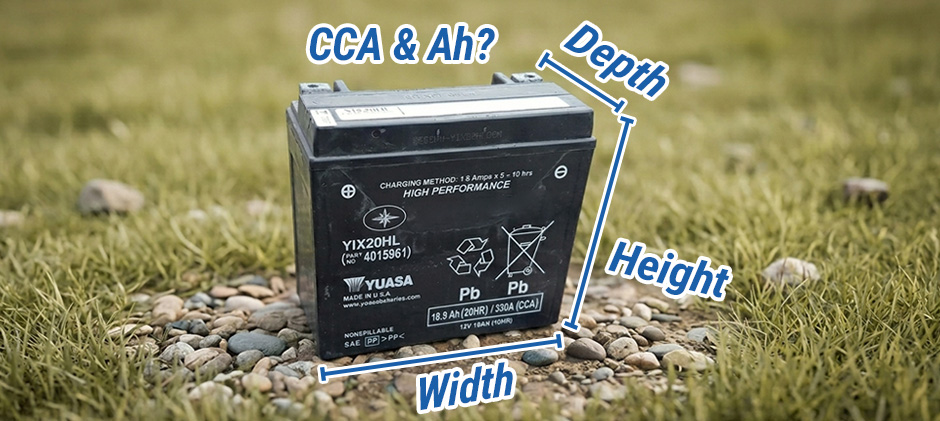
ATV batteries are sized by physical dimensions (L x W x H), starting power (CCA), and battery capacity, measured in amp hours (Ah).
Physical Dimensions
The physical size of an ATV battery is measured as the Length x Width x Height of the battery casing, not including the battery terminals. ATV batteries are available in many sizes to suit different types of vehicles and engine capacities. Selecting the right size of battery is essential to ensure a good fit in your ATV’s compartment. The clamping mechanism may not keep the battery securely in place if the battery is too small. If the battery bounces around in the battery compartment, it is prone to cracking and other damage, and the connectors may come loose, potentially causing dangerous short circuits. If the battery is too big, it may not physically fit on the ATV, depending on the design of the mounting spot.
Before you order a new battery, it’s essential to measure the size of your ATV’s battery compartment. Note that some batteries are slightly larger than the spec sheet tells you, so leave room for a slight margin of error.
Battery Capacity (Ah)
The battery capacity refers to how much electric charge it can deliver at its rated voltage. It is typically measured in Amp Hours (Ah). The battery Ah-rating is calculated by what current the battery can deliver constantly over a specified period (usually 20 hours), multiplied by that period. As Ah can vary with temperature, the test is done at 68°F (20°C) for comparable results. For example, a battery with an 18.9 Ah (20HR) rating can continuously deliver 18.9A/20hr = 0.945A for 20 hours.
Cold Cranking Amps (CCA)
The cold cranking Amps (CCA) describe its ability to deliver a burst of power for a short time (typically 30 seconds). When the engine runs, the ATV gets most of its power from the charging system; the battery only works as a buffer when you use more power than the built-in charging system can provide. But when you start the ATV, all the electricity needed for the electric starter comes from the battery. The starter draws a lot of power from the battery over only a few seconds. This makes CCA rating more important than the Ah rating.
Usually, a battery with a higher CCA rating delivers a higher electric current, allowing larger engines to perform better in the cold. The most common standard for measuring CCA is that a battery’s CCA rating describes how much current, measured in Amp (A), a fully charged battery can deliver for 30 seconds with the voltage not dropping below 7.2V at 0°F (-18°C).
What Type of ATV Battery Do You Need?
Before selecting your ATV batteries, let’s see three common ATV battery types first.
ATV Battery Types
Here are three common types of batteries for your ATV.
- Flooded Lead Acid: This is the most affordable ATV battery but tends to have shorter lifespans than the other two battery types. Since flooded batteries are not completely sealed and lose water due to evaporation when charged, you may need to offset this water loss by regularly adding distilled or deionized water. Otherwise, they can become corroded and decrease in their lifespan.
- AGM Lead Acid: This type of battery is spill-proof and maintenance-free. AGM batteries contain a one-way pressure relief valve that helps prevent gases from escaping. The electrolyte is held in stasis in a number of fiberglass plate separators, delivering many benefits, such as longer service life, faster recharge times, slower discharge rate, and more resistance to vibrations and extreme temperatures.
- Lithium: Lithium iron phosphate (LiFePO4) batteries have roughly 4X longer lifespans than most batteries and charge up to 2X faster. They’re also about 55% lighter than a lead-acid battery. On the cost side, lithium batteries have a higher upfront cost, but they last longer, making it an ideal option for long rides.
See Related:
The table below helps you determine which type of ATV battery you should choose.
| Aspects | Flooded | AGM | Lithium |
|---|---|---|---|
| Maintenance | Requires regular topping off with distilled or deionized water | Sealed and maintenance-free | maintenance-free |
| Spills& Vibration | Can spill, weak against vibration | Spill-proof and highly vibration-resistant | Spill-proof and vibration-resistant |
| Charging | Works with standard charger | Works with standard charger | Needs lithium-specific charger |
| Cold Weather | Loses strength in cold weather | Reliable starts in the cold | Struggles to charge when cold |
| Upfront Cost | Lowest | Mid-range, great value | Highest |
| Best for | Short rides | Short rides, Trail rides, long-distance rides, cold-weather rides, hauling | Trail rides, long-distance rides, hauling, racing |
How to Choose the Right ATV Battery?
Knowing what size and capacity battery you need is not enough when selecting the battery. Here are several factors for you to consider:
- Size: Physical dimensions
- Capacity: Amp-hours (Ah), a measure of how long a battery can provide an amperage for one hour.
- Reserve Capacity: How long a new, fully charged battery can hold its charge.
- Starting power: Cold Cranking Amps (CCA)
- Nominal voltage: 6V or 12V
- Battery type: Choose the type of battery according to your specific needs.
- Terminal type and polarity: Battery polarity or terminal layout comes in many variants.
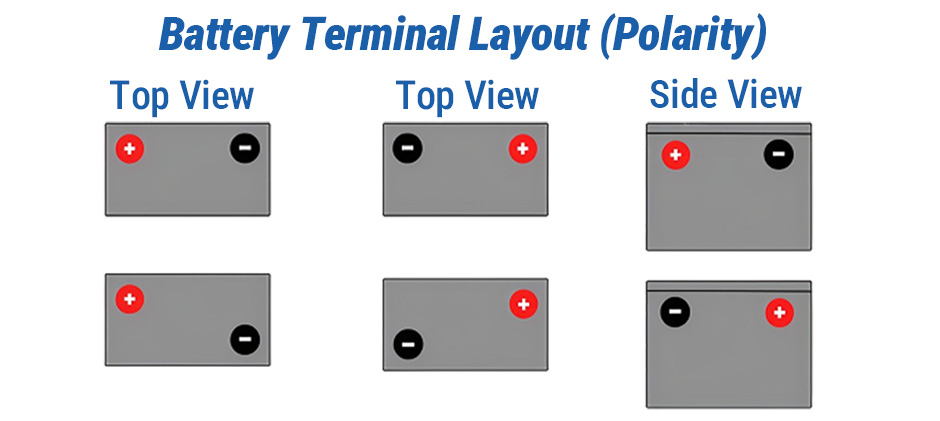
To find the right match, you need your new battery to meet or beat the specifications of the original. You can find these specifications on the label of the original battery or in the owner’s manual.
How Many Amps and CCAs Does an ATV Need?
ATVs typically need 10Ah to 20Ah batteries, depending on equipment level and accessories. An ATV with power steering, heated grips, and an electric winch typically needs a larger AH battery than a base model that only needs to run the ignition and lights. You should choose a higher Ah rating than the manufacturer recommended.
As for CCAs, adult-sized ATVs typically need batteries with a CCA rating of 200 to 400. ATVs with larger engines require batteries with a higher CCA rating to power the electric starter. A modified engine with higher compression or larger displacement will benefit from a battery with even more starting capacity.
The table below shows the typical CCA requirement by ATV engine size.
| Engine Size | Typical CCA Rating |
|---|---|
| 90 to 200 cc | 80 to 200 CCA |
| 400 to 600 cc | 200 to 340 CCA |
| 850 to 1000 cc | 350 to 400 CCA |
*Note: If the compatibility guide you’re using gives you several choices, choose the one that best fits your performance needs. For most users, the stock CCA rating will work just fine. If you live in a colder climate, the extra bucks on a higher CCA battery can be well spent, as higher CCA batteries operate better in colder temperatures.
Maintenance Tips for Your ATV Battery
No matter what type of battery you choose for your ATV, proper maintenance helps extend its service life.
- Keep your battery charged: Use a battery charger to maintain your ATV battery during the off-season or other long periods of non-use. For lithium batteries, they require less charging maintenance during off-season as they have a long self-discharge rate. It’s better to keep stored lithium batteries at around 50% for best results.
- Use the right charger: Selecting the correct charger with the same voltage and chemistry of your battery is also important. 12-volt AGM charger should go with a 12-volt AGM battery.
- Avoid overcharging: Overcharging can shorten battery life. Use a maintainer or charger with an automatic shut-off to prevent this.
- Water your battery: If you use a flooded battery, regularly inspect and top off the electrolyte inside with distilled or deionized water. Avoid doing this with an AGM or lithium battery.
- Keep terminals clean: Clean off corrosion on the battery terminal with a battery terminal brush and a mixture of baking soda and water. Protect the terminals with an anti-corrosion spray.
Conclusion
Choosing the right ATV battery comes down to matching the physical dimensions, battery type, and starting power (CCA) to your specific ride and climate. By keeping your battery properly maintained, you ensure your off-road adventures are never cut short by a dead engine. At FridayParts, we provide a vast selection of replacement ATV parts and batteries to keep your vehicle running at peak performance. Explore our extensive catalog today and find the perfect match for your ATV!
