

An oil pump is the heart of your engine’s lubrication system. When it fails, it can cause downstream damage to engine components and drive the repair bill into five or six figures. That’s why you should know the bad water pump symptoms. Delaying repairs can lead to engine failure and cost you arms and legs. Read on and find out the 5 main warning signs of a bad pump, how to check it, and whether or not you can operate with a bad oil pump.
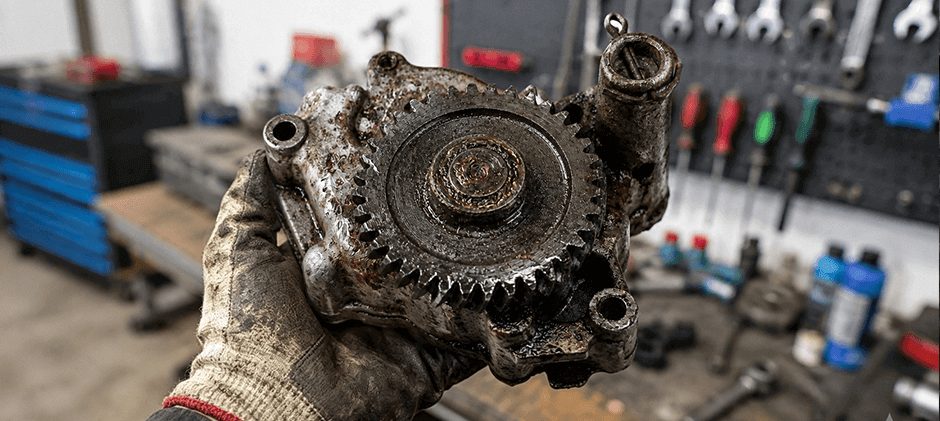
What Does An Oil Pump Do and Why It Matters
The main function of an oil pump is to push pressurized oil throughout your engine, reaching bearings, crankshaft, camshaft, valve train and turbocharged (if equipped). It can generate pressure of about 20 to 80 psi and does these jobs at once:
- Lubricate moving parts to prevent metal-to-metal wear
- Cool hot spots by absorbing frictional heat
- Clean by flushing debris to the oil filter
- Cushion dynamic loads during combustion
For off-road equipment, long hours under load make a healthy oil pump essential for your machines. Once the pump fails completely, it can lead to sudden damage to internal engine parts in less than a minute.
Early Signs of A Bad Oil Pump
Noticing the 5 main bad oil pump symptoms and taking prompt action can save you from costly repairs and complete engine replacement.
Low Oil Pressure
Low oil pressure is one of the major bad oil pump symptoms. As internal components wear, the clearances between moving parts and their housing gradually increase. As a result, oil bypasses internally and output pressure drops. Without sufficient oil pressure, oil cannot reach critical components, leading to metal-on-metal contact, accelerated wear and eventual failure.
What to Check: In this case, you must verify the low pressure is coming from the pump. A clogged oil filter can restrict flow and a pressure relief valve stuck open can lower system pressure even when the pump is healthy. You can use a pressure gauge upstream and downstream of filters and relief valves to isolate the pump before condemning the pump. Always compare readings against the OEM-specified minimum. See 10 Causes of Low Oil Pressure in an Engine.
Weird Noise from the Pump or System
When the pump can’t maintain pressure, you may hear unusual noises, like whining, grinding, or knocking. This suggests internal pump problems that require immediate checking. A whining or high-pitched noise shows cavitation that can erode the pump internals quickly and destroy the pump in hours. Common causes include a clogged inlet strainer, a collapsed inlet hose, an air leak on the pump suction side and too high oil viscosity. Grinding noise means metal contact inside the pump. This is mostly due to worn gear teeth, damaged vanes or debris in the pump housing. A knocking sound may suggest loose mounting hardware, a failing pump drive coupling or debris in the system. No matter what the noise it is, you should check it immediately.
What to Check: You can use a mechanical stethoscope or ultrasonic detector to find the noise source. Before disassembling, confirm the pump is the actual source of noise. Any new deep knock should be treated as an emergency. Continuing to operate can turn a rebuildable engine into a complete loss.
Increased Engine Temperature & Overheating
A defective oil pump can lead to inadequate oil and cause your engine to run dry. It reduces glow and removes less heat from friction surfaces, bearings, and gear contacts. This will cause an increase in engine temperature, which can damage the engine and its components. In hydraulic systems, a temperature spike is a sensitive indicator. If the hydraulic oil consistently runs 10 to 15°C above its normal operating temperature, you’d better investigate the pump efficiency instead of the cooling system capacity only.
What to Check: You should rule out other heat sources by checking the oil cooler differential temperature, checking the cooling fan to verify cooling system function and reviewing operating load history.
Visible Oil Leaks Around the Pump
External oil leaks from pump shaft seals, housing gaskets, or fittings suggest seal degradation that often accompanies internal pump wear. A small external leak signals the pump has enough wear even if it doesn’t affect the pump’s performance directly. What’s worse, the leaks can reduce system oil volume and lead to oil starvation. Under such conditions, the pump runs hotter, cavitates more easily and wears faster, leading to accelerated degradation and leaking.
What to Check: Before blaming the pump, you should identify the exact leak source. Leaks from inlet and outlet fittings, or the shaft seal are not a pump failure. If the leaks come from the pump body or housing, it indicates cracked castings or gasket failure.
Identify the exact leak source before condemning the pump. Leaks from inlet or outlet fittings indicate fitting or line problems, not pump failure. If the leaks come from the shaft seal, it indicates seal wear. Leaks from the pump body or housing indicate cracked castings or gasket failure. Each has a different repair approach and different implications for continued operation.
Burning Oil Smell or Visible Smoke
The last bad oil pump symptoms are a burning oil smell or visible smoke. A failing oil pump creates heat buildup at bearings, gear contacts, and friction surfaces. When temperatures rise, oil oxidizes and burns on contact with hot metal. A degraded pump also puts added stress on surrounding seals. Once those fail, oil leaks onto exhaust manifolds or turbocharger housings, producing a sharp burning smell and visible smoke around the engine bay. Blue or grey smoke from the exhaust is more serious, as it typically means oil is entering the combustion chamber due to seal failure or excessive crankcase pressure. Even a minor leak can quickly lead to a low oil level and full pump starvation.
What to Check: You should inspect the exhaust manifold, turbocharger housing, and any lines near heat sources for oil residue while the engine is still warm. Check the oil level immediately and do not continue operating until the source of loss is confirmed. If blue smoke is present, perform a crankcase pressure test to determine whether oil vapor is entering the combustion system. Cross-reference with your oil pressure readings. If pressure is also low, prioritize the pump as the primary suspect over an isolated seal failure.
Common Causes of Oil Pump Failure
Oil pump failure is often associated with wear, contamination or neglect instead of random breakage. Basic maintenance tasks, such as regular oil changes and properly servicing the filter, can help prevent the problem. Common causes of a bad oil pump are:
- Normal wear and long operating hours
- Dirty or contaminated oil
- Low oil level
- Using the wrong oil type
- Improper installation of the oil pump
Practical Diagnosing Tips from Mechanics
Professionals follow steps before replacing the pump.
- Check oil level, condition, and filter for metal debris
- Measure true pressure with a mechanical gauge at idle and higher RPMs
- Inspect the pump, pickup screen, and bearings if tests show low pressure
If you catch the early bad oil pump symptoms, adopting the process can help prevent unnecessary pump replacement and catch deeper issues earlier.
How Much & When to Replace the Oil Pump
When you catch the warning signs of a bad oil pump, it’s time to replace it. Every minute of operating with low oil pressure can cause severe damage and costly repairs. Replacing an oil pump costs much less than replacing the entire engine. It costs typically between $400 and $2,000+, depending on the labor time and models. The labor cost varies based on access. If you need to replace your pump, choose high-quality pumps from trusted sources like FridayParts for long-term reliability.
How to Prevent Oil Pump Failure
You can avoid most oil pump failures with simple maintenance and by sourcing reliable replacement parts.
- Follow the manufacturer’s oil change intervals
- Adopt high-quality filters and the correct oil grade
- Check the oil level regularly
- Fix leaks and check the unusual noises immediately
- Follow these habits, and you can protect your pump as well as your engine. A reliable parts supplier can add another layer of confidence for your machines.
Frequently Asked Questions for Oil Pump
How do I know my oil pump is bad, or it is something else causing low pressure?
You should isolate the pump from other components that can affect pressure. Check the oil filter differential pressure, inspect the pressure relief valve, verify oil level and check for air leaks on the suction side. If all these are ok and your pump pressure remains low, that’s probably a faulty pump.
Should I repair the oil pump or replace it?
It depends on the pump type and the extent of wear. Gear pumps with worn teeth or increased housing clearances are typically replaced rather than repaired, because the cost can exceed the cost of a new pump.
Can I replace the oil pump myself?
If you’re a skilled mechanic, you can perform the repair and replacement yourself with proper tools and a service manual. But if you are without extensive engine rebuild experience, professional installation is strongly recommended. The labor costs pale into insignificance regarding the protection against potentially engine-destroying mistakes.
Do I Need an Oil Change?
Oil and filter change are recommended. Regular oil change can help maintain the oil pump and reduce the likelihood of contaminants. Dirty or contaminated oil can have a negative impact on engine components.
Final Words
An oil pump failure rarely happens without warning. Low oil pressure, unusual noises, overheating, visible leaks, and burning smells are all signs your pump is struggling. The key is to act on these early bad oil pump symptoms before minor wear deteriorates into costly engine repairs. Follow your maintenance schedule, monitor oil condition regularly and source reliable replacement parts from a trusted supplier. FridayParts offers a vast selection of oil pumps and replacement parts to keep your machine operating at its peak performance. A small investment in attention and quality parts today can save you from a five-to six-figure repair bill tomorrow.
