

Can you mix coolant colors? Many equipment owners aren’t sure whether it’s safe to mix different coolants. The confusion often comes from the different colors available on the market. Mixing the wrong coolants can cause problems for your cooling system and may even lead to costly repairs.
What Color Is Coolant? Does Coolant Color Matter?
Coolants come in all sorts of colors. John Deere tractors use green Cool-Gard II, Caterpillar loaders run on red or orange CAT ELC, and Cummins-powered machines often have blue ES Compleat.
But don’t judge a coolant by its color — it’s just colored dye added by the maker. Colors used to line up with different coolant formulas: green for older styles, red and orange for newer long-life options. That’s no longer the case, though. You’ll see coolants with the same color but different ingredients, and vice versa.
The only thing you can trust is the chemical specs on the coolant container and your equipment’s owner’s manual.
Can You Mix Different Coolants?
Never mix different coolants for your heavy equipment. Color doesn’t matter here, it’s all about the special chemical additives that keep your engine safe.
All coolants are mostly ethylene glycol and water. What makes them different is their inhibitor formulas. These additives stop rust, keep seals lubricated and prevent engine damage. Here are the three common types:
- IAT (Inorganic Acid Technology): The classic green antifreeze. It uses mineral-based salts for corrosion protection and doesn’t last as long.
- OAT (Organic Acid Technology): Usually red, orange or yellow. Its organic acid additives wear down slowly, so this is a long-life coolant.
- HOAT (Hybrid Organic Acid Technology): A combo of IAT and OAT. It works fast to protect parts and also lasts a long time, and it comes in many colors.
Mixing coolants of different types — even if they look the same color — will cause their additives to react badly. They’ll turn into thick gel and sludge, which clogs the radiator, heater core and engine lines. This will make your engine overheat badly. At the very least, the protective additives will stop working, and your engine will start to rust.
What if it’s an emergency? If your machine overheats out in the field and you only have incompatible coolant or distilled water, add it right away. It’s way better than letting the engine burn up. Just remember this is only a temporary fix to get you back safely. Once you’re back, fully flush the cooling system and refill with the coolant recommended by the manufacturer.
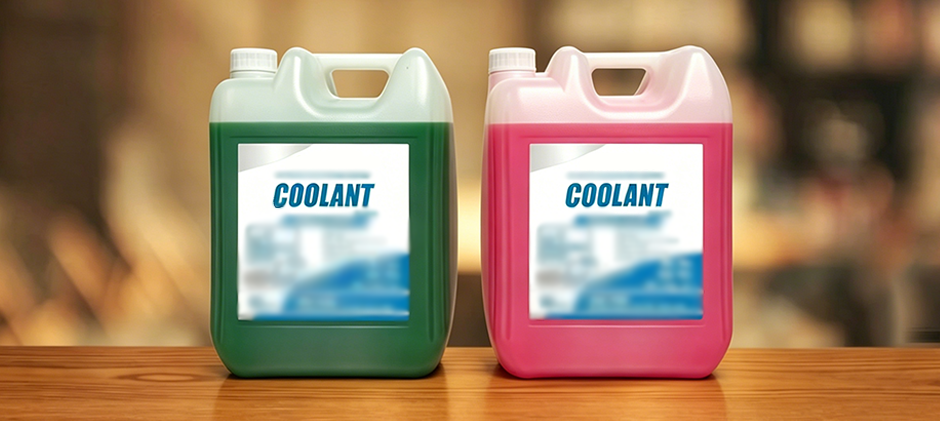
Can You Mix Red and Green Antifreeze?
For years, green was the regular coolant and red was the newer long-life type, so folks often wonder if they can mix them. The answer is no.
The classic “green” coolant is IAT, and traditionally, many red coolants were based on OAT technology, but color alone is not a reliable indicator today. These two technologies are chemically incompatible. Their additives react with each other and turn into gunk or a thick gel. The silicates and phosphates in green IAT will solidify when they come into contact with the organic acids in red OAT.
You might see online posts or veteran mechanics saying they’ve mixed the two for years with no obvious issues. Even if sludge doesn’t show up right away, your engine is still taking hidden damage. Mix OAT and IAT, and you’ll lose the long-life benefit of OAT completely. The blend will only last as long as regular IAT coolant. What’s more, the corrosion protection gets weaker too, leaving your engine exposed long before its next service.
Diesel engines are expensive, and you need your equipment running reliably. It’s never worth cutting corners and taking this risk.
Risks of Mixing Incorrect Coolant
- Overheating: As we said before, conflicting additives turn into gel and solid gunk. This buildup clogs the tiny tubes in your radiator and the cooling passages around engine cylinders. Once the cooling system is blocked, heat can’t escape, and the engine overheats fast. This will bend cylinder heads and blow head gaskets.
- Faster corrosion: Mixed coolants break down protective additives, so the fluid starts to eat away metal parts. It damages engine blocks, aluminum heads, radiators and water pump parts.
- Water pump damage: The hard particles from mixed coolants act like sand. They wear down the water pump seals, causing leaks and wearing out the pump bearings until the pump fails.
- Pitting on wet cylinder liners: This is a serious risk for most heavy-duty diesel engines. Their wet liners sit right in coolant. Engine vibration creates tiny air bubbles that pop hard against the liner surface — this is called cavitation. Good coolant forms a protective layer to stop this damage. Mix coolants, and that protection disappears. Cavitation will pit and wear through the liner over time. Coolant will leak into the combustion chambe.
How to Tell If Two Coolants Are Compatible?
Now you know why mixing coolants by color is risky. So how do you pick the right one for your machine?
- Follow the OEM specs first: Always start with your equipment’s owner’s manual. The engine maker has tested and approved a specific coolant for your unit. The manual will list official standards like ASTM D6210, or brand-specific codes such as CAT EC-1 and Cummins CES 14603 — don’t just go by brand names alone.
- Check the coolant type: Match the specs from the manual to what’s printed on the coolant bottle. The label will clearly say if it’s IAT, OAT or HOAT. Make sure the coolant meets the exact standard your engine needs.
- Look for official manufacturer approvals: For extra peace of mind, check the packaging for equipment brand approvals. Good coolant brands will state they work for John Deere, Case IH, New Holland and more. This means the product is fully compatible.
- Ignore the color: Color doesn’t mean anything once you’ve checked the specs and coolant type. Two green coolants can be totally different formulas and won’t mix safely. On the other hand, yellow and red coolants can share the same chemical makeup if they follow the same standard.
Even when two coolants match chemically, it’s still best not to mix them. If you switch products, fully flush the cooling system first. Always go by the formula, not the color.
Conclusion
When it’s time for that flush and repair, you need parts you can trust without paying dealer prices. FridayParts is dedicated to providing high-quality cooling system components at affordable prices, ensuring you can find the right water pump, radiator, etc. Get your machine back to work.
