

The CAT 3176 engine changed the game for heavy equipment. It powered machines like the Cat 950F wheel loader, and was one of the first to move from fully mechanical setups to today’s electronic engine controls. That said, opinions on it are split. Fleet managers often wonder: is the 3176 a tough, dependable work engine, or just a constant maintenance headache? Designed to run efficiently with a great power-to-weight ratio, some of its original design flaws caused ongoing issues down the line. In this guide, we’ll break down its design, common problems and real-world performance in tough working conditions.
The Evolution From Two-Piece Blocks to a One-Piece Foundation
The Cat 3176 changed a lot over the years, so there’s a big difference between the early engines and the later models.
Early Design (Spacer Plate Engine)
The early 3176 used a two-piece design. It had a cast-iron crankcase with a separate aluminum spacer deck bolted on top. This setup became well known for oil and coolant leaks around the seam between the two sections.
Repairs on these engines also take more work. To replace a cylinder liner, you have to remove the entire aluminum spacer deck first. A complete overhaul is even more time-consuming because the radiator has to come out before the camshaft can be removed.
Later “C” Models (One-Piece Block)
To fix these problems, Caterpillar later switched to a stronger one-piece iron block and crankcase design. This removed the troublesome spacer deck and made the engine much more reliable.
This updated design later became the base for the successful Cat C12 engine. The later models also came with improved ECMs (Electronic Control Modules) for better engine control and performance.
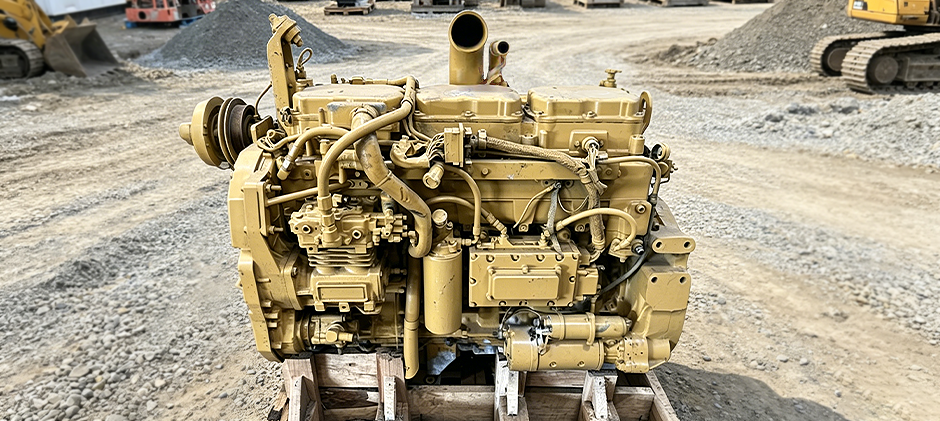
CAT 3176 Performance and Power Output
The 3176 is a lightweight 10-liter (611 cubic inch) engine. It has a good power-to-weight ratio, but it’s not built for the heaviest jobs. For trucks or equipment running under 80,000 lbs on flat or rolling ground, the engine usually delivers reliable performance and good fuel economy. But in hilly areas or with loads close to 100,000 lbs, many operators feel it lacks power.
One operator compared a 350HP 3176 to a 475HP Detroit while hauling an 80,000 lb load and said, “The only difference the extra 125HP makes on a 30-mile trip is about 20 seconds.”
Still, if your work involves pulling heavy loads up steep grades all the time, you may need an engine with more displacement, or “more cubes,” to hold speed more easily.
Common CAT 3176 Engine Problems
The 3176’s early electronic design and complex build result in several well-documented failure points that owners must monitor closely. Oil & Coolant Leaks: The front cam cover gasket is a primary leak source, and its repair is a major job requiring cam removal. The early aluminum spacer deck is also known for seepage where it meets the cylinder head.
- Fuel System Issues: The 3176 uses copper injector sleeves in the cylinder head. If the sleeve seals fail, fuel can leak into the cooling system, and coolant can get into the fuel system. Diagnosing and repairing this problem usually requires special Caterpillar tools.
- Component Wear: The air compressor drive splines can wear out over time and create noticeable noise during operation. A more serious problem is cam follower bushing failure. If this happens, it can damage the camshaft and turn into a very expensive major repair.
- Sensor and Electronic Problems: On early PEEC (Programmable Electronic Engine Control) engines, the boost sensor was mounted low on the engine. Water could collect inside the sensor hose, freeze in cold weather, and force the engine into “low boost mode.” When that happens, the engine loses a lot of power.
- Structural Weak Points: Make sure the upper left front support bracket stays tight and secure. If it loosens, it can crack the front cover and cause a major oil leak.
You should also keep the water pump weep hole clear. If the water pump seal fails and the weep hole is blocked, coolant can be forced into the oil pan.
Where Will You Find the CAT 3176?
The 3176 was used across a wide range of on-highway trucks and off-highway heavy equipment. Its versatility made it a common choice for many applications.
| Equipment Type | Common Models |
|---|---|
| On-Highway Trucks | Kenworth (T600, W900), Peterbilt (377, 379), Freightliner, Ford, Volvo |
| Wheel Loaders | Caterpillar 950F, 960F, 966F, 970F |
| Excavators | Caterpillar 350, 350L, 375, 375L |
| Dozers | Caterpillar D8N |
| Articulated Trucks | Caterpillar D250E, D300E |
| Marine & Industrial | Various generator sets and marine propulsion applications |
Final Thought
The Cat 3176 is the kind of engine that needs regular attention and proper maintenance. Mechanics who know these engines well usually get the best results from them.
It can be a good engine for owners who understand its common weak points, do regular oil analysis, keep sensor lines clean and clear, and have the proper tools for repairs and diagnostics. With careful maintenance and the use of reliable aftermarket parts, the 3176 can still be a dependable and productive 10-liter work engine.
For older engine platforms like the 3176, OEM parts can get expensive fast. Using high-quality aftermarket parts from FridayParts is a practical way to fix common leak points and replace worn components without spending a fortune.
