

Heavy equipment needs the right engine oil, especially for machines like excavators, loaders, and bulldozers that often run for long hours. When people compare CK-4 vs CJ-4, CK-4 is usually seen as the better choice for newer machines. However, the answer is not the same for every machine, because engine type, viscosity grade, manufacturer advice, and working conditions all matter.
CK-4 vs CJ-4: Quick Answer
If a machine has used CJ-4 before, you can usually switch to CK-4 unless the manufacturer says otherwise. CK-4 offers better oxidation resistance, shear stability, aeration control, and overall durability. These things matter more on jobsites where machines run hot, work long hours, and deal with dust every day. In practice, this usually applies to equipment such as excavators, wheel loaders, bulldozers, articulated dump trucks, motor graders, cranes, drilling rigs, and diesel generators.
CJ-4 still shows up in some older maintenance plans. Some operators stick with it because they already have stock or don’t want to change a habit that works.
What Is CJ-4 Oil?
CJ-4 is an older API diesel oil category used in many heavy-duty engines. It was widely used in equipment that needed good soot control and wear protection, and many older machines still rely on it today.
In actual use, many people treated CJ-4 as a reliable choice for construction machines, mining equipment, farm machinery, and other diesel machines that often run under load for a long time; many older excavators, wheel loaders, compactors, and drilling machines have used oils in this category in their normal preventive maintenance work. In other words, CJ-4 is still mostly seen in older heavy-duty diesel equipment or in fleets that have kept earlier maintenance practices.
What Is CK-4 Oil?
CK-4 came later and was built for tougher conditions. CK-4 was introduced by the American Petroleum Institute (API) in December 2016 as the successor to CJ-4, with stronger performance requirements for oxidation resistance, shear stability, and aeration control.
Compared to CJ-4, it handles heat better, resists shear better, and controls air in the oil more effectively. That’s why many newer fleets prefer it.
These differences make CK-4 a more practical option for many fleet managers. CK-4 wasn’t just a name change — it was meant to improve oil performance when equipment works in harder conditions.
Why Many Heavy Equipment Owners Move to CK-4?
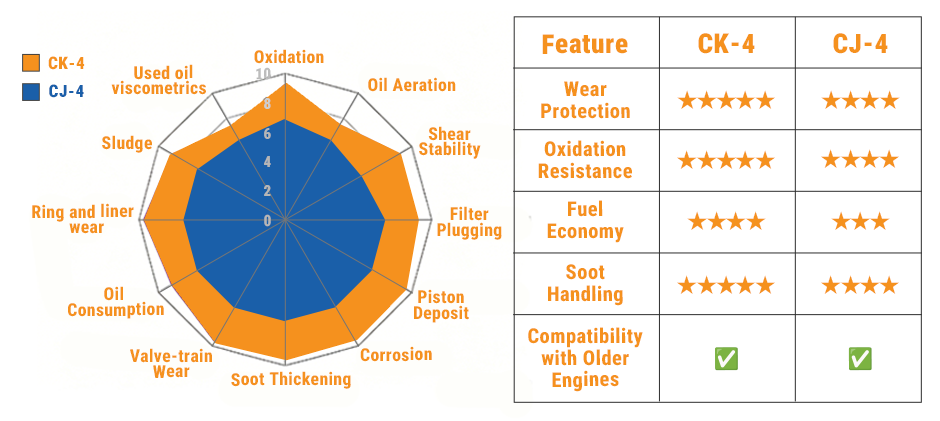
Many users switch to CK-4 for one reason: it lasts longer under hard use. Run an engine hot for hours, and the oil will oxidize. It gets thick, loses performance, and leaves deposits inside. CK-4 handles that better than CJ-4. That’s why it gives more consistent performance on tough job sites.
For equipment like excavators, wheel loaders, bulldozers, articulated dump trucks, and drilling rigs — machines that run at high load for hours with little break — oil that breaks down fast is a real problem. CK-4 resists oxidation and holds its viscosity better under constant mechanical stress. That means a consistent oil film between moving parts, not a thin, worn-out one.
Simply put, CK-4 is the choice for modern heavy equipment fleets because it keeps its properties longer in hot, dusty, high-load conditions.
CK-4 vs CJ-4: Main Differences
Below is a simple comparison of these two oil categories;
| Feature | CK-4 | CJ-4 |
|---|---|---|
| Standard age | Newer | Older |
| Oxidation resistance | Higher | Good |
| Shear stability | Higher | Good |
| Aeration control | Improved | More limited |
| High-temperature durability | Stronger | Good |
| Use in many CJ-4 applications | Often suitable | Original standard |
Oxidation Resistance
CK-4 has a clear advantage over CJ-4 when it comes to oxidation resistance. Heavy equipment oil often faces long idle times, repeated heavy loading, and high outside temperatures. Over time, these conditions speed up oil breakdown. CK-4 can slow this process, so the oil stays more stable and works more consistently throughout the service interval.
Shear Stability
Shear stability means how well engine oil keeps its viscosity under mechanical stress. This is very important for off-road machines that work under constant load — excavators, cranes, and haul trucks, for example. Better shear stability means the oil is less likely to thin out too quickly. That helps keep lubrication stable when the engine is under pressure.
Wear Protection
Both oils provide protection for heavy-duty engines. In that respect, CJ-4 and CK-4 are both usable. But under stronger mechanical stress, CK-4 usually forms a more stable oil film. In longer, hotter, and more demanding conditions, CK-4 simply keeps that protection going longer. For equipment owners, this means more reliable lubrication in real-world work — not just in theory.
Aeration Control
Aeration means air gets mixed into the oil. If too much air enters a hard-working engine, lubrication becomes less effective. Engine performance can also become less stable. CK-4 performs better at controlling this problem. That’s useful for machines that face vibration, hydraulic pressure, and long duty cycles.
High-Temperature Protection
Heavy equipment often runs in hot environments — think construction sites, quarries, road work, or earthmoving jobs in the middle of summer. Under those conditions, CK-4 is usually the better fit. It just holds up better when temperatures stay high for long stretches.
Can CK-4 Replace CJ-4?
In many cases, the answer is yes. CK-4 is commonly regarded as suitable in many applications where CJ-4 was used before, so many fleets treat it as a practical upgrade. For example, many heavy equipment users find that moving from CJ-4 to CK-4 improves oil performance without forcing a complete change in their maintenance system.
However, you still need to check the equipment manual and the engine manufacturer’s guidance before making any switch. This point becomes even more important when the machine is older, when it has special maintenance requirements, or when it’s used in more specialized operating situations. API category matters, but viscosity grade matters just as much — because even if the API category is more advanced, the wrong viscosity can still cause problems.
Which Is Better for Heavy Equipment?
For most newer machines and for severe-duty work, CK-4 is usually the more suitable choice; this often includes excavators, wheel loaders, bulldozers, articulated dump trucks, motor graders, cranes, drilling rigs, and diesel generator sets. It is especially useful for these situations:
- machines that work long hours every day
- fleets that often run in high temperatures
- equipment that faces heavy loads and dusty environments
- owners who want oil with stronger durability
- Maintenance plans that need a more stable service performance
CJ-4 can still be reasonable in some cases, such as these:
- older equipment with an already established maintenance habit
- operations that are still using existing oil stock
- If the manufacturer still specifically mentions CJ-4 and you haven’t done a new review, stick with CJ-4.
- Maintenance teams that do not want to change oil selection before technical confirmation is available
So, CK-4 is usually the stronger and more updated option for modern work conditions, while CJ-4 is still more like an older standard that remains in use in some previous service habits.
Benefits of Upgrading from CJ-4 to CK-4
Changing from CJ-4 to CK-4 can bring several practical benefits for heavy equipment owners.
Slower Oil Aging
Because CK-4 has better resistance to oxidation, the oil usually ages more slowly in severe working conditions; this helps the oil keep viscosity stability and basic lubrication performance for a longer period during service.
Better Engine Protection
Since CK-4 can stay more stable when engines run hot for a long time, it is less likely to lose protective ability too early; this is important for reducing wear inside expensive diesel engines.
More Reliable Maintenance Planning
Even if you don’t actually get longer intervals between oil changes, stepping up to a more durable oil category can still make things more predictable between services. That said, unexpected downtime in off-road equipment isn’t always about oil. Clogged filters, worn hoses, or aging seals can mess with engine stability and machine uptime just as much. In those cases, swapping out key parts like filters, hoses, and sealing parts can help restore system function and reduce unplanned downtime.
How to Choose Between CK-4 and CJ-4?
Stick with CJ-4 if your equipment manual calls for it, your maintenance plan already uses it, or you’re servicing older gear and haven’t confirmed a switch yet.
Go with CK-4 if you’d rather run a newer standard that handles heat, oxidation, shear, and aeration better. That tends to matter a lot for heavy equipment working in tough conditions.
One more thing — don’t pick an oil just by reading the API label. You still need to check the manufacturer’s recommendation, your engine design, your service intervals, and the right SAE viscosity grade for your situation.
Frequently Asked Questions
Can You Mix CK-4 and CJ-4 Oil?
In an emergency, you can top off with whatever oil you have. But don’t make it a habit. It’s better to stick with one correct oil type and follow what the equipment manufacturer recommends.
Is CK-4 Better Than CJ-4?
In most heavy equipment applications, yes, CK-4 is a newer category, and in several important performance areas, it usually shows stronger overall results.
Is CK-4 Backward Compatible with Older Standards?
Many applications now use CK-4, where older categories like CJ-4 were previously specified. However, you should still check your equipment manual and the required viscosity grade to confirm compatibility.
Conclusion
For most newer machines or ones that get run hard, CK-4 is usually the better bet. It handles oxidation better, resists shear, manages aeration more effectively, and just holds up better under high heat. CJ-4 can still get the job done in some older setups or fleets that haven’t changed their maintenance routines. But for a lot of equipment owners these days, moving to CK-4 just makes more sense. FridayParts helps you choose the right oil and the right parts — with professional guidance and aftermarket components built for off-road machinery parts.
