

Diesel exhaust fluid (DEF) helps control emissions, allowing your engine to run cleanly and efficiently. However, DEF is susceptible to crystallization due to evaporation or degradation. Solving DEF crystallization is as simple as storing it in a properly sealed container and cleaning with deionized water if the white residue appears. In this guide, we’ll walk you through the common causes, signs and easy fixes for DEF crystallization.
What Is DEF Crystallization?
DEF crystallization appears when DEF loses water through evaporation or degradation, leaving behind solid urea crystals. These DEF crystals form white, chalky deposits that can restrict or block critical SCR components. DEF is a precise mixture of 67.5% purified water and 32.5% high-purity urea. If that balance is disrupted, the urea can no longer stay dissolved. Over time, white DEF crystals build up in the tanks, lines, injectors, and sensors, significantly affecting proper DEF dosing and emissions control.

What Causes DEF Crystallization to Happen?
After the harvest in September, your diesel tractor may be driven at low speeds, with light loads, for short durations or even sit for long periods. All of these make your tractor susceptible to developing white crystal deposits in the SCR system. The most common reasons for DEF crystallization are:
- Heat and Evaporation: Extended exposure to temperatures over 86 °F can accelerate evaporation, concentrating urea and encouraging crystal formation.
- Leakage: If there are any leaks in your SCR system, the water will evaporate, thus leading to crystallized urea.
- Overdosing or Topping Off Incorrectly: Putting too much DEF or mixing with non-purified water prevents proper dissolution and leads to deposits.
- Improper Storage: If DEF is not handled or stored properly, it may become contaminated. Unsealed containers, direct sunlight, or hot environments degrade DEF faster than you could realize.
- Poor Quality DEF: If the DEF doesn’t maintain the required ratio of deionized water to urea, it is prone to crystallizing under normal operating conditions.
- Contamination: If dirt, debris, rust, diesel fuel or other harmful chemicals enter the SCR system, it can trigger DEF crystallization and abrasion inside the system.
Signs of DEF Crystallization
When DEF crystal contamination occurs, you can notice the following signs:
- Visible white, crusty deposits forming around the DEF injector, nozzle or filler cap.
- Diagnostic trouble codes such as P20EE, P20EF, P204F, P207F, P20E8, and P218F
- The engine may enter a derate or “limp” mode
- A noticeable loss in fuel efficiency
DEF issues can trigger many of the problems mentioned above. Using high-quality DEF and storing it properly is essential for overall engine health and performance, as low-quality or contaminated fluid can damage critical components and lead to costly repairs. Once you notice these signs of DEF crystals, it’s crucial to take immediate action to get rid of the crystal deposit and prevent it from happening again.
How to Clean DEF Crystals?
It’s essential to clean DEF crystals early to prevent further damage and costly replacements. Here are step-by-step instructions for you to follow:
- Get prepared: For safety purposes, you should shut the engine off and park your tractor on a level surface. It’s better to wear protective gloves and eye protection.
- Access crystallized DEF components: Find the common areas for DEF crystallization, such as DEF injectors and dosing valves, DEF supply lines, filters or pickup screens and the DEF tank. If you are not sure, you can consult your service document. In certain cases, you may need to remove the DEF tank for a complete cleaning.
- Clean off visible DEF crystals: You can use a soft, non-abrasive cloth or brush to remove any loose white crystal deposits gently. Never use high-pressure water or compressed air, as they can dislodge delicate parts or even push crystals deeper into the system.
- Flush with distilled or deionized water: For tanks or components with buildup, flush with only distilled or deionized water and allow it to soak so the urea crystals can fully dissolve. Just fill the tank partway with distilled water, gently agitate to contact all internal surfaces, allow the water to sit for at least 30 minutes and drain completely and inspect the rinse water. Repeat this flushing process until the drained water is clear and free of sediment. Never use tap water, soaps, detergents or petroleum-based solvents during this process.
- Dry thoroughly before assembling: Make sure all parts are fully dry before reinstalling injectors, sensors, pumps or tank components.
- Refill with fresh, certified DEF: After reassembling, refill with certified DEF and then start the engine and monitor for warning lights or fault codes. If fault codes persist after cleaning, or DEF flow remains restricted, your tractor may already have internal damage. In this case, you’d better turn to a pro.
How to Prevent DEF Crystallization?
Prevention is far more cost-effective than repair. Here is a detailed DEF crystallization prevention checklist:
- Apply premium-quality DEF that meets ISO 22241 standards
- Properly store the DEF in a sealed container out of sunlight, between 12-86°F
- Avoid DEF contamination by using dedicated, clean DEF equipment
- Keep tanks sealed and caps clean after every fill
- Don’t put too much DEF in, which can reduce spillage and evaporation
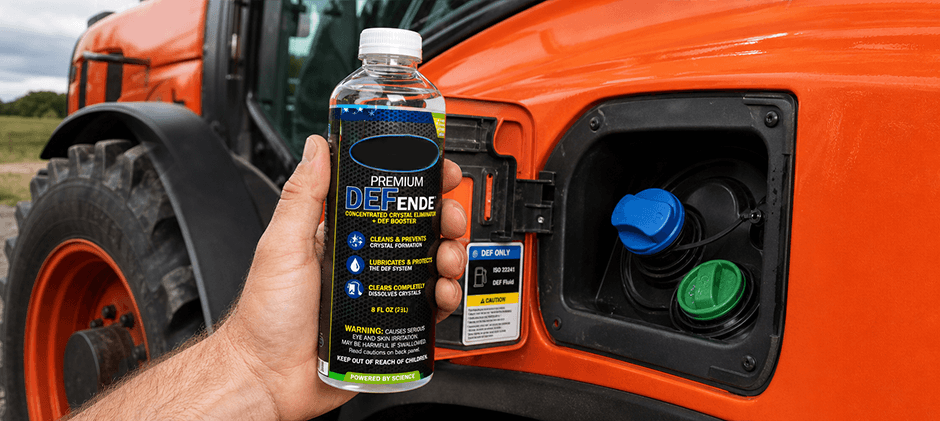
- Apply DEF additives like DEFender™ with each refill to help maintain DEF quality
- Rotate inventory to prevent aged DEF from degrading

Here are seasonal maintenance tips:
- Spring: Test the quality of your stored DEF using a refractometer, as the freeze-thaw cycles of winter can alter the DEF’s urea concentration.
- Summer: Monitor storage temperatures and move DEF to a shaded or insulated area. Treat DEF with an additive at every fill-up
- Autumn: Before any long-term storage, pre-treat the DEF and fill the tank completely. A full tank minimizes airspace, which reduces condensation and crystal formation.
- Winter: Verify that the DEF heater system is working properly. If your tractor will be sitting idle, run the engine for 15 minutes or so each month. This circulates treated DEF through the system, preventing components from seizing due to crystallization.
Conclusion
The health of your diesel emission system is essential for your tractor performance. While problems within the diesel exhaust fluid system are common, they are preventable. You can apply high-quality additives to your routine maintenance to prevent DEF crystallization and protect your SCR system. At FridayParts, you can explore a vast selection of quality tractor replacement parts for brands like New Holland and learn more about tractor maintenance and repairs through our helpful blogs.
See Related
Does DEF Expire? Dealing with DEF Issues
