

If the cab feels dusty, airflow is weak, or the windows fog up more than usual, the cabin air filter should be one of the first things you check. This guide walks you through where excavator cabin air filters are typically located, why some machines actually have two filters, how to find the right replacement faster, and what to look at before swapping one out. The goal is to make maintenance quicker and less of a headache.
Common Cabin Air Filter Locations on Excavators
There’s no single spot that fits every excavator. Where the cabin air filter goes depends on the cab design, the HVAC layout, and how the machine handles fresh outside air versus recirculated air. Still, most off‑road equipment tends to follow a few common patterns.
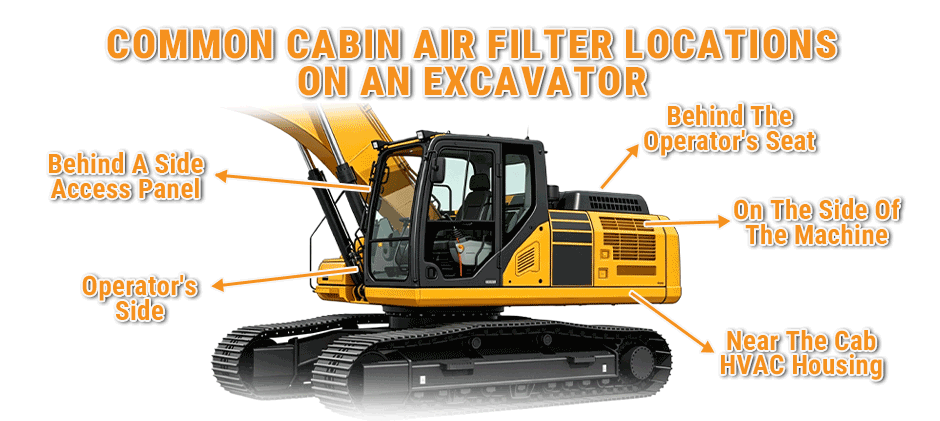
1. Behind a Side Access Panel
A very common excavator cabin air filter location is behind a side access panel near the operator cab. This setup makes service easier because the filter can often be removed without taking apart much of the interior.
On some machines, you’ll find the access panel right on the outside of the cab. Others tuck it inside a service box next to the cab frame. Either way, if there’s an obvious external air intake on the cab, that’s one of the first spots to check.
This layout is popular because it shortens service time and keeps the filter close to the fresh air path.
2. Behind the Operator’s Seat
Some excavators place the recirculation filter inside the cab, often behind the operator’s seat or behind an interior trim panel. This filter handles the air already moving through the cab rather than air coming in from outside.
That difference matters. If only the exterior of the machine is inspected, the recirculation filter can be missed completely. On enclosed-cab off-road machinery, this inside-cab filter is often the reason airflow problems remain even after one filter has already been changed.
3. On the Side of the Machine Near the Cab Intake
Another common cabin air filter location on an excavator is the side of the machine near the fresh air intake area. This is often where the fresh air filter is mounted. Machines with separate outside-air and inside-cab airflow paths often use this layout.
In practice, this means the machine may have:
- One filter outside the cab for incoming air
- Another filter inside the cab for recirculated air
That is why a quick visual check can lead to the wrong conclusion.
4. Near the Cab HVAC Housing
Some excavators place the cabin air filter near the cab HVAC housing. Since the HVAC system controls heating, cooling, and air movement inside the operator compartment, this is a logical place for filter placement.
If the filter is not obvious behind a side panel or behind the seat, tracing the HVAC housing is often the fastest next step. On some machines, this area is reached through a removable cover. On others, it may sit behind a service door near the cab structure.
If the filter location is not obvious, follow the cab airflow path: intake area, HVAC housing, then interior recirculation points.
Why Some Excavators Have More Than One Cabin Air Filter?
A common source of confusion is that some excavators do not use just one cabin air filter. Instead, they use two separate filters for two different jobs.
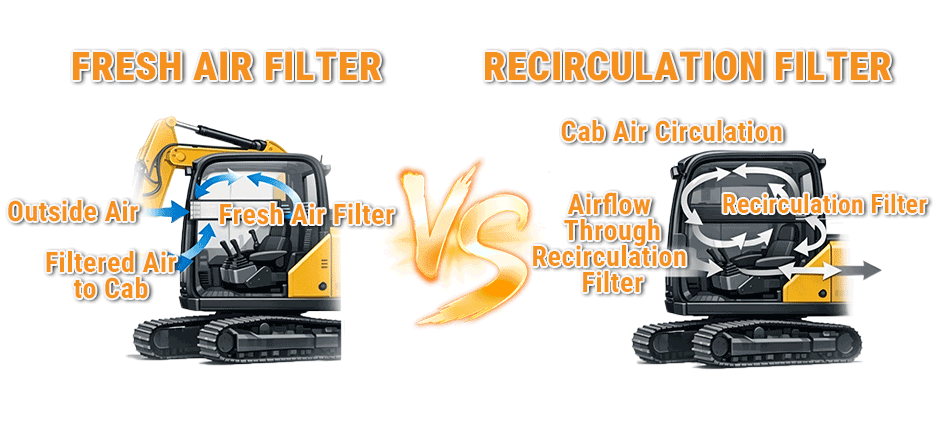
Fresh Air Filter
The fresh air filter cleans outside air before it enters the cab. It is commonly mounted near the machine exterior, side intake area, or a service compartment close to the cab.
Recirculation Filter
The recirculation filter cleans the air already inside the operator compartment. It is usually mounted inside the cab, behind the trim, behind the seat, or near the HVAC housing.
The table below shows the difference clearly:
| Filter Type | Common Location | Main Job |
|---|---|---|
| Fresh Air Filter | Exterior side panel or intake area | Filters incoming outside air |
| Recirculation Filter | Inside the cab or near the HVAC housing | Filters the air already circulating in the cab |
This is also why some operators think the machine has the wrong filter installed, when in fact there are two separate cabin-related filters.
How to Find the Cabin Air Filter Faster?
Instead of opening random covers, it helps to check the machine in a simple order. That cuts down service time and reduces the chance of missing a second filter.
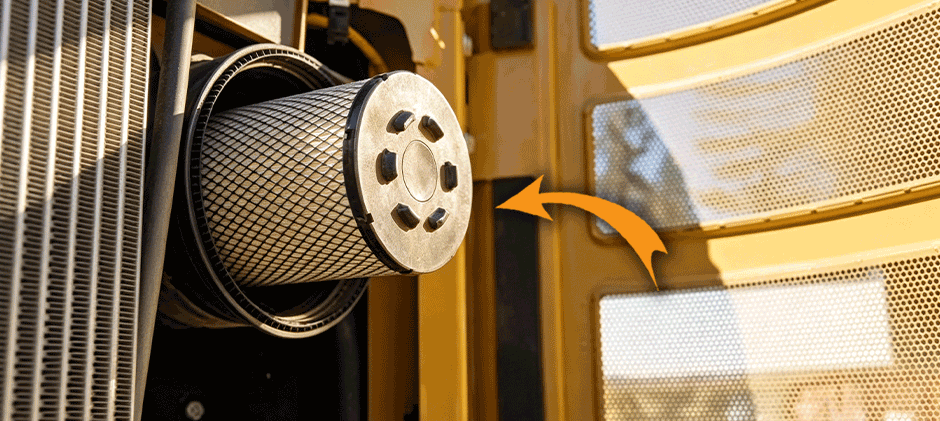
Quick Inspection Checklist
- Confirm the exact machine model and cab type
- Check the operator’s manual if available
- Inspect side access panels near the cab
- Look behind the operator’s seat or interior trim
- Trace the cab HVAC housing
- Check whether the machine uses both fresh air and recirculation filters
This process matters even more on older off-road machinery, where panel layout may not be obvious and prior repairs may have changed fasteners or covers.
Brand Patterns: General Location Guide
| Brand | Common Filter Location | May Have Dual Filters |
|---|---|---|
| CAT | Inside the cab or the side intake area | Yes |
| Komatsu | Side access panel or intake area | Some models |
| Hitachi | Near HVAC housing or side service area | Some models |
| Volvo | Rear cab compartment or side access area | Some models |
| John Deere | Side service area or interior cab panel | Some models |
This table is only a guide. On off-road machinery, the same machine family can still have different cab filter layouts depending on series, climate package, or cab ventilation setup.
Signs the Cabin Air Filter Needs Attention
So you found the filter. Now, how do you know if it’s still doing its job?
A clogged or dirty cab filter will make the cab uncomfortable and drag down HVAC performance. If you’re working around dust, fine particles, crop waste, demolition junk, or dry dirt, the filter can go bad fast.
Watch for these signs:
- weak airflow from the cab vents
- dust collecting inside the cab
- poor heating or cooling performance
- window fogging that takes longer to clear
- musty smells or stale air in the operator compartment
If you notice those signs, check the filter before you start digging into the rest of the HVAC system.
But don’t just throw parts at it. A new filter that doesn’t fix the airflow problem means you need to look elsewhere. Next up: the blower motor, the evaporator, or the intake screen. Sometimes, crud built up around those parts restricts airflow just as badly as a dirty filter.
Weak vent airflow does not always mean HVAC failure. In many cases, it starts with a loaded cabin air filter or a restricted intake path.
Replace or Clean the Filter?
For most excavators, it’s safer to just replace the filter if it’s caked with dust, torn, or wet. You can knock off some loose dirt during inspection, but once the pleats are packed or the media is damaged, it won’t do its job right.
Replacement is especially important when:
- Airflow remains weak after basic cleaning
- The filter media is torn
- Dust passes into the cab
- Moisture or mold is present
- The housing seal no longer fits tightly
A new filter will help get your cab airflow back and keep the heating and cooling working right. But if the housing is cracked or the cover doesn’t seal well anymore, you’ll also want to check related parts like the housing seal. Otherwise, air and dust will just sneak around the filter.
How Often Should an Excavator Cabin Air Filter Be Replaced?
There is no universal replacement interval for every machine. Service timing depends on:
- working hours
- dust level at the jobsite
- season and weather
- how often the HVAC system is used
- whether the machine runs in mining, earthmoving, forestry, or agricultural conditions
Machines working in heavy dust usually need more frequent inspection than equipment used in lighter conditions. A practical approach is to inspect the cabin air filter during routine service intervals and replace it as soon as restriction becomes visible or airflow begins to drop.
If the machine is already being serviced for cab climate issues, that is also a good time to inspect related wear items. For example, poor cooling performance may also point to a dirty HVAC core, while poor pressurization can sometimes involve worn cab door seals that allow dust to enter.
Tips for Replacing an Excavator Cabin Air Filter
Replacing the filter is usually straightforward, but a few steps help prevent installation problems.
Before Installation
- Verify the correct filter type
- Compare the new filter with the old one
- Clean loose debris from the housing
- Check airflow direction markings
- Inspect the housing cover and seal condition
After Installation
- Secure all clips and access covers
- Test vent airflow
- Check for unusual noise from the HVAC system
- Confirm the filter sits evenly with no gaps
These small checks matter because even a good filter will not work well if it does not seal correctly in the housing. See a complete guide on changing cabin air filer with 5 easy steps here.
FAQ
Where is the cabin air filter located on an excavator?
Most of the time, you’ll find it behind a side access panel, behind the seat, on the side of the cab near the intake, or close to the HVAC housing.
Does an excavator have more than one cabin air filter?
It depends — some do. Certain machines use a separate fresh air filter and a recirculation filter, and they’re usually in different spots.
Is the cabin air filter the same as the engine air filter?
No. The cab filter cleans the air you breathe inside the operator station. The engine air filter protects the engine intake.
Why is there still dust inside the cab after replacing the filter?
A few things could be going on. The housing might not seal well, the intake screen could be blocked, the door seals might be bad, or there could be an airflow problem in the HVAC system. The filter isn’t always the only culprit.
Can the wrong cabin air filter cause problems?
Absolutely. If the size, thickness, or seal design is wrong, you can get low airflow, a bad fit, or dirty air sneaking right around the filter.
Conclusion
Knowing where your excavator’s cab filter is — and whether the machine takes one or two — saves time and helps you avoid skipping an important service point. When replacement is needed, the right fit matters. FridayParts supplies aftermarket parts for off-road machinery with solid quality, fair pricing, broad compatibility, and a large inventory for many heavy equipment applications.
