

If you’re troubleshooting power loss under load, rough idle, or repeated derate on a diesel engine, the EGR system is often the first place to look. On a modern diesel engine, exhaust gas recirculation affects emissions, intake flow, and combustion temperature simultaneously. When the system is healthy, most operators never think about it. Once it starts plugging, sticking, or leaking, the machine usually feels weak before it actually stops. This guide covers what EGR does, why it fails, and the related components most commonly checked during diagnosis.
What Is Exhaust Gas Recirculation?
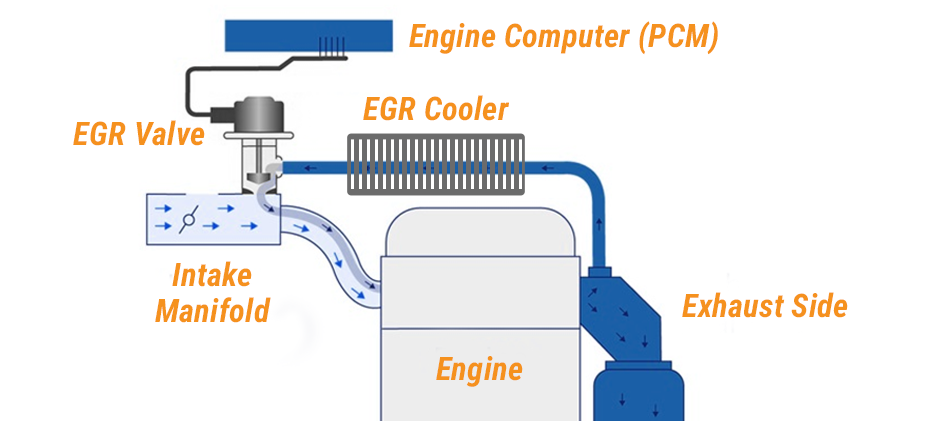
Exhaust gas recirculation sends a controlled portion of exhaust gas back into the engine’s intake. The goal is to lower the peak combustion temperature, thereby reducing NOx formation. That is the basic job of the EGR system on most diesel platforms.
On a cooled setup, the flow path is fairly direct:
- Exhaust gas is tapped from the exhaust side
- The EGR valve meters flow
- The gas passes through the EGR cooler
- Then it returns to the intake manifold
The layout changes from one engine family to another, but the principle stays the same. Hot exhaust is mixed back into the intake charge to soften combustion temperature. On many systems, gas entering the cooler is several hundred degrees Celsius, and cooler outlet temperature under load often falls into the 150–200°C range when the unit is working properly. If outlet temperature stays higher than that because of fouling or weak coolant flow, EGR effectiveness starts to drop.
You see the same pattern across Cummins, CAT, Deere, and Perkins engines. The hardware is packaged differently, but the failure path is familiar: soot builds in the valve and passages, movement slows down, and the ECM starts seeing a mismatch between commanded flow and actual response.
Why Do Diesel Engines Use EGR?
Diesel engines use exhaust gas recirculation because NOx limits are strict, and EGR reduces NOx inside the cylinder before the exhaust reaches downstream aftertreatment. That is the technical answer. The practical one is simpler: without stable EGR flow, the engine becomes harder to keep both clean-running and compliant.
Duty cycle makes a big difference here. A machine that runs hot and is loaded for long periods usually keeps the EGR path cleaner than one that idles between short work cycles. On a jobsite where equipment spends hours waiting between loads, carbon forms faster and valve movement gets sticky much earlier. On some light-duty or low-load applications, technicians begin seeing meaningful deposit problems in the 3,000–4,000-hour range. Harder-working engines often go longer before showing the same kind of buildup.
EGR also affects more than emissions numbers. Once the flow starts drifting, operators tend to notice weaker throttle response first. After that, soot loading increases and the DPF may regenerate more often than usual. Fuel use can creep upward too, even before a hard code appears.
How Does the EGR System Work?
Exhaust gas recirculation works through three main areas, and breaking diagnosis into these makes troubleshooting easier:
- The valve
- The cooler
- The sensors and control side
If one of them drifts out of range, the engine may still run, but it will not run cleanly or consistently. The symptom often shows up in one place while the fault sits somewhere else.
The EGR Valve
Ask most diesel techs what fails first, and the answer is usually the EGR valve. It lives in hot exhaust, sees constant soot, and has to keep moving accurately. Over time, carbon forms around the shaft and seat. Then the valve gets lazy, sticks partway open, or fails to close the way it should.
When that happens, the symptoms are usually easy to feel:
- Weak response under load
- Rough or unstable idle
- Delayed boost feel
- Recurring flow-related codes
A valve stuck open floods the intake with too much exhaust gas and makes the engine feel flat, and it can also affect turbocharger response because intake pressure becomes unstable. A valve stuck closed creates the opposite problem: NOx climbs, and the ECM eventually notices the missing flow. On some engines, P0401 or P0402 are the first clues. On others, especially heavier equipment, the warning comes through SPN/FMI codes tied to position or insufficient flow.
The code alone is not enough to condemn the valve. On many systems, commanded versus actual valve position should stay within a few percent under stable conditions, though the exact tolerance varies by platform. If the gap is wider than expected, the valve may be sticking — but bad feedback wiring can create the same pattern. That is why live data matters.
The Cooler and Why It Fails
The EGR cooler works hard and usually fails quietly at first. Its job is to pull heat out of the exhaust before that gas returns to the intake. When the cooler is clean and coolant flow is good, the outlet temperature stays in a useful range, and the EGR remains effective. When the core starts fouling, the gas leaves hotter than it should. The ECM can compensate for a while, but not forever.
Internal leakage is the more serious failure. A cracked core or pinhole lets coolant migrate into the exhaust side, and that is where diagnosis gets messy. The operator may report coolant loss with no visible external leak. A startup may come with white vapor. Idle may feel rough for the first few minutes, especially on a cold engine.
This is where people waste time chasing the wrong part. Plenty of valve complaints turn out to be cooler problems. Before ordering an EGR cooler, pressure-test it. A low-pressure test around 25–30 psi is often enough to expose a weak core if it is submerged and watched carefully for bubbles, though some procedures specify higher values. A cooler can look acceptable from the outside and still fail that test.
While the system is open, nearby parts deserve a look. A worn coolant hose can make thermal issues worse, and a leaking intake manifold gasket can distort airflow enough to muddy the diagnosis.
Sensors, Actuators, and Feedback
Not every EGR fault is mechanical. Sometimes the valve and cooler are usable, but the data going back to the ECM is wrong. That sends the engine into the same bad behavior pattern as a real hardware failure.
The usual suspects are position feedback drift and corroded harness connectors, especially on machines that live outdoors or work in wet conditions. Plugged sensing ports show up less often, but they are harder to catch because the numbers can still look plausible at a glance. If the engine is logging EGR-related faults and the hard parts look decent, compare commanded and actual values first, then inspect the harness before changing components.
What Problems Does EGR Cause?
Most EGR-related trouble comes back to three things: soot restriction, heat stress, and bad control feedback. None of them usually arrives overnight. The machine often starts and idles well enough, but under real load, it feels weaker than it should.
Soot restriction is the common one. Deposits narrow passages, slow valve movement, and upset airflow through the intake side. Heat stress is harder on the wallet. Repeated temperature cycling shortens cooler life and can eventually crack the core. Bad feedback is the most frustrating because it leads to unnecessary parts swapping unless live data and wiring checks are part of the routine.
A typical field pattern looks like this:
- Deposits build up in the valve and passages
- Flow drifts out of range
- Drivability gets worse
- Fuel use rises
- Derate events start showing up more often
Machines that spend long hours idling usually move through this cycle faster than machines that stay fully warmed and loaded.
What Are the Signs of EGR Trouble?
Operators usually notice power loss under load first. Then the idle gets rough, throttle response softens, and the engine starts feeling inconsistent from one work cycle to the next. If the condition keeps building, warning lamps and derate events follow.
When the EGR cooler is leaking internally, coolant loss becomes a major clue. White exhaust on startup points in the same direction. When the EGR valve is sticking, the complaint is more often an uneven response, an unstable idle, or repeated flow-related codes.
Common warning signs include:
- Power loss under load
- Rough idle
- Slow response
- Higher fuel use
- Warning lights or fault codes
- Repeated derate
- Coolant loss
- White exhaust in some cases
A restricted air filter will not create an EGR fault by itself, but it can make intake-side symptoms worse and complicate troubleshooting.
For a quick reference, the table below matches the most common symptoms to their likely EGR-related causes and the first items worth checking:
| Symptom | Likely EGR-Related Cause | What to Check First |
|---|---|---|
| Power loss under load | Valve sticking open, restricted passages | EGR valve movement, soot buildup in passages |
| Rough idle | Valve not seating properly, unstable recirculation | Valve seat condition, commanded vs. actual position |
| Repeated derate | Flow out of range, faulty feedback | Fault codes, live data, harness, and connectors |
| Coolant loss | Internal EGR cooler leak | Pressure-test the cooler and inspect for white exhaust |
| White exhaust on startup | Cooler leaking into the exhaust side | Cooler integrity, coolant level trend |
Used as a starting point rather than a final diagnosis, this table helps narrow the search before parts get pulled.
How Can You Reduce EGR Downtime?
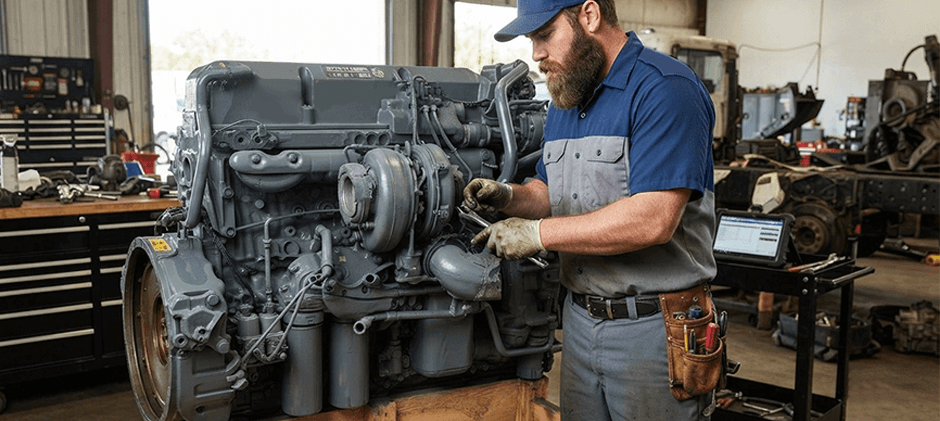
The best way to reduce EGR downtime is to match inspection habits to the way the machine actually works. Equipment that idles all day needs closer attention than equipment that stays hot under steady load. Waiting for a hard failure usually means the deposits have been building for a long time.
A solid maintenance routine should include visual inspection of the EGR passages, attention to coolant condition, and quick follow-up when new fault codes appear. If the engine starts hinting at EGR flow or position trouble during a 500-hour service or another routine interval, it is usually cheaper to inspect the system then than to wait for a derate on a working day.
Good shop habits still make the biggest difference:
- Inspect for soot during service
- Keep the cooling system in good shape
- Check connectors and harnesses
- Verify the cooler before replacing the valve
- Replace worn seals and hoses while the area is open
That last step saves more time than people think. Reopening the same area because of a cheap seal or hose is one of the easiest ways to turn a straightforward repair into a repeat job.
Bottom Line
Exhaust gas recirculation is essential for NOx control, but it also puts the engine in constant contact with soot, heat, and extra control complexity. Most failures trace back to a sticking valve, a weak cooler, blocked passages, or inaccurate feedback. Once diagnosis is done and the failed part is clear, FridayParts carries aftermarket replacements for many common Cummins, CAT, Deere, and Perkins EGR components — which matters when one cooler failure can turn into a valve, gasket, and hose job at dealer-level pricing.
Related Reading:
