

In off-road machinery, a muffler typically lasts about 3 to 8 years in real jobsite conditions—or roughly 2,000 to 8,000 operating hours—but it can fail sooner in salt, mud, high humidity, or with lots of cold starts and idling. It can also last longer when the exhaust system stays hot enough to dry out moisture, and the machine is stored and cleaned the right way. This guide breaks down what shortens muffler life, how to confirm the muffler (and not the tailpipe or a hanger) is the real problem, and how to decide when replacement is the smartest move.
How Long Does a Muffler Last?
A muffler is part of the exhaust system that reduces noise and helps keep exhaust flow stable. On heavy equipment, it may also be built as a silencer, and in some applications, it’s paired with a spark arrestor for site or forestry rules.
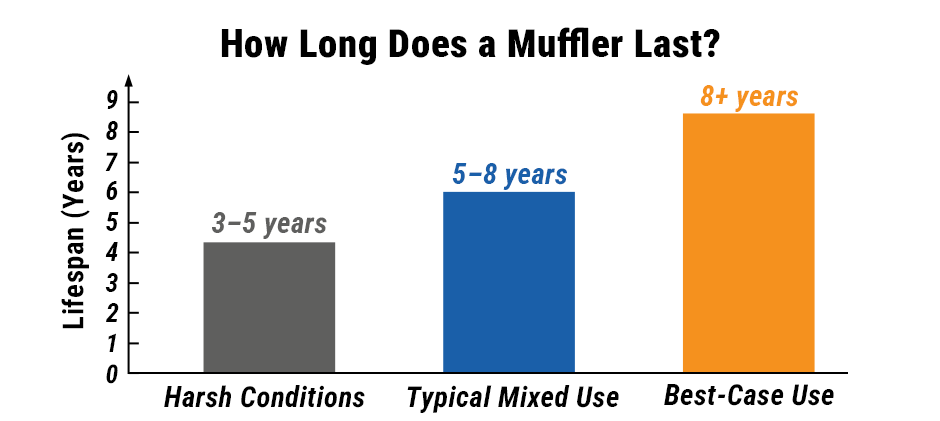
Real-world lifespan ranges (heavy equipment):
- Harsh conditions (salt, coastal air, frequent washdowns, constant mud): ~3–5 years (often faster if corrosion starts at seams and joints)
- Typical mixed use (construction, farm, moderate humidity, normal storage): ~5–8 years
- Best-case use (dry climate, good storage, steady operating temps): 8+ years
Why the range is so wide: mufflers often rust from the inside out when moisture and acidic condensation stay trapped after short runs, long idle time, or repeated cool-down cycles. External corrosion (salt, fertilizer dust, chemical exposure) adds another attack from the outside.
A practical way to think about it: if your machine does lots of short moves, long idle, or cold starts, the muffler sees more condensation and more corrosion even if the hour meter isn’t climbing fast.
How to Diagnose if the Muffler is Damaged?
Off-road machines are loud, vibrate hard, and work around debris. That makes it easy to blame the muffler when the issue is really the tailpipe, a clamp, or a broken hanger. Use this section to avoid buying the wrong part.
Step 1: Separate muffler failure from tailpipe or hanger issues
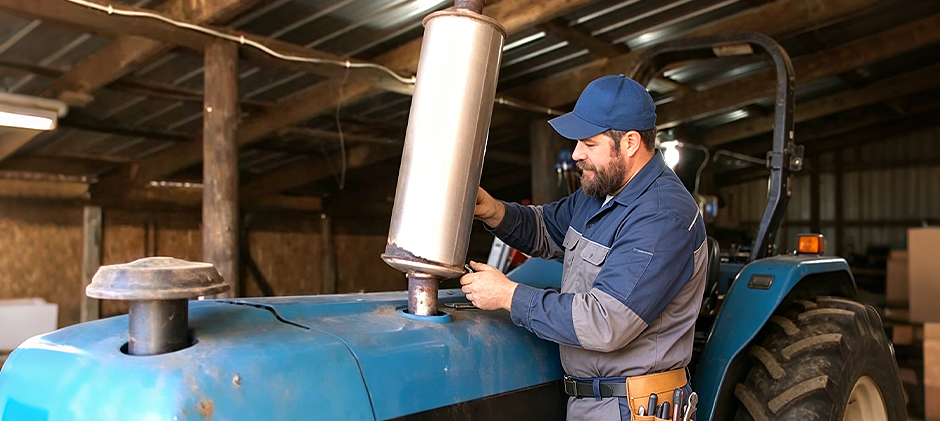
A common story: you notice “play” or a loose exhaust section and assume the tailpipe is loose—then you find the muffler is rusting at the pipe connection and the joint is what’s moving.
Fast checks
- Grab test (engine OFF, cool exhaust): try to move the tailpipe and the muffler body by hand.
- If the pipe moves but the muffler stays steady, you may have a tailpipe clamp/joint issue.
- If the muffler body shifts, you may have broken hangers, cracked brackets, or a failed muffler inlet/outlet joint.
- Look for soot tracks: black soot lines around seams, welds, and joints often mark an exhaust leak.
- Inspect mounts: rubber isolators, brackets, and band clamps fail before the muffler “looks bad.”
Step 2: Listen for the “type” of noise
With the machine in a safe area:
- Deep roar under load: often a leak or internal muffler damage (baffles broken).
- Metallic rattle at idle or shutdown: broken internal baffles or a loose heat shield/bracket.
- Sharp ticking near joints: a small exhaust leak at a flange, gasket, or clamp.
Step 3: Check for performance and safety clues
A failing exhaust component can do more than change sound:
- Exhaust smell near the cab or inside enclosed areas → treat as urgent (health risk).
- Soot buildup near the engine bay or under panels → leak path.
- Unexpected heat near hoses/wiring → exhaust leak redirecting hot gas.
Step 4: Confirm whether it’s the muffler or another exhaust part
Use this quick decision list:
- Likely muffler issue if:
- Rust-through on the muffler shell
- Seams, splits, or pinholes on the muffler body, internal rattle that doesn’t change when you tighten clamps
- Likely tailpipe/pipe/clamp issue if:
- The muffler shell is solid, but the outlet pipe is thin, cracked, or loose at a sleeve joint
- Likely manifold/gasket issue if:
- Ticking starts near the engine and gets louder under load
If you want a dedicated checklist of symptoms, use this reference: signs of a bad muffler.
The Factors Affecting Muffler Lifespan
A muffler’s life is mostly controlled by corrosion, heat stress, and physical damage. For off-road machinery, these factors show up in predictable ways:
1) Environment and chemicals
- Road salt/site salt and coastal air speed up external rust.
- Fertilizer, manure gases, and chemical dust can accelerate corrosion in agricultural work.
- High humidity keeps moisture on metal longer.
2) Duty cycle
- Short runs + long cool-downs = more condensation stays inside.
- Longer operating periods at working temperature = moisture evaporates and exits the exhaust.
- Heavy idling can keep the exhaust system warm-ish, but not hot enough to dry out fully.
3) Material and build quality
- Thicker shells and better welds generally last longer.
- Some mufflers are made with more corrosion-resistant materials (often worth it if your machines live outdoors).
4) Vibration and mounting condition
- Off-road vibration breaks hangers, cracks welds, and loosens joints.
- Missing isolators or misaligned pipes can put stress directly into the muffler neck.
5) Impacts and debris
Bottoming out, brush contact, or rock strikes can dent a muffler. A dent can:
- crack a seam later
- trap moisture
- change the internal baffle position and cause rattles
Transitioning from “what shortens life” to “what you can expect,” the next step is comparing common muffler types used on heavy equipment.
Average Lifespan of Different Muffler Types
The “type” here mainly means material and construction, not just shape. Use these as practical ranges.
| Muffler type | Typical lifespan | Best use case | Common failure mode |
|---|---|---|---|
| Standard steel / basic replacement | 3–6 years | Dry-to-moderate climates, sheltered storage | Rust at seams and pipe joints |
| Aluminized-coated steel | 4–7 years | Mixed jobsite use, moderate corrosion risk | Coating damage → rust spreads |
| Stainless or high-corrosion-resistance builds | 6–10+ years | Csalt, coastal air, outdoor storage | Weld/joint fatigue, hanger failure |
| Spark arrestor muffler assemblies | 4–8 years | Forestry / regulated sites | Clogging (if neglected) + corrosion |
Note: A muffler can be “alive” but not “healthy.” Internal baffle damage may raise noise or change backpressure even before a hole appears.
How to Extend the Life of a Muffler?
You can’t control the weather, but you can control moisture, stress, and damage. Focus on actions that prevent inside-out rust and joint failure.
1) Keep moisture from living inside the exhaust
- If the machine does many short moves, schedule periodic work periods long enough to fully warm the exhaust.
- After washing the undercarriage, avoid parking immediately in a cold, damp spot if you can safely operate long enough to dry external moisture off hot components.
2) Stop leaks early
- Tighten or replace loose clamps and worn gaskets.
- Don’t ignore soot marks—soot is often a “map” of where hot gases are escaping.
3) Protect mounts and alignment
- Replace broken hangers and isolators early.
- Ensure the exhaust isn’t preloaded (forced into position). Preload cracks joints.
4) Avoid impact damage
- Inspect after working in rock, demolition debris, or brush.
- Fix bent guards or missing skid plates that expose the muffler.
5) Maintain the engine so the exhaust stays “cleaner.”
A poorly running engine can increase soot and heat stress in the exhaust path. If you’re chasing repeated exhaust issues, it’s smart to look upstream at fuel and internal engine health. That’s also where having access to a broad catalog of engine parts helps—fuel system items, cooling parts, and internal components all affect how hard the exhaust system has to work.
When Should You Replace Your Muffler?
Replace the muffler when the cost of “nursing it along” starts turning into downtime, repeat labor, or risk.
1. Replace now (not later) if you have:
- Visible holes, cracks, or seam splits on the muffler body
- Exhaust leak toward the operator area (safety issue)
- Rattle from inside the muffler (broken baffles) that persists after checking shields and brackets
- Loose pipe connections caused by rust at the muffler neck
- Repeated clamp fixes that only last a short time
2. Replace soon if you have:
- heavy surface rust plus thinning metal at joints
- a leak that returns after a “temporary tack” fix
- noise increase that’s getting worse month by month
If you’re paying labor twice (or losing a day of work twice) because of the same exhaust section, replacement is usually the cheaper option—even if the part seems “not that expensive.”
When you’re ready to source a replacement, use a direct-fit heavy equipment muffler matched to your machine model and engine family to reduce install problems and repeat leaks.
Conclusion
A muffler on off-road machinery often lasts 3–8 years, but climate, heat cycles, vibration, and corrosion decide the real outcome. Diagnose carefully so you don’t confuse a failing muffler with a loose tailpipe, clamp, or hanger. If you see rust-through, repeated leaks, or internal rattles, replacement is usually the safest and most cost-effective fix—especially when downtime costs more than the part.
