

Four things decide whether a DEF pump is right for you: your refill volume, your power supply, your container capacity, and your workflow—mobile or yard-based. Pair them up wrong, and you’ll end up with corroded parts, contaminated DEF, and SCR damage that costs more to fix than it should have. This guide covers each of those factors in detail and highlights the mistakes that most drain operators’ pockets.
Quick Answer: Which Pump Fits You?
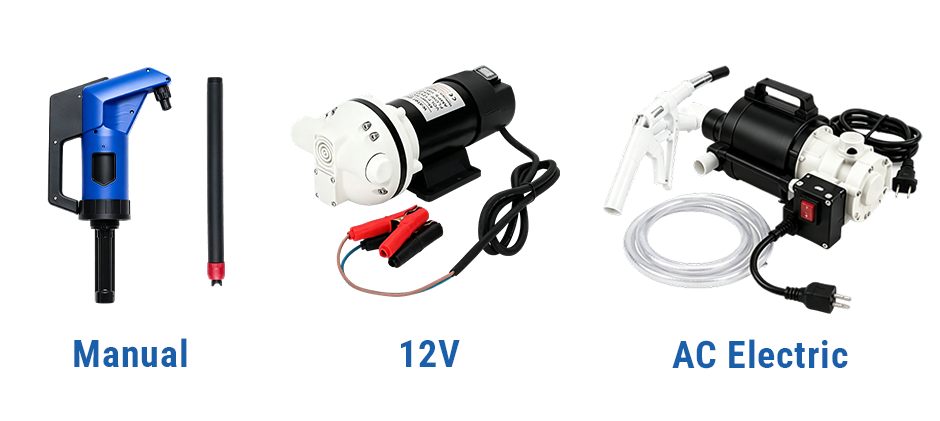
A safe DEF pump has three things in common, no matter the brand: a power source that matches your work site, a flow rate that matches your refill volume, and DEF-safe materials like stainless steel, polypropylene, EPDM, and Viton.
| Your Setup | Pick This |
|---|---|
| Service truck or field refill | 12V DEF pump (4–8 GPM) |
| Yard, shop, or daily use | AC electric pump (8–15 GPM) |
| Light or backup use | Manual rotary pump |
| Bulk fleet operation | Centrifugal pump (15+ GPM) |
The rest of this guide explains how to fine-tune that pick.
What Should You Compare Before Buying?
When comparing DEF pump setups, focus on seven practical points: power source, flow rate, container size, material compatibility, clean transfer, use case fit, and cold-weather performance.
Power source
Your work site decides the power type:
- 12V DC: Hooks to a battery. Best for service trucks and field work.
- AC electric (115V): Higher flow, steady power. Best for shops and yards.
- Air-operated: Runs on shop air. Tough and spark-free.
- Manual: No power needed. Slow but reliable as a backup.
How much flow do you really need?
The flow rate decides how fast a tank refills. Use this rough sizing chart instead of guessing:
| Daily Workload | Suggested Flow |
|---|---|
| 1–2 machines per day | 3–6 GPM |
| 3–5 machines per day | 6–10 GPM |
| Daily fleet refills (6+ units) | 10–15 GPM |
| Bulk yard or contractor transfer | 15+ GPM |
A quick rule: divide your daily DEF use by the minutes you can spend refilling. That’s your minimum GPM. Leave a 20% buffer for busy days, and remember that suction lift, hose length, and filter restriction all drop real-world flow below the spec sheet number.
Container type
Match the pump to your storage:
- 55-gallon drum → drum-mount or manual pump
- 275–330 gallon IBC tote → top-mount kit
- Bulk tank (500+ gal) → centrifugal or submersible
IBC totes hit the sweet spot for most small to mid-size fleets—enough volume for a week of work, small enough to swap with a forklift.
Which materials are DEF-safe?
This is one of the most common reasons DEF transfer systems fail early. DEF is 32.5% urea in deionized water, and it slowly breaks down into ammonia. Over time, DEF and its decomposition byproducts can attack copper, brass, zinc, and aluminum. A “universal” chemical pump may fail quickly and can contaminate the DEF in the process.
Safe materials for any DEF pump:
- Stainless steel 304 or 316
- Polypropylene or polyethylene
- EPDM or Viton seals
- PTFE for fittings
Avoid copper, brass, zinc, galvanized steel, aluminum, and Buna-N (nitrile) seals. Before you buy, check the spec sheet for the words “DEF compatible.” Don’t assume—confirm.
The same goes for every part that comes into contact with the fluid—it’s not just about the pump body. The usual culprits: hose linings not designed for urea, brass quick-connects pulled from an old fuel setup, and zinc-plated bolts hidden inside fittings. Get any single piece wrong, and you’re putting the whole transfer at risk. Stainless fittings paired with DEF-compatible hoses give you the safest all-around choice.
How do you keep the transfer clean?
DEF has strict purity rules under ISO 22241. One drop of diesel, a bit of dust, or a rust flake can spoil a whole tank and damage downstream SCR injectors. To keep transfers clean:
- Use closed-system couplers for dry-break connections that lock out air and dust.
- Add a 100-mesh inlet screen, plus a 5-micron filter for sensitive applications.
- Keep DEF gear fully separate from diesel, oil, and hydraulic fluid—even cleaned containers can cross-contaminate.
- Never reuse funnels, jugs, or rags between fluids.
A short hose run also helps. Dedicated tools, labeled clearly, help prevent one of the most costly mistakes in DEF handling: cross-contamination.
Which setup matches your job?
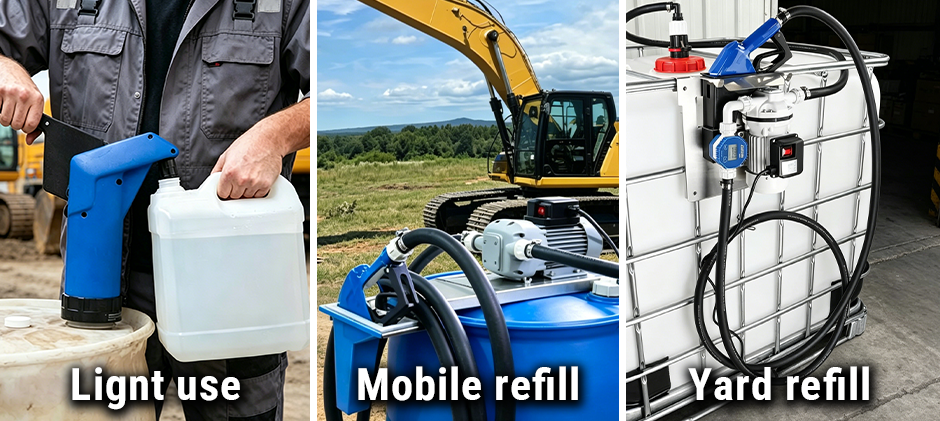
Three setups cover most operators:
- Light use: manual pump, drum, basic hose.
- Mobile service: 12V pump, 55–110 gal mobile tank, auto shut-off nozzle.
- Yard refill: AC pump, IBC tote, hose reel, meter.
Pick the setup that matches how you actually work—not how you wish you worked.
Can DEF freeze inside the pump?
DEF freezes at 12°F (-11°C). The fluid itself is fine once it thaws, but the pump and hose can crack. If you operate below freezing:
- Pick a heated pump model.
- Add heat trace to the hose, or use a heated hose assembly.
- Store smaller drums and totes indoors when possible.
- For long shutdowns, drain the pump fully.
Never thaw frozen DEF with open flame or boiling water. Slow warming at room temperature works every time and won’t damage the fluid.
Mistakes to Avoid
Even with the right pump, a few habits cause most field failures:
- Buying a non-DEF pump to save money—it fails in months and contaminates the fluid.
- Using open funnels instead of a closed coupler—dust and air spoil the DEF.
- Undersizing flow—a 5-truck fleet on a 4 GPM pump wastes hours every week.
- Skipping winter prep—cracked pumps are the most common January service call.
- Cross-contaminating with diesel or oil—one mistake can damage the SCR system.
Selection Guide
| Scenario | Pump Type | Flow | Container |
|---|---|---|---|
| Light use | Manual rotary | — | Drum |
| Mobile service | 12V electric | 4–8 GPM | Mobile tank |
| Yard or shop | AC electric | 8–15 GPM | IBC tote |
| Cold climate | Heated 12V/AC | 4–15 GPM | Insulated |
| Bulk transfer | Centrifugal | 15+ GPM | Bulk tank |
FAQ
What materials are safe for a DEF pump?
Stainless steel (304 or 316), polypropylene, polyethylene, EPDM, Viton, and PTFE. Avoid copper, brass, zinc, aluminum, galvanized steel, and Buna-N seals—they are not suitable for DEF service and can lead to corrosion or contamination.
What size DEF pump do I need?
Match flow to fleet size: 3–6 GPM for 1–2 machines, 6–10 GPM for 3–5 machines, 10–15 GPM for larger daily refills. Add 20% headroom for hose loss and busy days.
Can I use a regular fuel pump for DEF?
No. Fuel pumps have copper, brass, and Buna-N parts that react with DEF. Use a pump rated for DEF only.
Does DEF freeze inside the pump?
Yes, below 12°F (-11°C). The fluid thaws fine, but expansion can crack pump bodies and hoses. Use a heated pump or drain the system before long cold spells.
Can DEF be contaminated during transfer?
Easily. Diesel, dust, oil residue, or non-compatible metals all spoil DEF. Use closed couplers, dedicated tools, and a 5-micron filter to stay within ISO 22241.
Do I need a filter?
Yes. A 100-mesh inlet screen is the baseline. Add a 5-micron filter for cleaner transfer. Inspect filters regularly and replace them based on operating conditions and the manufacturer’s service interval.
Conclusion
Picking the right DEF pump comes down to matching power, flow, container, and materials to how you actually work—plus a closed coupler and a cold-weather plan if your climate calls for it. If you are comparing replacement transfer components and aftermarket parts for tractors, excavators, loaders, aerial work platforms, and other machine categories, FridayParts offers a broad catalog for routine maintenance and repair needs.
