

When the tractor hydraulic pump fails, the first thing is to order a new one, just using the OEM part number. But relying only on that part number doesn’t always work —especially for older tractors, imported second-hand units or modified machinery. Brands frequently update their product designs and change suppliers. Two hydraulic pumps can look identical, yet differ in mounting dimensions, drive shaft shape, rotation direction and operating specs.
Wondering how to check if a hydraulic pump fits your tractor beyond just the OEM number? Below are simple checks you can do before placing your order.
Confirm the Pump Rotation
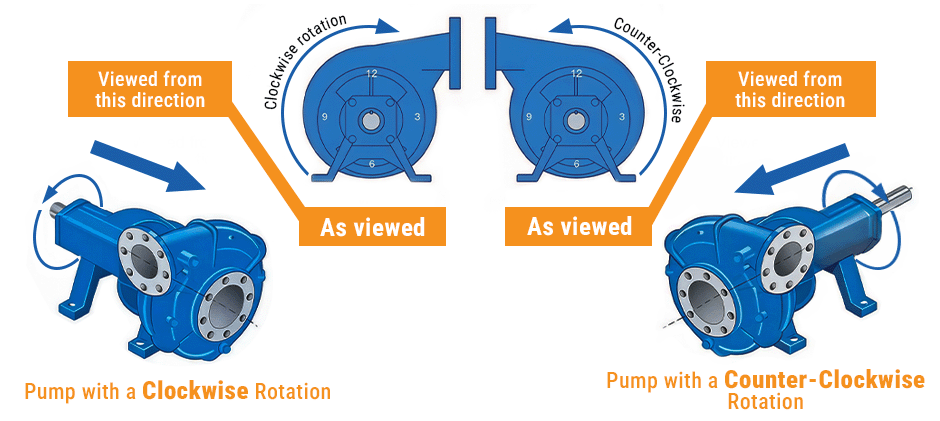
Before buying a replacement pump, make sure the rotation direction is correct. This is one of the easiest mistakes to make.
Hydraulic pumps only work in one direction—clockwise (CW) or counterclockwise (CCW). If the rotation is wrong, the pump won’t build pressure. It can also damage the shaft seal and other internal parts as soon as the tractor starts.
How to Identify Hydraulic Pump Rotation?
- Place the pump on a workbench with the drive shaft pointing directly at your face.
- Locate the large inlet (suction) port and the smaller outlet (pressure) port.
- Observe the position of the ports relative to the shaft.
- If the drive shaft is on top, and the inlet port is on the left, the pump requires Clockwise (CW) rotation to push oil to the right-hand pressure port. If you are unsure, look for an engraved arrow on the pump housing indicating the operational direction.
How to Check Hydraulic Pump Dimensions?
Before you check any hydraulic performance, first make sure the new pump physically fits your tractor’s engine or PTO drive. A digital caliper is all you need for this step.
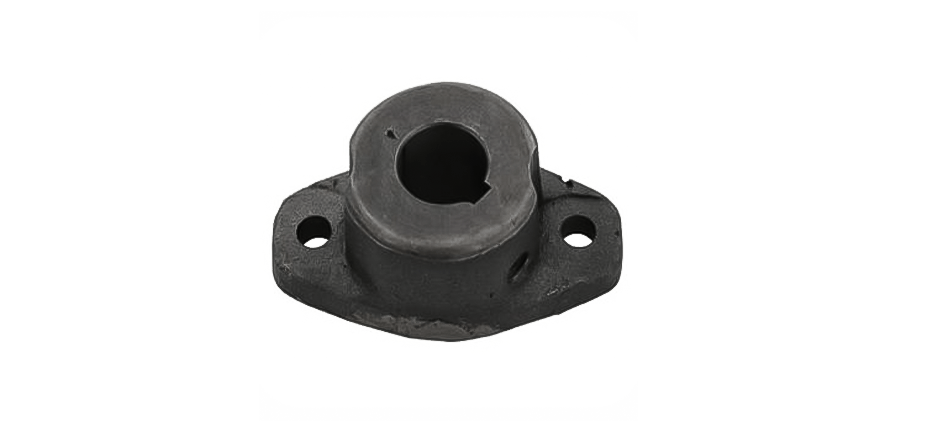
Mounting Flange
Most tractor hydraulic pumps follow standard SAE flange sizes. But some European and Japanese compact tractors use metric layouts, so don’t assume they match.
Do these simple checks for flange fit:
- Count the bolt holes – most pumps use either 2-bolt or 4-bolt mounting patterns.
- Measure bolt spacing – check the center-to-center distance between each mounting hole.
- Measure the pilot diameter – this is the raised ring on the pump face that centers the pump perfectly. Even a tiny size difference means the pump won’t sit flush and mount correctly.
Drive Shaft
The drive shaft transfers power from your engine to the pump. If the shaft doesn’t match exactly, the pump won’t engage properly, or it will bind and fail under load. Check your shaft type and measure accordingly:
- Splined shafts – count the spline teeth (common 9, 11, or 13-tooth) and measure the outer tooth diameter.
- Keyed shafts – measure total shaft diameter, shaft length, and the width of the key slot.
- Tapered shafts (common on European tractors) – measure the wide end, narrow end, and overall taper length.
Hydraulic Inlet & Outlet Ports
The inlet port pulls oil from the reservoir, and the outlet port sends pressurized oil to your tractor’s hydraulic valves.
Important rule: Never use Teflon tape on hydraulic threads. Small tape fragments can break off, get inside the hydraulic system, clog tiny valve openings, and lock up the whole system. Use dedicated hydraulic thread sealant or pumps with built-in rubber seals instead.
| Port Thread Type | How to Identify |
|---|---|
| O-Ring Boss (ORB) | Straight threads with an O-ring groove. |
| National Pipe Thread (NPT) | Tapered threads that get tighter when installed. |
| BSPP / Metric | Straight threads, commonly used on many European and Japanese tractors. |
| Split Flange | Four mounting bolts around the port. |
Check the Pump Performance Specs
Even if the new pump fits perfectly physically, it still has to match your tractor’s performance specs. Always check its flow rate, displacement and max working pressure.
Displacement & Flow Rate
Displacement is how much oil the pump pushes out with every rotation. Flow rate is how much oil it delivers over time. If the displacement is too small, your loader, steering or 3-point hitch will work very slowly. If it’s too large, the hydraulic system will react overly fast and put extra strain on the engine.
Maximum Pressure
Make sure your new replacement pump has the same maximum pressure rating as your original pump, or a higher rating. Never fit a pump with a lower max pressure than your tractor’s required specification.
Installation Tips for a New Hydraulic Pump
If your old hydraulic pump broke from internal mechanical damage — like worn metal parts, cracked gear teeth or busted pistons — tiny metal shavings will spread all through your tractor’s whole hydraulic system.
If you just bolt on a new pump right away, those metal bits will get sucked back into the new unit. They’ll scratch up the new gears, and your brand-new pump could fail after only a few hours of use.
- Drain and flush the whole hydraulic system: This step is super important to keep everything clean. Empty all oil out of the hydraulic tank. Flush every hose, cylinder and valve body with fresh hydraulic oil to wash away metal scraps left by the broken pump.
- Replace every filter: Replace both suction and return filters with brand new ones. If your tractor has a reusable suction strainer inside the tank, take it out and scrub it fully with cleaning solvent.
- Prime and pre-lube the new pump: Never fire up a pump with no oil inside it. Before hooking up any lines, pour clean hydraulic oil straight into the pump’s inlet port, then spin the drive shaft by hand several times. This coats all internal gears and seals with lube when you first start the tractor.
- Test run the tractor at low RPM: Check for leaks and make sure hydraulics move smoothly. Start the tractor and keep it idling slow. Work your loader, 3-point hitch and other hydraulic controls gently to push trapped air out of the lines. Don’t rev the engine high or lift heavy loads until all air is fully bled from the system.
Tractor Hydraulic Pump Quick-Match Checklist
Use this quick-reference table to write down your measurements before reaching out to a supplier or ordering online.
| Specification | My Old Pump Value | Why It Matters |
|---|---|---|
| Pump Type | e.g., Gear, Piston, Vane | Determines the internal mechanical design and efficiency. |
| Rotation Direction | CW (Right Hand) or CCW (Left Hand) | Critical. Spinning the pump backward destroys it instantly. |
| Mounting Flange Style | e.g., SAE A 2-Bolt, Metric | Matches the physical mounting interface on the tractor. |
| Pilot (Register) Dia. | e.g., 3.25 inches (82.5 mm) | Aligns the pump shaft concentric with the drive gear. |
| Shaft Style & Size | e.g., 9-Spline, 5/8″ Straight Keyed | Determines how power is transferred from the engine. |
| Inlet / Outlet Ports | e.g., 7/8″-14 UNF (ORB), 3/4″ NPT | Ensures leak-free plumbing to your existing hoses. |
| Max Pressure Rating | e.g., 3,000 PSI (207 bar) | Must meet or exceed the tractor relief valve setting. |
Need a Reliable Replacement Pump?
When you need a high-quality, direct-fit replacement, check out the full hydraulic pumps at FridayParts. Just enter your tractor’s brand and model, or all the physical specs we covered earlier. You’ll get budget-friendly, dependable pumps to keep your tractor working well.
FAQs
Can I upgrade to a higher-flow pump to make the loader move faster?
You can, but don’t go overboard. If you boost flow too far, your hydraulic hoses won’t keep up. The oil will overheat, and your tractor will lose engine power. Stick to a pump that’s only 10–15% higher GPM than the original one. If you want more flow than that, you’ll need to upgrade your hydraulic valves and cooling system too.
Why does my new pump make a loud, high-pitched whine?
That squealing or howling sound almost always means cavitation. The pump isn’t getting enough oil and is sucking in air instead. Check if your suction line is blocked, the tank strainer is clogged, or there’s an air leak where the suction hose connects.
What if the name tag on my old pump fell off completely?
No tag? You can still find the right replacement. Match the mounting flange, measure the drive shaft, write down your port sizes and thread type, and confirm the pump’s rotation direction. Reliable aftermarket sellers like FridayParts have huge cross-reference charts. They can match all your physical measurements to the correct pump for your tractor model.
