

Most hydraulic fluid leaks on off-road equipment come from four places: damaged hoses, worn seals, loose fittings, or cracked lines. Start by figuring out whether the leak is external or internal. An external leak leaves oil on the ground or on the machine. Internal leaks do not — you may notice weak power, cylinder drift, or the system running hot. A small drip around a fitting might only need a new O-ring. But an internal leak inside a pump or cylinder can lead to overheating and eventual system failure if ignored.
Common Signs of a Hydraulic Fluid Leak
Before you find where the leak is, the machine usually shows signs that something is wrong.
Common symptoms include:
- Slow movement of the attachment
- Weak lifting power
- The cylinder is moving on its own
- A whining noise from the pump
- The hydraulic oil is getting too hot
- Oil on the outside of hoses and fittings
In some cases, operators may also notice:
- Jerky movement of the boom
- Air bubbles in the tank
This happens when air gets into the system. The leak can be hard to find.
External vs Internal Leaks
To fix the problem, you need to know where the system is losing pressure.
External leaks are easy to spot. You can see oil dripping from rubber hoses and collecting around fittings. Sometimes oil runs down a cylinder rod on a backhoe. These leaks are usually easy to find. If oil can escape, dirt and grit can also get inside and damage internal parts.
Internal leaks are harder to diagnose because you may not see oil on the outside of the machine. For example, the excavator boom may slowly move down when it is under load. The loader bucket may not feel as strong as it should. Hydraulic oil may also get too hot during operation.
You should be careful when checking for leaks. Never use your hands to search for high-pressure leaks. A tiny hole in a hydraulic line can easily pierce your skin. Always use a piece of cardboard or wood to check lines.
Common Causes of Leaks
- The equipment operates in harsh conditions that cause heavy wear.
- Excavator hoses can leak because of frame rubbing or track vibration. In that case, you may need to replace the high-pressure hoses or hose ends.
- Loader fittings can leak because of vibration or over-tightening. You may need to replace straight or elbow fittings and adapters.
- Skid steer cylinders can leak because of dirt contamination or pitted chrome. You may need to replace the rod seals, piston seals, or the full cylinder seal kit.
- Valve blocks can leak because of high oil temperature or seal hardening. In that case, valve seal kits and O-rings may need to be replaced.
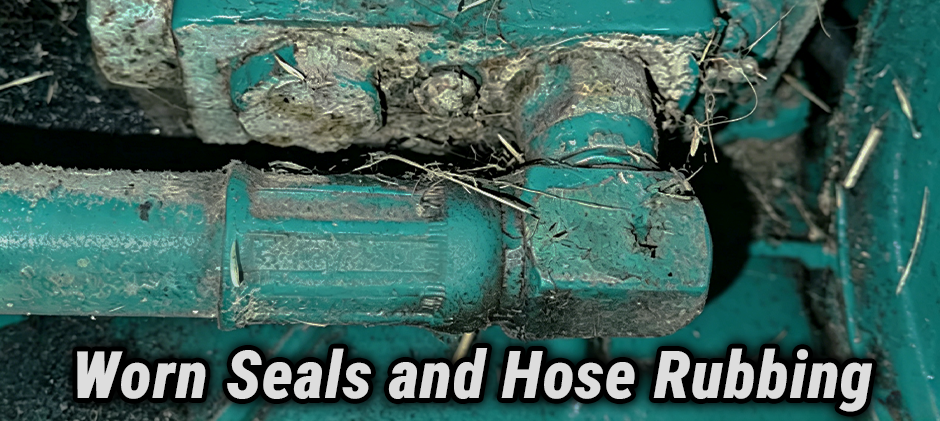
Worn seals and hose rubbing are common causes of leaks. When rubber O-rings and rod seals go through constant heating and cooling cycles, they become brittle and eventually crack. If a line rubs against a metal edge, it can fail suddenly. Over-tightened connections can also damage threads and cause leaks.
Hydraulic Fluid Leak Troubleshooting Table
| Symptom | Possible Cause |
|---|---|
|
Oil around hose fittings
|
Loose-fitting or damaged O-ring
|
|
Weak bucket lifting power
|
Internal cylinder seal leak
|
|
Hydraulic oil overheating
|
Internal bypass leakage
|
|
Cylinder drift
|
Worn piston seals
|
| Sudden hose burst |
Hose abrasion or excessive pressure
|
| Pump whining noise | Air entering the suction line |
3-Step Hydraulic Fluid Leak Diagnosis and Fix
1. Clean and inspect the system
Wipe down the hoses, cylinders, and valve blocks. Dirt and oil can hide small leaks. You cannot fix what you cannot see.
2. Test under safe conditions
Put the machine on level ground. Lower all attachments to take pressure off the system. Then look for leaks.
If there is no oil on the outside but the machine still runs weakly, that points to an internal leak. In that case, focus on pumps and cylinders.
3. Replace what is broken
Once you find the source, replace the damaged parts:
- Hoses – Replace cracked or leaking hoses
- O-rings and fittings – Replace parts that leak at the connection
- Seal kits – Use the correct seal kit if there is an internal leak in a cylinder or valve
After the repair, run the machine under a light load. Make sure the problem is gone before putting it back to work.
When to Stop Operating the Machine
Some hydraulic issues are minor. Others require immediate shutdown. Stop operating the equipment if you notice:
- Rapid loss of hydraulic power
- Severe oil leakage under pressure
- The hydraulic pump noise is increasing quickly
- Hose swelling, cracking, or signs of bursting
- Overheating combined with performance loss
Continuing to operate the machine in these conditions can lead to pump failure or sudden hose rupture.
Conclusion
Fixing a leak early helps protect your machine from further damage and reduces the risk of downtime. Regularly checking hoses for wear, watching oil temperature, and replacing worn seals can help keep the hydraulic system working properly.
Hydraulic leaks do not fix themselves. Replacing a damaged hose, fitting, or seal early usually costs far less than repairing a failed hydraulic pump or damaged cylinder later.
If you need replacement hoses, FridayParts offers aftermarket parts for excavators, loaders, skid steers, bulldozers, and other off-road equipment. You can also find seal kits, fittings, cylinder parts, and other replacement components for repair and maintenance.
