

When you filter coolant during a repair on your excavator, tractor, or loader, you might wonder: Can I clean and use it again? Sometimes, yes — but it depends. Reusing coolant can save money, but if it’s dirty or old, it can harm your engine. This guide explains when it’s safe to reuse coolant and gives you easy, step-by-step instructions for filtering it safely.
When Should You Consider Reusing Coolant?
You should only reuse coolant when it’s very clean and very new. For example, if you drained it during a quick job (like replacing a hose) and kept it in a clean, sealed container, it might be safe.
But if you’re not 100% sure that it stayed clean, it’s safer to use a fresh batch.
4 Signs You Must Not Reuse Coolant
If you notice any of these signs, do not reuse the fluid — always replace it.
1. Visible Debris or Rust
2. Milky or Oily Appearance
If it looks cloudy, milky, or has an oil film, it’s probably mixed with engine oil — a clear sign of internal damage.
3. The Coolant Is Old
Coolant only lasts about two years or a certain number of operating hours. Old fluid loses its ability to protect metal surfaces.
4. It Was Drained into a Dirty Pan
If you used a tray or pan that wasn’t completely clean, the coolant is no longer safe. Even a little dirt can cause engine wear.
How to Properly Filter Coolant in 5 Steps
If your coolant still looks fresh and passes all checks above, follow these 5 detailed steps to filter it carefully.
(Remember: this process only works for very clean coolant!)
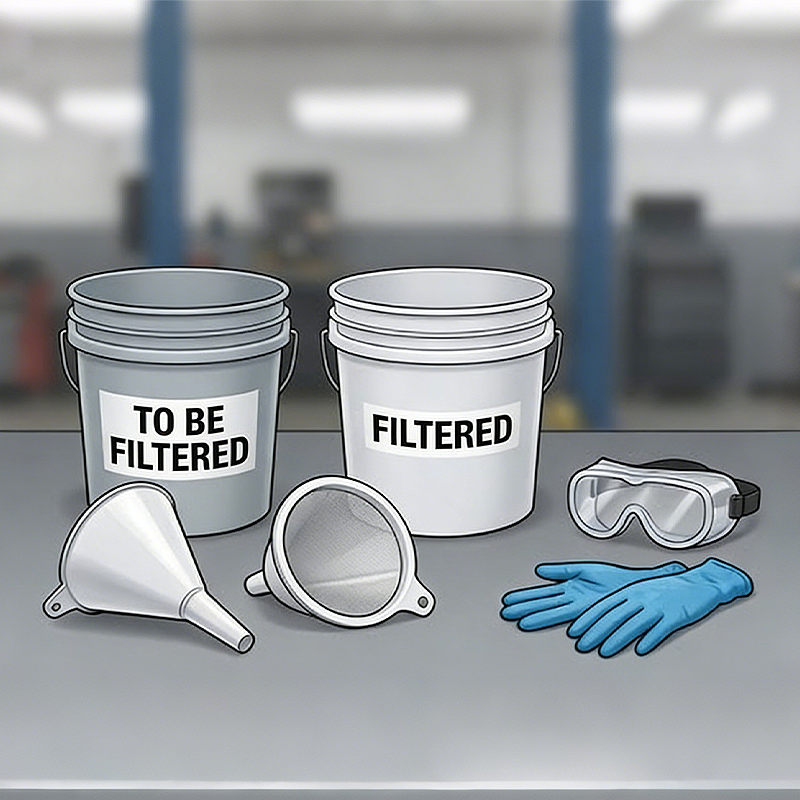
Step 1: Get Your Supplies
Gather everything you’ll need so you don’t have to stop mid-job.
You’ll need:
- Two clean and dry containers or buckets: one for pouring, one for collecting filtered coolant.
- One clean funnel: big enough so the coolant won’t splash.
- Filtering material: a fine-mesh paint strainer, several layers of cheesecloth, or a few stacked coffee filters all work well.
- Protective gloves and safety glasses: coolant can irritate skin and eyes.
- A flashlight or lamp: for checking clarity later.
Make sure all tools and containers are completely clean and dry before starting. Any leftover dirt or water can ruin the coolant.
Step 2: Set Up Your Filtering Station
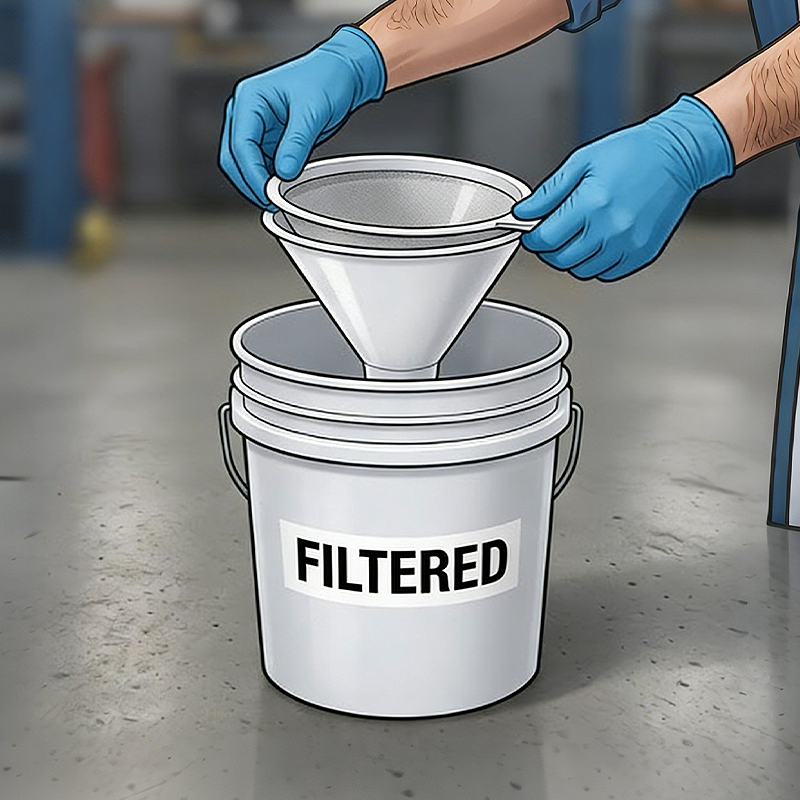
- Find a flat, bright area to work — ideally a workspace or garage floor.
- Place the empty, clean container right under your funnel. Use something stable so it can’t tip over.
- Put your filtering material inside the funnel and spread it out evenly. It should cover the whole opening but still let liquid pass through slowly.
- Make sure the filter won’t collapse under the weight of the liquid — you can use rubber bands or clips to hold it tight.
A steady setup means fewer spills and better results.
Step 3: Pour the Coolant Slowly
This step matters most — take your time.
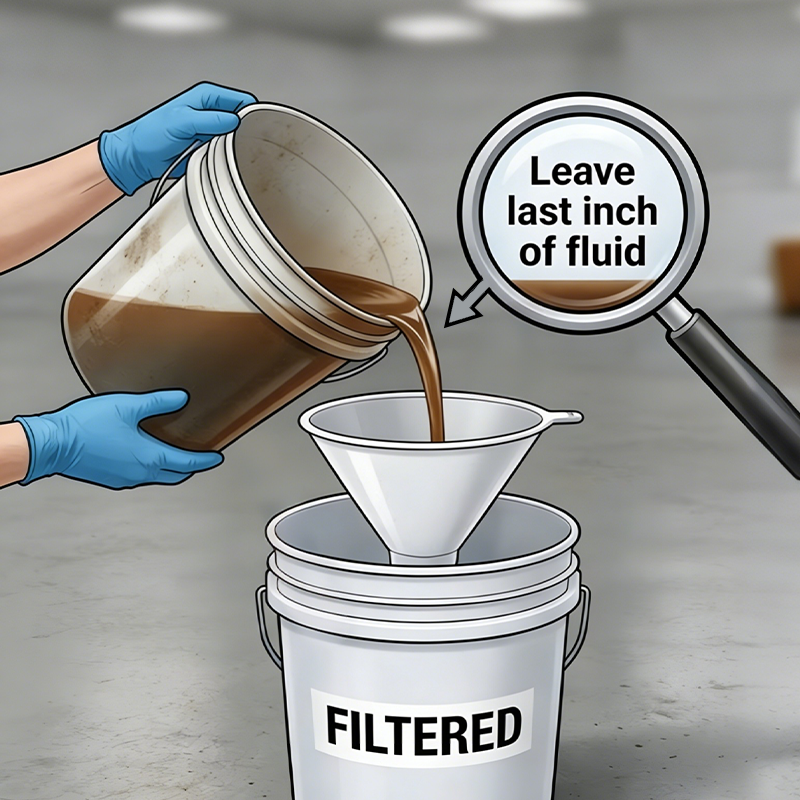
- Pick up the container with the used coolant carefully; don’t shake it. Let any settled dirt stay at the bottom.
- Start pouring the coolant into the funnel slowly and in a steady stream. The fluid should move gently through the filter, not rush in.
- Stop pouring every so often to check if the filter is filling up. If it starts to clog, replace it with a new one and keep going.
- Avoid pouring the last inch (2–3 cm) of liquid — that part often holds tiny dirt particles that have settled at the bottom.
A slow pour helps your filter trap every bit of dust or grit.
Step 4: Inspect the Filtered Coolant
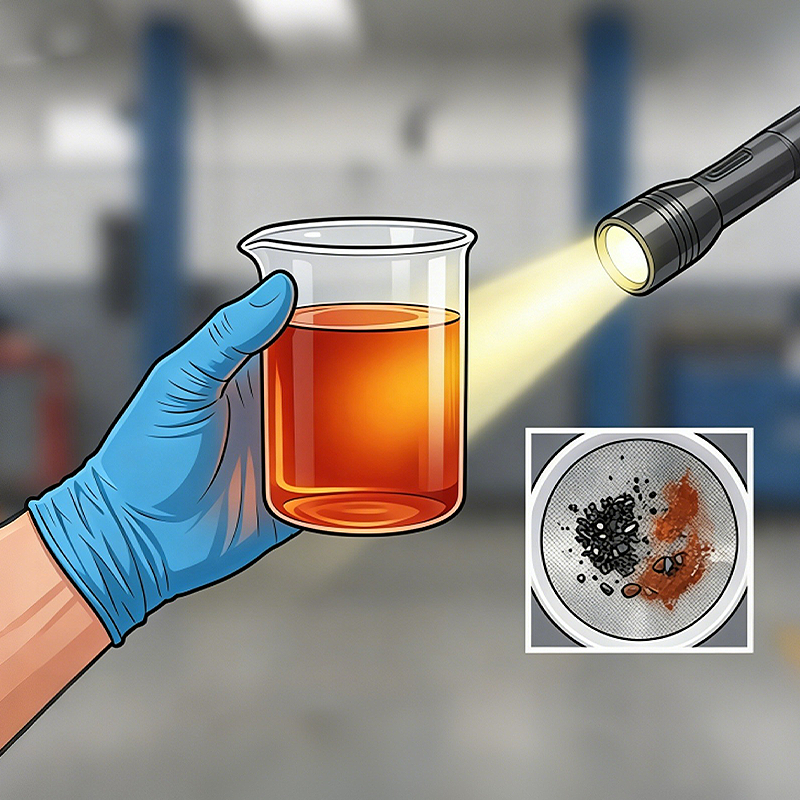
Once finished, take the clean container and hold it up under a bright light or flashlight:
- The coolant should look clear, bright, and even in color — just like new.
- If you see floating specks, cloudy patterns, or small flakes, it’s not good enough to reuse.
- Look inside the filter to see what was caught — if you find sand, rust, or black residue, the coolant was more contaminated than you thought.
Check the smell too. A sharp or burnt odor often means the chemical additives are worn out.
Step 5: Make the Final Decision
Now decide whether it’s worth reusing:
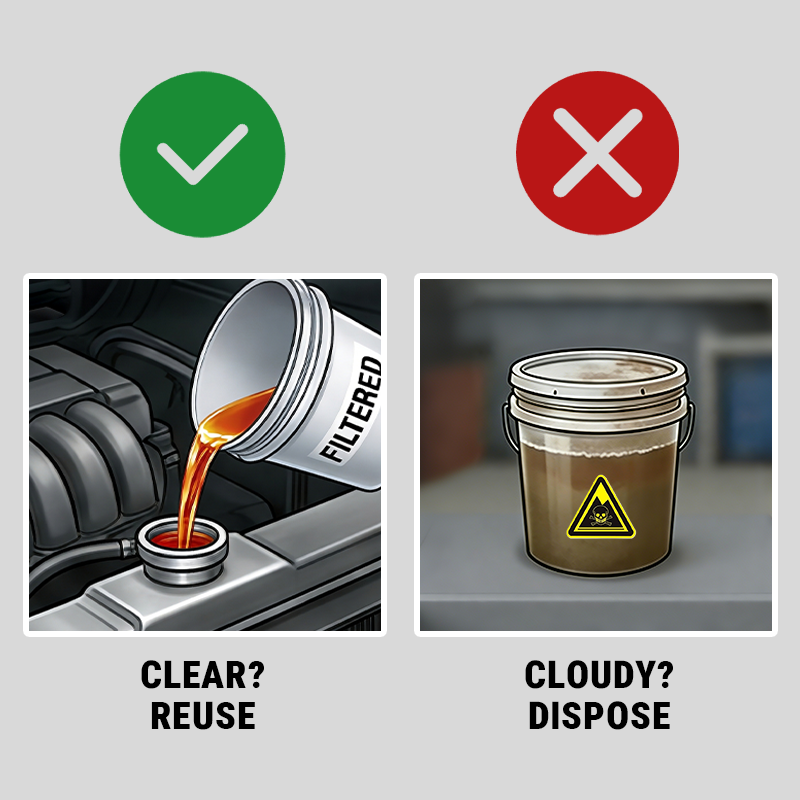
- If the coolant looks perfectly clean, bright, and free of debris, it’s likely safe to reuse for a short time.
- If it looks even slightly cloudy, has floating dust, or smells strange, throw it away and use new coolant.
When in doubt, don’t take a chance. A new bottle of coolant costs much less than fixing an overheated engine.
Pour the approved coolant carefully back into your radiator or coolant tank using a clean funnel, and tighten the caps securely. Dispose of any rejected coolant properly — never pour it on the ground or into drains.
Final Words
Filtering and reusing coolant can work only in the cleanest conditions. Even small contamination can cause major damage to water pumps, hoses, and radiators. Whenever possible, protect your machinery by choosing fresh, high-quality coolant. Keeping the cooling system clean is one of the simplest ways to make your equipment last longer.
If you need new parts like a radiator, water pump, or hose set, check the reliable options in the FridayParts collection of cooling system parts to keep your off-road machine running safely and smoothly.
