

To replace a lawn mower deck wheel, remove the mounting nut and bolt, take off the old wheel, and install a compatible replacement. If the wheel is stuck, rust may have seized the bolt inside the metal sleeve. Read on to learn more details and prevent the same problem from happening again.
What Are Lawn Mower Deck Wheels and Anti-Scalp Wheels?
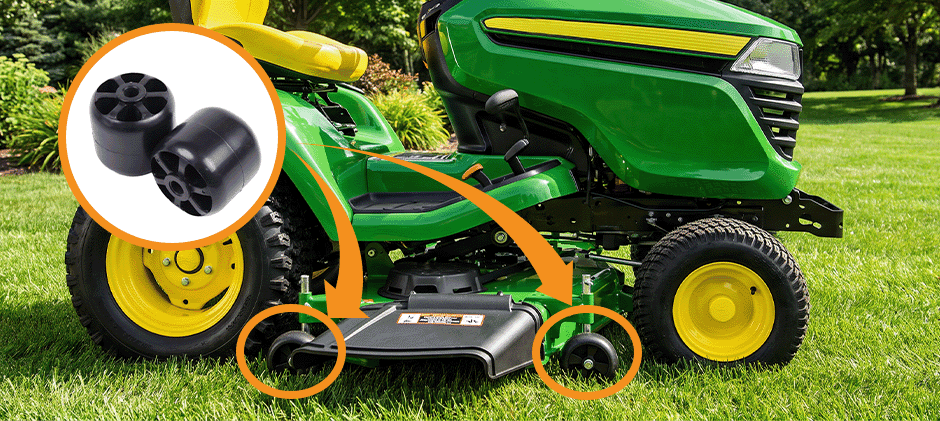
Before we start taking things apart, we need to look at the different types of wheels on your machine. While the main drive wheels move the mower forward, the smaller wheels attached to the mower deck serve a completely different purpose. These are often called deck wheels or anti-scalp wheels.
Anti-scalp wheels work just like they sound — they keep mower blades from scalping your grass. When you go over bumpy ground, little mounds or dips in your yard, the mower deck tends to drop down. If it sinks too far, the spinning blades cut grass all the way down to bare dirt and leave ugly dead spots on your lawn. The anti-scalp wheels touch the ground first, holding the deck up just enough so it slides over raised areas.
These wheels take a beating. They keep slamming into rocks, tree roots and curbs. Over time, the hard plastic or rubber wears out, the center hubs get loose, and they don’t roll freely anymore. Once they stop rolling, they drag across the grass. That hurts your turf and puts extra stress on your mower frame. Learning how to replace this type of lawn mower wheel is simple maintenance every equipment owner should know.
Why Is Your Lawn Mower Deck Wheel Stuck?
You gather your tools, ready for a quick repair, but when you try to loosen the bolt, it refuses to budge. A lawn mower wheel stuck on its bracket is one of the most common issues we see. But why does this happen?
- Harsh Working Environments: The space under the mower deck is really tough. While you mow, these wheels get hit nonstop with wet grass clippings, dirt, mud and moisture.
- Lack of Factory Lubrication: A lot of stock factory wheels don’t have proper grease points. When water and dirt get into the metal sleeve inside the wheel hub, rust starts to build up.
- Rust Expansion and Heat Bonding: That rust works like strong glue, sticking the metal bolt tight to the wheel’s inner metal sleeve. The wheel fights to turn, and friction creates heat. This makes the binding even worse until the bolt locks up completely.
“When a bolt seizes inside the metal sleeve of a deck wheel, standard wrenches often won’t do the trick. The metal-on-metal bond requires mechanical force or cutting to break free.”
If the wheel is completely destroyed and the bolt is seized, you might find yourself unable to turn the nut at all. In these severe cases, you have to resort to heavy-duty methods to get it off.
How to Replace Anti-Scalp Wheels on a Lawn Mower?
Replacing anti-scalp wheels is pretty easy as long as you’ve got the right tools and a little patience. Follow these steps to get a good fit and smooth rolling. You’ll need a socket set, combination wrench, hammer, and penetrating oil (WD-40 works great). If your wheel is really stuck, you may also need a hacksaw or angle grinder.
- Lift and Lock the Deck: Park the mower on flat ground. Shut off the engine, pull out the key, and disconnect the spark plug wire. Use a jack to raise the deck, then lock it in place with jack stands. Never trust just the mower’s hydraulic or mechanical lift to hold it up.
- Take Off the Old Wheel: Spray penetrating oil on the nut and bolt head. Let it sit a few minutes. Use your socket and wrench to loosen the retaining nut. If the nut comes off but the bolt won’t slide out, lightly tap the end of the bolt with your hammer.
- For Tough Seized Bolts: When the bolt is stuck tight inside the metal sleeve, you’ll have to cut it off. Use an angle grinder or hacksaw and carefully cut the bolt on both sides of the wheel hub. Watch what you’re doing so you don’t damage the metal bracket on the mower deck.
- Clean the Mounting Bracket: Before putting on new parts, scrub the mounting bracket with a wire brush. Clear away dried grass, dirt and rust flakes. A clean surface lets the new hardware seat properly.
- Fit the New Hardware: Line up your new anti-scalp wheel with the holes in the bracket. Push the new bolt through the bracket, the wheel sleeve, and out the other side. Screw on the new lock nut. Tighten it until it’s firm, but leave enough play so the wheel spins freely. Over-tightening will make the wheel bind and drag.
How to Prevent Lawn Mower Deck Wheels from Seizing Again?
Once you finish the replacement, you don’t want to run into seized bolts ever again. Good lubrication is the key to making these parts last. Here’s how to keep your wheels rolling freely:
- Switch to Grease Zerk Fittings: Most stock wheels don’t have any way to add grease. Swapping to wheels with grease zerk fittings on your mower deck saves you tons of hassle later. A grease zerk is a small metal fitting that works like a one-way valve.
- Pump in Fresh Grease: Hook your grease gun onto the zerk fitting. Pressure pushes fresh grease straight into the wheel hub center. It coats the metal sleeve and bolt to form a waterproof shield. When you keep pumping new grease in, old dirty grease gets squeezed out from the sides, carrying dirt and moisture along with it.
- Stick to a maintenance routine: We suggest greasing these fittings every 25 working hours, or at minimum once before and once after mowing season. This easy cut down wear on the internal bushings, so the bolt will slide out without trouble next time.
When Should You Replace the Anti-Scalp Wheel Bracket?
Sometimes the issue isn’t just a broken wheel. While you check over the mower deck, take a close look at the metal brackets welded onto the deck shell. You’ll need a new bracket if you see any of these problems:
- Wallowed-Out Holes: When a wheel stays stuck or drags for a long time, constant friction wears down the bracket metal. The round mounting holes turn oval or get wallowed out. Once this happens, even a brand-new wheel and bolt will fit loosely. The wheel will wobble and bounce around.
- Bent Brackets: Hitting a big rock or stump can bend the bracket back from the impact. A bent bracket shifts the wheel angle, so it can no longer stop turf scalping.
- Severe Rust or Cracks: If the bracket has cracks or heavy rust damage, hold off on installing the new wheel for now. Welding a new bracket to the deck is the only fix to get the right alignment and solid strength back.
Conclusion
Replacing these mower wheels is key for routine equipment care. Remove seized hardware, upgrade to wheels with grease fittings, and check your deck brackets. This protects your lawn and helps your mower last longer. Keep up with lubrication and swap out broken parts right away, and your mower will run smoothly even over rough ground. Get reliable lawn mower parts from FridayParts for all your repair and maintenance jobs.
