

Thinking about buying a complete hydraulic cylinder seal kit? You might run into a few questions. In this guide, we’ll talk about all you need to know about the hydraulic cylinder seal before making a purchase.
What Are Hydraulic Cylinder Seals?
Hydraulic cylinder seals are critical components that maintain the integrity and efficiency of your hydraulic system on heavy machinery, like excavators, tractors, dozers and more. These seals are used to close gaps between components in hydraulic cylinders. Even a slight damage can destroy the functionality of your hydraulic system.
Types of Hydraulic Cylinder Seals
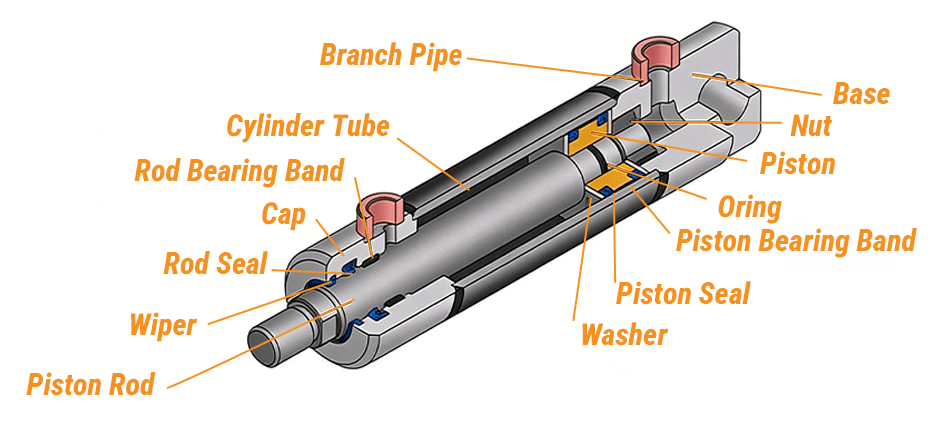
Each hydraulic cylinder has unique rod and bore diameters, stroke length, cylinder length, pressure flow requirements, etc. The hydraulic seals come in five major types:
- Piston seals: Seal between piston and cylinder bore for a pressure-tight chamber, preventing fluid from bypassing the piston (Get your replacement piston seals here)
- Rod seals: Seal in the cylinder head(gland), preventing external fluid leaks
- Wiper seals (scrapers): Seal at the very end of the cylinder head to remove dirt and contaminants from the rod as it retracts.
- Wear rings (guide rings): Low-friction bands to prevent metal-to-metal contact between the piston and the cylinder bore and between the rod and the cylinder head
- Buffer seals: Seals that absorb shock and reduce pressure spikes.
The Main Role of Hydraulic Seals
Their primary functions are as follows:
- Keep the hydraulic fluid contained for consistent performance
- Prevent contaminants from entering the cylinders
- Maintain pressure to ensure efficient operation of the hydraulic system
In simple words, these seals serve as protectors of your hydraulic system against contamination and leakage.
Common Signs of Worn Hydraulic Cylinder Seals
Operating under immense pressure, these cylinder seals are susceptible to wear and tear. When you notice these bad cylinder seal symptoms, it’s time for a quality replacement. The common signs of a damaged seal include:
- Visible leaks from the cylinder around the piston rod
- Reduced hydraulic pressure
- Inconsistent or jerky movement
- Watch for any signs of wear and perform a careful check or replacement of the seals. This can mean the difference between routine and disastrous hydraulic system failure.
Shop quality piston rods here.
How to Choose the Right Seal Kits for Hydraulic Cylinder?
Once you notice any sign of a worn-out seal, you should have your seals replaced immediately to prevent catastrophic system failure. But how to find a seal kit for a hydraulic cylinder?
The most reliable way to select the right hydraulic seals for cylinders is to source by part numbers and model numbers. You can find the part number on the body of the hydraulic cylinder for a metal nameplate, tag or stamped number. It will list the part number, model number as well as other information.
What if the nameplate has fallen off? You can also search the right hydraulic cylinder seal kits by providing critical information, including the equipment make, model, serial number as well as cylinder function to your parts suppliers, so you can get the right parts.
The last solution is to search hydraulic seal kits by size. You can provide the bore diameter, rod diameter, the specific dimensions of the seals (inner diameter, outer diameter and thickness) and the photo of each seal’s cross-section (profile) to your parts suppliers for looking up. Yet, this method can be time-consuming and sort of risky, because an old seal can be worn, so you can’t measure the exact size of your hydraulic cylinder seals.
How to Measure the Size of Your Hydraulic Cylinder Seals?
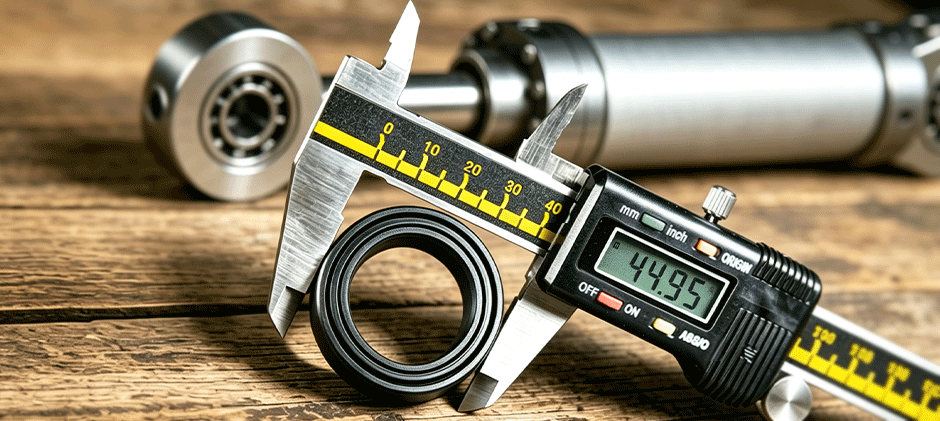
Sizing a hydraulic cylinder seal kit is a straightforward process but a little bit time-consuming. You’ll need a precise tape measure and calipers for the measurement. Here are the steps for your reference.
- Measure the Bore Diameter: Stretch the tape measure across the cylinder’s inner barrel to measure the cylinder’s bore, aka the interior diameter of the cylinder
- Measure the Piston Rod: Measure the diameter of the chrome-plated circular piston rod with outside calipers
- Measure Retracted Length of Your Cylinder: Measure the length with a tape measure between the centers of its pin holes when the cylinder is totally closed
- Measure Cylinder’s Extended Length: Use your tape measure to determine the length between its pin holes when the cylinder is completely opened
- Calculate Your Cylinder’s Stroke: Simply subtract your cylinder’s retracted length from its extended length. For example, if your retracted length was 12 inches, and your extended length was 34 inches, your stroke will be 22 inches.
Now, you know how to size your hydraulic cylinder seals. You can make your purchase at FridayParts.
What Details Do You Need to Confirm Before Your Purchase?
To make sure the hydraulic seal kit replacement is compatible, you need to confirm as many of the following details as possible before ordering:
- Cylinder manufacturer
- Cylinder or assembly part number
- Equipment make, model, and serial number
- Bore diameter
- Rod diameter
- Stroke length
- Seal style and gland design** (U-cup, buffer seal, wiper, O-ring with backup ring, etc.).
- Seal material, if known (polyurethane, NBR/Buna-N, PTFE, Viton, etc.), especially if the cylinder operates in unusual temperatures or with specialty fluids.
Where to Buy Hydraulic Cylinder Seal Kits?
Hydraulic cylinders operate under immense pressure and are subjected to wear and tear over time. Recognizing the early signs of wear or damage can prevent more extensive issues and save on costly repairs. At FridayParts, you can explore a vast range of quality hydraulic cylinder seals for your John Deere, Bobcat, CASE, JCB and other brands. Always search for parts with your part numbers and models for compatibility and reliability.
See Related
Complete Guide on How to Bleed A Hydraulic Cylinder?
How to Rebuild A Hydraulic Cylinder?
