

If a loader, excavator, skid steer, or tractor starts losing compression, smoking on startup, or making unusual valve train noise, replacing the intake and exhaust valves alone is often not enough. In real shop practice, the stronger repair usually includes the matched wear parts around the valves.
Short answer: When replacing intake and exhaust valves on an off-road engine, mechanics typically replace them as a set along with the springs, spring seats, stem seals, and locks—these are the components you’ll usually find in a valve repair kit. If the cylinder head itself shows signs of seat wear, guide wear, warping, or combustion gas leakage, you may be looking at additional head work beyond just the valve kit.
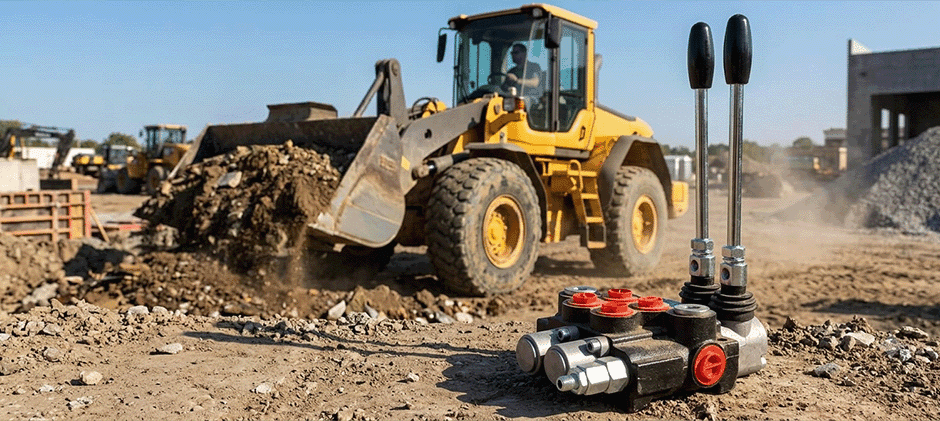
This article covers what intake and exhaust valves do, which parts usually get replaced alongside them, why those components are typically changed as a set, how to recognize valve-related issues, and what to look for when choosing parts for a dependable off-road engine repair.
What Are Intake and Exhaust Valves?
Intake and exhaust valves control air and combustion gas flow in diesel and gasoline engines. The intake valve opens to admit fresh air—or an air-fuel charge in some engines—while the exhaust valve opens to release burned gases after combustion. Both seals seal against machined seats in the cylinder head and are operated by the valve train with precise timing. In off-road engines, these parts run under high heat, heavy impact, and extended hours, so valve wear is often accompanied by wear in related valve train components.
What Parts Are Usually Replaced with Intake and Exhaust Valves?
For most off-road engines, these parts are commonly replaced together during valve service:
In many repair cases, these parts are also sold and installed as a matched valve repair kit, which helps avoid delays caused by missing small but necessary hardware during reassembly. If the cylinder head is already apart, many repair jobs also involve inspecting or repairing the cylinder head, especially when valve damage comes with seat wear, guide wear, or combustion leakage.
There’s a practical reason for this: valve problems rarely stay isolated. If the intake and exhaust valves show heat damage, sealing wear, or stem wear, the spring, seal, and retaining hardware may also be near the end of their service life.
Why Are These Valve Parts Often Replaced Together?
Replacing just the valve that looks damaged might get the engine running again, but it often overlooks the wear pattern that caused the failure to begin with. In many off-road engines, the valves, springs, seals, and retainers all endure the same heat, loads, and running hours—so swapping one component while leaving the others in place usually means you’re only fixing part of the problem.
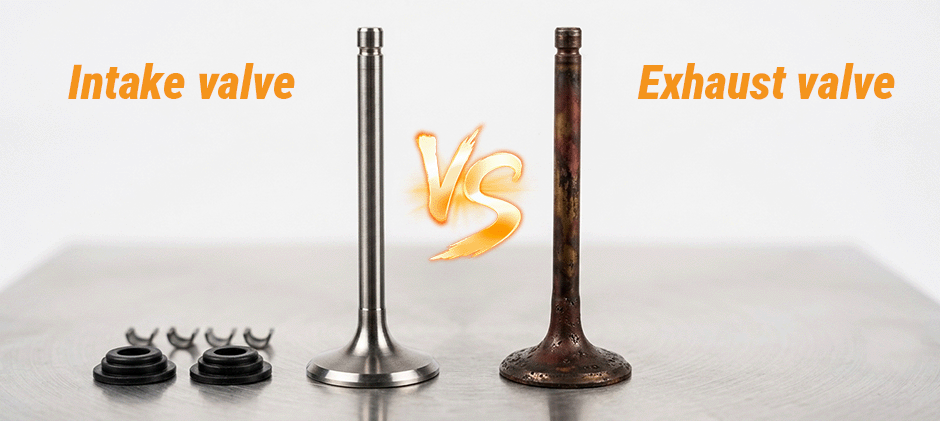
Exhaust Valves Fail Sooner Than Intake Valves
The exhaust valve runs in a much tougher thermal environment than its intake counterpart. Under sustained heavy loads, the edge of an exhaust valve can hit 700–800°C (1,290–1,470°F)—well above what the intake side sees, since intake valves get cooled by the incoming air charge and typically stay several hundred degrees lower. That thermal gap really matters in off-road equipment, where engines tend to run for long stretches under heavy loads, often in dusty, hot conditions.
As a result, the exhaust valve is more likely to suffer from:
- Burning at the valve edge
- Pitting or face erosion
- Stem wear from heat and poor lubrication
- Loss of sealing at the seat contact area
The intake side can still wear down, especially in dusty conditions or engines with subpar filtration, but the exhaust valve typically takes more heat-related abuse. For machines running in grading, digging, hauling, or general site work, that’s a good reason to check both sides at the same time instead of swapping out just the one valve that failed.
Nearby Parts Share the Same Wear Cycle
Valve problems rarely stay isolated. If the valves have been running with heat stress, poor sealing, contamination, or long service hours, nearby parts are often aging at the same time.
For example:
- A weak spring may no longer control valve motion correctly
- A hardened valve stem seal may start leaking oil into the cylinder
- Worn valve locks may no longer hold the retainer as securely as they should
- A damaged spring seat may apply load unevenly
That is why a valve job often becomes more reliable when the surrounding wear parts are renewed as a set instead of piece by piece.
Matched Replacement Reduces Repeat Labor
A single failed valve often reveals wear that was already developing in nearby parts. Replacing only the obviously damaged item may lower parts cost at first, but it can increase the risk of reopening the cylinder head later.
Matched replacement helps because it can:
- Restore more even valve sealing
- Improve spring control across the cylinder head
- Reduce oil entry through worn seals
- Lower the chance of repeat labor after reassembly
On a mid-size excavator or loader engine, reopening the cylinder head can add several labor hours on top of parts cost. In many cases, that extra labor costs more than replacing the full matched valve set during the first repair.
Shop Tip: When sourcing a valve job, order the springs, seals, and locks in the same shipment. Missing one low-cost retainer part can hold up a much larger repair once the head is already apart.
Signs Intake and Exhaust Valve Parts May Need Replacement
Good repair decisions come from both symptoms and inspection. Some clues show up while the engine is still assembled. Others only become clear after the cylinder head comes apart.
Compression Loss
Compression loss may point to intake or exhaust valve sealing trouble, especially if a leak-down test shows air escaping through the intake or exhaust port. But it can also come from a damaged head gasket, worn rings, or cylinder wall wear.
During a leak-down test with the piston at top dead center on the compression stroke:
- Air hissing at the intake manifold points to intake valve leakage
- Air hissing at the exhaust outlet points to exhaust valve leakage
- Bubbles in the radiator, or air crossing into an adjacent cylinder, point to head gasket failure
That is why compression loss should not automatically be blamed on the valves. The head gasket and cylinder head sealing surfaces need to be checked at the same time.
Blue Smoke
Blue smoke, especially on startup after the machine has been parked, usually points more strongly to valve stem seal wear than to the valve face itself. Oil slips past the seal, enters the combustion chamber, and burns when the engine starts.
If the blue smoke continues under load, piston ring wear should also be checked.
White and Black Smoke
Not every smoke issue is valve-related. White smoke usually signals coolant entry, injector timing problems, or cold-combustion issues—so check the head gasket and cylinder head sealing surfaces before blaming the valves. Black smoke more often points to fuel issues, restricted airflow, or turbo problems. Use smoke color as a guide, not a diagnosis.
Valve Train Noise
A ticking or unstable top-end sound may come from worn valves, weak springs, or poor lash settings. It may also involve the rocker arm or related top-end contact surfaces. If noise appears together with rough running and poor sealing, a full valve train inspection is usually the better path.
Valve Spring
Do not replace a spring only because the valve failed. Measure it.
Check for:
- Free length outside service specification
- Visible heat discoloration
- Uneven coil spacing
- Poor vertical alignment on a flat surface
As a practical guideline, if free length varies noticeably across matched springs — often more than about 1 mm (~0.04 in), depending on engine specification — or if the spring shows clear lean or distortion, replacement is usually the safer choice. Always check the service manual for the exact free length tolerance.
In heavy-use machines, weak spring force can lead to unstable valve control and accelerated seat wear. If the engine shows unstable top-end motion, this is also a good time to inspect the rocker arm for wear at the contact area.
Valve Spring Seat
The seat is small, but it should not be ignored. If the valve spring seat shows grooves, tilt, or uneven contact, spring force may not be applied evenly. That can shorten spring life and affect valve tracking.
Replace the seat if you see:
- Scoring or step wear
- Uneven contact marks
- Distortion from heat or fatigue
Valve Stem Seal
This part is one of the most common causes of oil-related valve symptoms.
Replace the seal if you see:
- Hardened rubber
- Cracking
- Loose fit on the guide area
- Oil residue around the stem path
In many diesel engines used in skid steers, compact track loaders, and mini excavators, blue smoke at startup after the machine has been sitting is a strong clue that the valve stem seal is leaking.
Valve Locks
Valve locks are small, but they should not be reused blindly. Check the contact faces and the fit on the valve stem groove. If there is wear, rounding, or questionable fit, replace them. They are low-cost parts compared with the labor needed to reopen the cylinder head.
Cylinder Head
The head itself does not always need replacement, but it should be inspected whenever the valves come out.
Look for:
- Cracks between valve seats or around injector bores
- Seat recession beyond the service limit
- Warping of the sealing surface, checked with a straightedge and feeler gauge
- Worn or loose valve guides
A worn head that receives fresh valves may leak again quickly. In that case, head resurfacing, seat cutting, guide service, or full head replacement is usually the more reliable path.
How to Choose the Right Intake and Exhaust Valve Parts?
Before ordering, confirm the engine model and the exact valve-related part design. Similar engines can use different stem diameters, spring rates, lock styles, or seal dimensions. Machines powered by Cat, Komatsu, Kubota, Yanmar, or Cummins engines may look similar at a distance but still require different matched valve components.
A good parts match starts with:
- Engine model and serial information
- Valve dimensions
- Seal type
- Spring specification
- Lock and retainer design
For larger repairs, it also makes sense to review cylinder head condition before installing fresh valve parts into a worn or damaged housing.
Conclusion
For most off-road engines, valve service holds up best when all the related components—springs, seats, seals, and locks—are renewed as a set. Browse FridayParts valve repair kits and cylinder head parts by engine model, or reach out to our team with your engine serial number to get help selecting the right kit before you start the job.
