

A robotic lawnmower is worth it when your yard is under an acre, the slope stays below 30 percent, and you’d rather not spend Saturday behind a push mower. LiDAR and vision AI models have dropped below $1,000 this year, and that changes the math. Below, you’ll find side-by-side comparisons with gas mowers, which navigation system fits your yard, and the five-year costs most buyers forget to factor in.
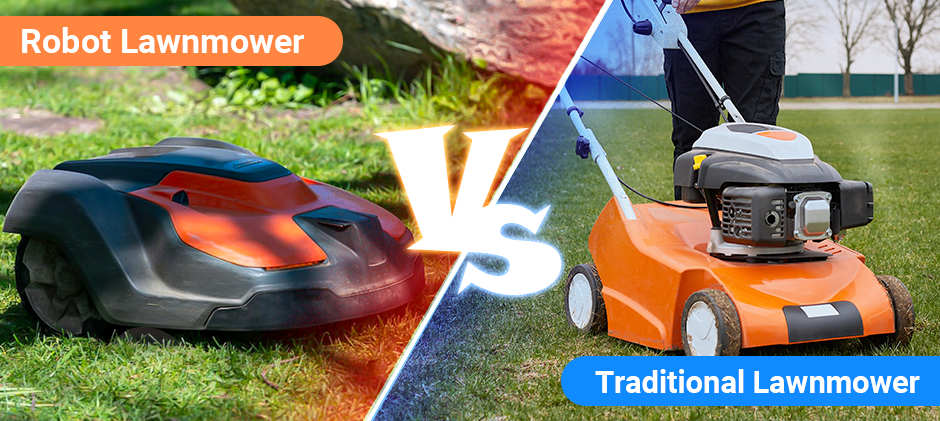 Robotic Lawnmower vs Traditional Mower
Gas mowers still beat robots on raw power and rough terrain. No argument there. But a robot lawn mower wins on time saved, noise reduction, and cutting consistency. Which of those trade-offs you can stomach is the real question.
Cutting Style and Lawn Health
Your push mower removes a big chunk of grass blade once a week, which stresses the plant. A robotic unit goes out daily or every other day, snips roughly the top quarter inch, and drops those clippings right back as mulch. That mulch returns nitrogen to the soil and holds color through July and August when most lawns go dull. I’ve talked to owners who saw visible thickening inside 60 days, and the reason is simple: the grass never gets shocked by a heavy cut.
Noise, Emissions, and the Neighbors
A gas mower hits 90-plus decibels. That’s loud enough to damage hearing after sustained exposure, and it puts out the same hydrocarbon load as a 45-mile car ride for every hour of run time. Battery robots sit at 55 to 65 dB. Conversation level. Your neighbor sleeping at 6 a.m. won’t hear it through a closed window. If you’ve got quiet-hour rules in your subdivision, the robot is the only option that won’t get you a written complaint from the HOA, and honestly, even if you don’t have rules, your neighbors will appreciate the difference.
Terrain and Edge Work
This is where traditional mowers still have the edge. A self-propelled gas unit will eat tall weeds, handle ditches, and power through grade changes that would stall a robot flat. Most robots handle slopes up to about 30 to 42 percent. Premium AWD models with lugged tires reach 60 to 75 percent. But edges? Along fences, flower beds, driveway borders? You’ll still need a string trimmer every couple of weeks. The robotic lawnmower gets close, but it doesn’t get flush.
| Factor | Gas / Cordless | Robotic Lawnmower |
|---|---|---|
| Weekly labor | 45 to 90 min | 5 min oversight |
| Noise level | 85 to 95 dB | 55 to 65 dB |
| Max slope | 40%+ with effort | 30 to 75% depending on model |
| Edge finish | Clean to the line | Needs trimming |
| Upfront cost | $300 to $1,500 | $700 to $4,500 |
| Lifespan | 7 to 10 years | 8 to 10 years |
Picking the Right Robot for Your Yard
Don’t match the machine to the brochure. Match it to the grass you actually have. Three measurements decide most of the shortlist for a robotic lawnmower: your lawn’s square footage, the steepest slope on the property, and the narrowest gate or passage the robot has to fit through.
Capacity and Lawn Size
Manufacturers rate robots by acreage, but those numbers assume an open rectangle with no obstacles, no trees casting shade on the charging dock, and no side yard too narrow for the unit to turn around in. Real yards have all of those things, and they cut effective capacity by 15 to 25 percent. Buy one tier above your measured area.
- Under 0.15 acre (6,500 sq ft): a compact single-battery unit is enough.
- 0.15 to 0.3 acre: look at mid-tier models with vision or RTK navigation.
- 0.3 to 0.75 acre: you’ll want AWD or a LiDAR-equipped machine with a wider deck.
- 0.75 acre and up: dual-battery flagships with cellular backup.
Slope and Traction
Don’t eyeball it. Walk your yard with a phone inclinometer app and measure the steepest patch, not the average grade. Two-wheel-drive robots start slipping on wet grass above 30 percent slope, and once they slip they tear the turf and leave divots that take weeks to fill back in. AWD models with lugged tires hold their line on 50 percent grades without chewing up the lawn. If you’ve got a ditch or a retention bank, check the spec sheet’s slope rating before anything else.
Navigation Types on the Market
Three systems are selling right now, and each has a yard it belongs in.
| Navigation | How It Works | Best For |
|---|---|---|
| Boundary wire | Buried perimeter cable | Simple rectangles, tight budgets |
| RTK + visual SLAM | GPS correction plus cameras | Open yards with sky view |
| LiDAR + Vision AI | 3D laser mapping + cameras | Tree cover, complex layouts |
Wire-free systems save you a weekend of trenching, but they need clear sky or clear sight lines to hold their position, and that’s a dealbreaker for properties with heavy tree cover or tall fences blocking satellite signals on one side of the yard. Got mature oaks covering half the lawn? LiDAR or a hybrid vision system will outperform pure RTK. I’ve seen RTK units wander off-line under dense tree canopies and leave strips uncut.
Setup, Apps, and What Daily Use Looks Like
The first weekend sets the tone for the next five years. Rush through the mapping step and you’ll be the person returning the unit to the store.
Mapping and First Mow
Wire-based models need two to six hours of cable laying. You peg the wire every 30 inches around the perimeter, keeping it 12 inches off flower beds and borders, and if you nick the cable with a spade six months later you’ll spend an afternoon with a multimeter tracking down the break. Wire-free robots map in 15 to 90 minutes. You walk the perimeter once with the app open, and the robot builds the layout from that drive. Save two or three mowing zones on day one, even if you don’t think you’ll need them. You’ll want different cut heights for the front and back eventually.
Things that bite people on day one:
- Dock on a slope over 7 percent. The robot can’t undock cleanly and throws a fault.
- Gates under 32 inches wide. Most mid-size robots won’t fit through.
- Ponds or water features with reflective surfaces. Vision sensors misread the glare and the robot avoids that zone entirely.
App Control and Smart Home
Every model on the market uses Bluetooth for setup and Wi-Fi for daily control. Flagships add 4G cellular, which keeps the mower running when your router drops or you’re out of cell range for setting zones. Alexa and Google Assistant integrations exist, but they’re shallow. You get start, pause, and dock. That’s it. The useful controls live in the native app: zone scheduling, cut-height presets, rain delays, theft alerts with GPS ping, and the ability to check blade status from your office chair, which is something no gas mower will ever offer you.
For mower blades, drive belts, and charging contacts across major brands, aftermarket suppliers keep wear parts stocked when the dealer backlog hits six weeks. I keep a spare blade set in the garage. It saves a full day of downtime during peak spring growth when everyone else is waiting on a shipment.
Safety Around Kids and Pets
Lift sensors stop the blade within 0.3 seconds of the chassis leaving the ground. Dual-camera models spot pets, garden hoses, and toys at 10 to 15 feet and reroute. But “safe” doesn’t mean “let your toddler play on the lawn while it’s running.” It doesn’t. Schedule overnight cycles from May through September when the grass is growing fastest, and the yard stays clear during the day.
What It Actually Costs to Run One
The sticker price isn’t the real number. You need the five-year cost, and most buyers don’t run that math before clicking buy.
| Interval | Task | Typical Cost |
|---|---|---|
| Weekly | Clear clippings from deck and wheels | $0 |
| Monthly | Wipe sensors, inspect blades | $0 |
| Every 2 to 3 months | Rotate or replace blades | $8 to $25 |
| Yearly | Deep clean, check wheel motors | $0 to $40 |
| Every 3 to 5 years | Replace battery pack | $150 to $400 |
Blade swaps take two minutes. You need a Phillips screwdriver and nothing else. Dull blades tear grass instead of cutting it clean, and torn tips brown within three days. A lawn cut on schedule with sharp blades looks better than one cut twice as often with dull ones.
Parts and Repairs After Year Three
The store usually skips this bit. Somewhere around year four, a proprietary part gives up: perhaps a wheel motor, the charging board, or a bump sensor. Brands don’t share these parts. Peak-season dealer backlogs can reach eight weeks in some markets, and a repair costs $200 to $500 per visit if the part is actually on the shelf. Buying from a supplier that carries compatible lawnmower parts for several brands can keep that mid-life fix from eating half the machine’s original price. Put your model number and firmware version on a card in the kitchen drawer. Not in the app. A dead mower won’t let you open it.
Where Robots Still Fall Short
I’m not going to pretend these things solve every problem. They don’t.
- Autumn leaves. They clog the deck and confuse vision sensors. You’ll need to blow leaves before the robot cuts.
- Tall grass. Anything past four inches needs a traditional first cut. The robot will struggle and leave an uneven finish.
- Edging. Robots trim to within an inch or two of a hard border. Not flush. You’ll still need a trimmer for clean lines.
- Theft. PIN locks and GPS tracking are standard now. But a $2,500 machine sitting in your front yard is still a target. Lock it in the shed or garage when it’s not charging.
The Five-Year Math
A $1,500 mid-tier robotic lawnmower costs about $1,950 over five years. That includes blades, one battery replacement, and electricity. A gas push mower in the same period runs $1,100 to $1,400 across fuel, oil, tune-ups, and probably one carburetor rebuild. The robot costs more on paper. But it gives back roughly 100 hours of labor per year, and that’s where the calculation flips for most owners who’d rather spend Saturday morning doing anything other than walking behind a mower in July heat.
Final Words
The purchase makes sense when your lawn falls inside the size and slope window and a battery swap around year four doesn’t put you off. Gas remains the better tool for rough terrain and lawns beyond an acre. And when a blade set or charging base wears out, FridayParts carries aftermarket parts across brands, saving you from a six-week wait for the dealer’s shipment.
