

Stock John Deere Gator tire sizes fall into clear groups by model family. Classic 4×2 and 6×4 machines use 22.5×10⁻⁸ front and 25×12-9 rear. TX and HPX models run 10-inch wheels. XUV units take 12-inch setups, with select trims going 14-inch from the factory. These three platforms use three distinct tire-size families, and their packages are not interchangeable. The John Deere Gator tire size chart below maps every major model, followed by the fitment checks that prevent wrong orders and clearance problems.
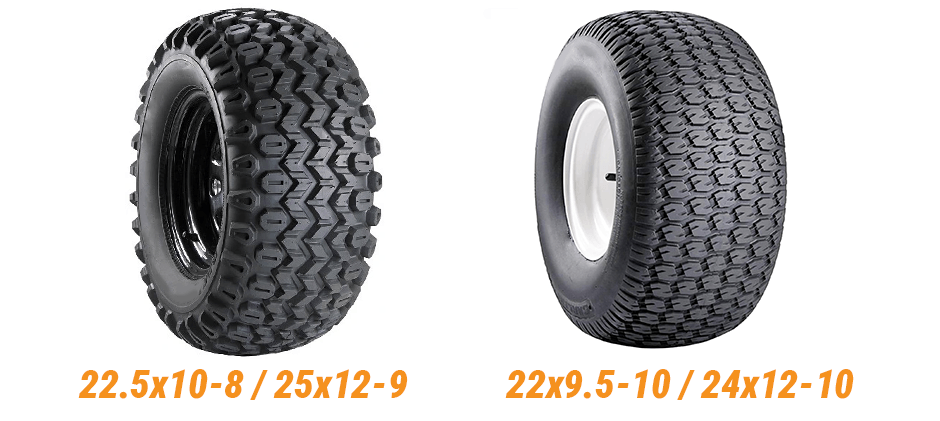
Quick Tire Size Chart
Factory Gator tire packages split first by platform, then by trim. The two quick charts below cover the most common stock setups. Because some models offer more than one package, always confirm final fitment with your machine tag and manual.
Classic and Work Models
These are the common factory packages for 4×2, 6×4, TS, TX, and HPX machines.
| Model Series | Front Tire Size | Rear Tire Size | Wheel Size F/R | Notes |
|---|---|---|---|---|
| Classic 4×2 / 4×2 Trail | 22.5×10⁻⁸ | 25×12-9 | 8 / 9 in | Shared with TS and many 6×4 |
| TH 6×4 Gas / Diesel | 22.5×10⁻⁸ | 25×12-9 | 8 / 9 in | Diesel may use 25×13-9 rear |
| TH 6×4 Diesel Wanda Option | 22.5×10⁻⁸ | 25×13-9 | 8 / 9 in | Alternate diesel rear package |
| TS 4×2 | 22.5×10⁻⁸ | 25×12-9 | 8 / 9 in | Same platform as classic 4×2 |
| TX 4×2 Turf | 22×9.5-10 | 24×12-10 | 10 / 10 in | Newer 10-inch platform |
| TX 4×2 All-Terrain | 22×9.5-10 | 24×10.5-10 | 10 / 10 in | Same wheel platform as TX Turf |
| HPX615E / HPX815E All Purpose | 24×9.5-10 | 24×10.5-10 | 10 / 10 in | Common work setup |
| HPX Turf | 24×9.5-10 | 24×12-10 | 10 / 10 in | Lighter ground impact |
| HPX Aggressive | 24×9.5-10 | 24×12-10 | 10 / 10 in | Same size as turf, different tread |
XUV Models
XUV packages vary by trim, especially in the 825i family.
| Model Series | Front Tire Size | Rear Tire Size | Wheel Size F/R | Notes |
|---|---|---|---|---|
| 625i XUV | 26×9-12 | 26×11-12 | 12 / 12 in | Standard 12-inch setup |
| 825i XUV 2-seat | 26×9-12 | 26×11-12 | 12 / 12 in | Standard 2-seat setup |
| 825i XUV Sport | 27×9-14 | 27×11-14 | 14 / 14 in | Factory 14-inch Sport package |
| 825i XUV S4 | 25×9-12 | 25×11-12 | 12 / 12 in | Smaller than 2-seat 825i |
| 835E | 25×9-12 (Terra Hawk) | 25×11-12 (Terra Hawk) | 12 / 12 in | 12-inch base; 14-inch Maxxis also offered |
| 835M / 845M / 865M / 875M | 27×9-R14 | 27×11-R14 | 14 / 14 in | Full-size crossover 14-inch pattern |
Key Fitment Notes
The main split is platform, not just tire size. Classic 4×2, TH 6×4, and TS 4×2 share an 8/9-inch wheel platform. TX and HPX models use 10-inch wheels but different tire families. XUV machines use 12- or 14-inch setups, and the 825i family alone has three different packages: standard 2-seat, Sport, and S4.
Part numbers are intentionally left out of this quick chart to keep it readable. If you are replacing more than rubber, inspect gator wheel hub parts, gator lug hardware kits, and gator wheel bearing kits before mounting new tires. For these and other aftermarket John Deere Gator parts, check availability before the wheels go back on.
Know Your Gator Platform
The phrase John Deere Gator tire size sounds simple, but the platform split is what matters most.
Classic 4×2 Is Not The Same As TX
Classic 4×2, TH 6×4, and TS 4×2 machines share the same basic tire platform in many stock setups:
- Front 22.5×10⁻⁸
- Rear 25×12-9
- Front wheel 8 inches
- Rear wheel 9 inches
Modern TX models are different:
- Front 22×9.5-10
- Rear 24×12-10 for turf use
- Rear 24×10.5-10 for all-terrain use
- 10-inch wheels front and rear
That means a tire package that fits a classic 4×2 may not fit a TX, even though both are compact work machines. This is one of the most common reasons people order the wrong set. While checking fitment, it also helps to review suspension parts and steering parts if the machine has uneven tire wear.
HPX Has Its Own Layout
HPX models sit between TX and XUV machines in tire size. Common setups use:
- 24×9.5-10 front
- 24×10.5-10 rear for all-purpose work
- 24×12-10 rear for turf or aggressive packages
The wheel diameter stays at 10 inches, but the tire family is different from TX.
Tire Sizes By Model Family
Here is the practical breakdown by use group.
Traditional And Work Models
| Model | Front | Rear | Wheel Size | Notes |
|---|---|---|---|---|
| Classic 4×2 / 4×2 Trail | 22.5×10⁻⁸ | 25×12-9 | 8/9 in | Shared with TS and many 6×4 units |
| TH 6×4 | 22.5×10⁻⁸ | 25×12-9 | 8/9 in | Diesel units may also have a 25×13-9 rear option |
| TS 4×2 | 22.5×10⁻⁸ | 25×12-9 | 8/9 in | Same tire platform as classic 4×2 |
| TX 4×2 Turf | 22×9.5-10 | 24×12-10 | 10/10 in | Separate newer platform |
| TX 4×2 All-Terrain | 22×9.5-10 | 24×10.5-10 | 10/10 in | Mixed surface use |
These work models often ride better on softer sidewalls than on extra-stiff replacements. If you carry weight often, also check gator axle parts and gator brake parts during the tire swap.
XUV Models
| Model | Front | Rear | Wheel Size | Notes |
|---|---|---|---|---|
| 625i XUV | 26×9-12 | 26×11-12 | 12 / 12 in | Standard setup. Confirm by year and manual |
| 825i XUV 2-seat | 26×9-12 | 26×11-12 | 12 / 12 in | Base 2-seat package |
| 825i XUV Sport | 27×9-14 | 27×11-14 | 14 / 14 in | Factory Sport setup, not an aftermarket change |
| 825i XUV S4 | 25×9-12 | 25×11-12 | 12 / 12 in | Four-seat version uses a smaller package |
| 835E | 25×9-12 (Terra Hawk base) | 25×11-12 (Terra Hawk base) | 12 / 12 in | 14-inch Maxxis Bighorn also offered; 12-inch is the base package |
| 835M / 845M / 865M / 875M | 27×9-R14 | 27×11-R14 | 14 / 14 in | Common full-size crossover pattern |
That 825i split matters. Many buyers assume every 825i uses the same tires, but the S4 and Sport packages prove otherwise.
How To Read Tire Size Markings
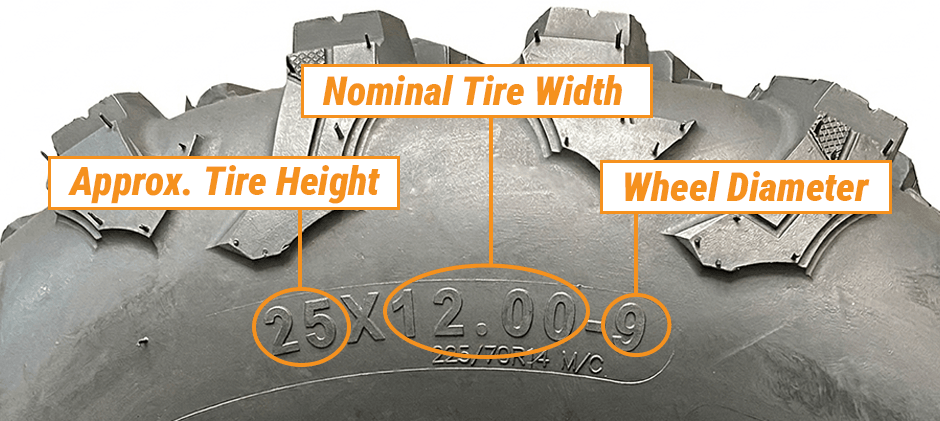
A size like 25×12-9 means:
- 25 is the overall tire height in inches
- 12 is the tire width in inches
- 9 is the wheel diameter in inches
A size like 27×9-R14 means:
- 27 is overall height
- 9 is width
- R means radial construction
- 14 is wheel diameter
This matters because height, width, and wheel size each affect a different part of fitment.
Use this quick checklist:
- Confirm front and rear sizes separately
- Confirm wheel diameter before ordering
- Check whether the tire is bias or radial
- Match tread style to your terrain
- Check the load range for cargo use
If the old tires show shoulder wear, wobble, or cupping, inspect Gator driveline parts and Gator front-end parts as well.
Can You Change Tire Size?
Yes, but only after checking clearance, wheel width, and front-to-rear balance.
Safe Changes
Common examples include:
- Switching from turf tread to all-terrain tread in the same size
- Moving an 825i from the standard 12-inch package to the factory Sport 14-inch package
- Fitting a similar-height tire from another brand after checking actual specs
The important point is this: some larger tire combinations were factory packages on certain trims, so not every size jump is a custom modification.
Risk Points
Watch for these issues before changing sizes:
- Front tire rub at full steering lock
- Rear tire contact when the bed is loaded
- Tire too narrow or too wide for the rim
- Harsher ride from stiffer casing
- Wrong rolling match on 4WD models
On 4WD Gators, the printed size is only part of the story. Tires from different brands can have different actual dimensions under load. That is why it is safer to compare real specifications instead of assuming every 26-inch or 27-inch tire measures the same.
Fitment Rules That Matter
A few checks will save a lot of trouble.
Check Rim Width
Rear rims are often wider because the rear axle carries more load. Mounting the wrong width tire can change tread shape and the loaded tire height.
Compare Loaded Height
Two tires can share the same sidewall number but sit differently once mounted and carrying weight. On 4WD machines, that difference can matter more than expected.
Keep Ride Quality In Mind
Older electric and work-style Gators rely a lot on tire sidewall flex for comfort. A stiffer tire can improve toughness but make the machine feel harsher on uneven ground.
Match Tread To Your Use
Choose by real terrain, not just by appearance:
- Turf tread for grass and finished surfaces
- All-terrain tread for gravel, dirt, and mixed work
- Aggressive tread for mud, loose soil, and trail use
This is also a good time to check gator tire valve stems, gator wheel hardware, and other service parts if the wheels are already off.
Common Questions
What Is The Most Common John Deere Gator Tire Size?
There is no single size for every model. The most common groups are:
- 22.5×10⁻⁸ front and 25×12-9 rear on older 4×2 and 6×4 machines
- 24×9.5-10 front and 24×10.5-10 or 24×12-10 rear on HPX machines
- 26×9-12 front and 26×11-12 rear on many 625i and 825i two-seat models
- 27×9-R14 front and 27×11-R14 rear on many later full-size XUV models
What Is The John Deere Gator 6×4 Tire Size?
For many TH 6×4 setups, the common stock package is:
- Front 22.5×10⁻⁸
- Rear 25×12-9
Some diesel versions also had a 25×13-9 rear tire option, so the manual and machine tag still matter.
What Is The John Deere Gator 825i Tire Size?
It depends on the trim:
- 825i 2-seat standard: 26×9-12 front and 26×11-12 rear
- 825i Sport: 27×9-14 front and 27×11-14 rear
- 825i S4: 25×9-12 front and 25×11-12 rear
Can You Run The Same Width On All Four Corners?
Sometimes, but it is not always the best move. The rim width, loaded tire shape, steering clearance, and 4WD rolling balance all need to be checked first.
Final Words
Choosing the correct John Deere Gator tire size is mostly about getting the small details right, especially model family, trim, and wheel diameter. Once those match, the rest is straightforward. And if you need a few extra parts while you are at it, FridayParts is a convenient place to check for aftermarket replacements.
