

Overtighten a bolt, and it can stretch, weaken, or even snap. Undertighten it, and it can vibrate loose, leading to equipment failure and unsafe conditions. John Deere uses the metric bolt and screw torque values. This guide explains the metric bolt torque chart and how to apply it correctly during maintenance and repairs.
What Are the Metric Bolt and Screw Torque Values for John Deere?
Torque tells you exactly how much twisting force to apply to bolts and nuts. Tightening a fastener to the correct torque stretches the bolt just enough to create the proper clamping force. This keeps parts securely fastened without damaging the bolt or the components.
These general torque values apply to standard metric bolts used on John Deere equipment. The chart is a useful reference for routine maintenance and repairs.
Note: If your John Deere service manual specifies a different torque value or tightening procedure, always follow the manual. Critical fasteners such as cylinder head bolts, wheel lug nuts, and connecting rod bolts often require their own torque specifications that override the general chart.
Metric Bolt and Screw Torque Chart
The chart below shows standard metric torque numbers for bolts and screws. Use these reference values for regular metric fasteners on John Deere gear when your service manual doesn’t list a separate torque spec. Torque changes based on bolt size and strength grade.
- Lubricated means coated with a lubricant such as engine oil, or for fasteners with specific phosphate and oil coatings.
- Dry means plain or zinc-plated fasteners installed without any lubrication.
Dry
| Bolt or Screw Size | Class 4.8 | Class 8.8 or 9.8 | Class 10.9 | Class 12.9 |
|---|---|---|---|---|
| M6 | 6 N˙m 53 lb-in |
11.3 N˙m 100 lb-in |
16.5 N˙m 146 lb-in |
19.5 N˙m 172 lb-in |
| M8 | 14.5 N˙m 128 lb-in |
27.5 N˙m 243 lb-in |
40 N˙m 29.5 lb-ft |
47 N˙m 35 lb-ft |
| M10 | 29 N˙m 21 lb-ft |
55 N˙m 40 lb-ft |
80 N˙m 59 lb-ft |
95 N˙m 70 lb-ft |
| M12 | 50 N˙m 37 lb-ft |
95 N˙m 70 lb-ft |
140 N˙m 105 lb-ft |
165 N˙m 120 lb-ft |
| M14 | 80 N˙m 59 lb-ft |
150 N˙m 110 lb-ft |
220 N˙m 165 lb-ft |
260 N˙m 190 lb-ft |
| M16 | 125 N˙m 92 lb-ft |
240 N˙m 175 lb-ft |
350 N˙m 255 lb-ft |
400 N˙m 300 lb-ft |
| M18 | 170 N˙m 125 lb-ft |
330 N˙m 245 lb-ft |
475 N˙m 350 lb-ft |
560 N˙m 410 lb-ft |
| M20 | 245 N˙m 180 lb-ft |
475 N˙m 350 lb-ft |
675 N˙m 500 lb-ft |
790 N˙m 580 lb-ft |
| M22 | 330 N˙m 245 lb-ft |
650 N˙m 480 lb-ft |
920 N˙m 680 lb-ft |
1080 N˙m 800 lb-ft |
| M24 | 425 N˙m 315 lb-ft |
820 N˙m 600 lb-ft |
1150 N˙m 850 lb-ft |
1350 N˙m 1000 lb-ft |
| M27 | 625 N˙m 460 lb-ft |
1200 N˙m 885 lb-ft |
1700 N˙m 1250 lb-ft |
2000 N˙m 1475 lb-ft |
| M30 | 850 N˙m 625 lb-ft |
1630 N˙m 1200 lb-ft |
2300 N˙m 1700 lb-ft |
2700 N˙m 2000 lb-ft |
| M33 | 1150 N˙m 850 lb-ft |
2200 N˙m 1625 lb-ft |
3150 N˙m 2325 lb-ft |
3700 N˙m 2730 lb-ft |
| M36 | 1450 N˙m 1075 lb-ft |
2850 N˙m 2100 lb-ft |
4050 N˙m 3000 lb-ft |
4750 N˙m 3500 lb-ft |
Lubricated
| Bolt or Screw Size | Class 4.8 | Class 8.8 or 9.8 | Class 10.9 | Class 12.9 |
|---|---|---|---|---|
| M6 | 4.7 N˙m 42 lb-in |
8.9 N˙m 79 lb-in |
13 N˙m 115 lb-in |
15.5 N˙m 137 lb-in |
| M8 | 11.5 N˙m 102 lb-in |
22 N˙m 194 lb-in |
32 N˙m 23.5 lb-ft |
37 N˙m 27.5 lb-ft |
| M10 | 23 N˙m 204 lb-in |
43 N˙m 32 lb-ft |
63 N˙m 46 lb-ft |
75 N˙m 55 lb-ft |
| M12 | 40 N˙m 29.5 lb-ft |
75 N˙m 55 lb-ft |
110 N˙m 80 lb-ft |
130 N˙m 95 lb-ft |
| M14 | 63 N˙m 46 lb-ft |
120 N˙m 88 lb-ft |
175 N˙m 130 lb-ft |
205 N˙m 150 lb-ft |
| M16 | 100 N˙m 74 lb-ft |
190 N˙m 140 lb-ft |
275 N˙m 200 lb-ft |
320 N˙m 235 lb-ft |
| M18 | 135 N˙m 100 lb-ft |
265 N˙m 195 lb-ft |
375 N˙m 275 lb-ft |
440 N˙m 325 lb-ft |
| M20 | 190 N˙m 140 lb-ft |
375 N˙m 275 lb-ft |
530 N˙m 390 lb-ft |
625 N˙m 460 lb-ft |
| M22 | 265 N˙m 195 lb-ft |
510 N˙m 375 lb-ft |
725 N˙m 535 lb-ft |
850 N˙m 625 lb-ft |
| M24 | 330 N˙m 245 lb-ft |
650 N˙m 480 lb-ft |
920 N˙m 680 lb-ft |
1080 N˙m 800 lb-ft |
| M27 | 490 N˙m 360 lb-ft |
950 N˙m 700 lb-ft |
1350 N˙m 1000 lb-ft |
1580 N˙m 1160 lb-ft |
| M30 | 660 N˙m 490 lb-ft |
1290 N˙m 950 lb-ft |
1850 N˙m 1350 lb-ft |
2140 N˙m 1580 lb-ft |
| M33 | 900 N˙m 665 lb-ft |
1750 N˙m 1300 lb-ft |
2500 N˙m 1850 lb-ft |
2900 N˙m 2150 lb-ft |
| M36 | 1150 N˙m 850 lb-ft |
2250 N˙m 1650 lb-ft |
3200 N˙m 2350 lb-ft |
3750 N˙m 2770 lb-ft |
Disclaimer: These torque values are for general use only. Do not use these values if a different torque value or tightening procedure is given for a specific application in the service manual.
How to Read the Torque Chart?
This metric bolt torque chart might look full of confusing numbers at first, but it’s really easy to read once you learn how. Let’s walk through a quick example.
Say you’re tightening a clean, dry M12 bolt rated Class 10.9.
- Locate your bolt size: Check the first left column and find the M12 row. The M number stands for the bolt’s thread diameter in millimeters.
- Find its strength grade: Check the chart headers to match your bolt’s class — here that’s 10.9. We’ll show how to spot the grade mark on bolts later.
- Check if the bolt is dry or lubricated: Every strength grade has two sets of torque numbers, one for lubricated bolts and one for dry ones. We’re using the dry rating here.
- Get your torque number: Follow the M12 row over to the Dry column under Class 10.9. You’ll see 140 N·m, or 105 lb-ft. Just set your torque wrench to that number and tighten it up.
That’s all there is to it. You only need four details: bolt size, strength class, whether the threads are dry or lubricated, and which torque unit you want to use (N·m or lb-ft).
Dry vs. Lubricated Torque Values
You’ve probably seen lubricated bolts need way less torque than dry ones, and this matters a lot—it all comes down to friction.
- Dry bolts: When you tighten a bolt with no lube, most of your twisting force just fights friction between the threads and under the bolt head. Hardly any force actually clamps the parts together.
- Lubricated bolts: Oil or grease cuts down friction a ton. Less friction wasted means more twist force stretches the bolt and locks components tight.
That’s why you can’t swap these torque numbers randomly.
- If you use dry torque specs on a greased bolt: You’ll crank it way too tight. Lower friction stretches the bolt past its limit, and it will snap.
- If you use lubricated torque specs on a dry bolt: The bolt won’t get tight enough. Most force is lost to friction, leaving a loose joint.
How to Identify Bolt Strength Grades?
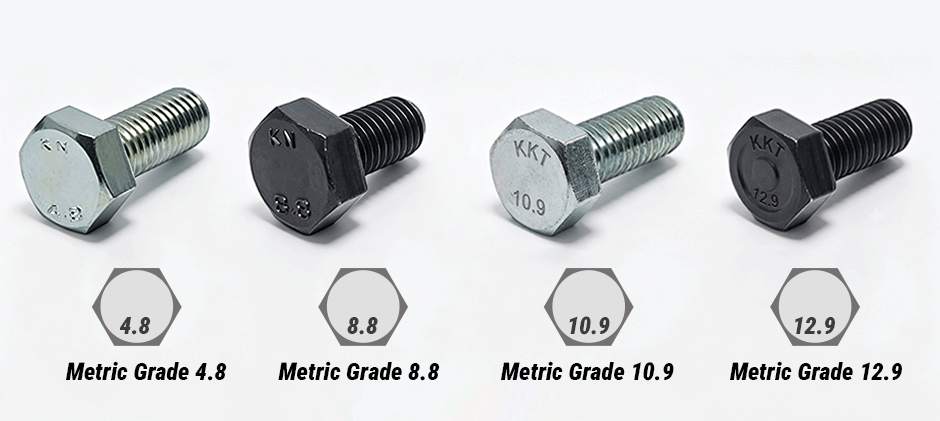
How to check your bolt’s strength grade? All metric bolts have their grade marked right on the bolt head.
You’ll see markings such as 4.8, 8.8, 10.9 or 12.9. If it says 8.8 on the head, that’s a Class 8.8 bolt. If it’s marked 10.9, it’s Class 10.9. These numbers tell you how tough the bolt is. They show two key strengths: how hard you can pull it before it snaps, and how much you can stretch it without permanent bending. The bigger the number, the stronger the bolt.
Note: always use a bolt with the same or higher strength grade as the factory original. If you upgrade to a stronger bolt — like switching an 8.8 for a 10.9 — still torque it to the original 8.8 setting. Going tighter could crack or warp the machine parts you’re fastening.
Conclusion
Check bolt grades and read the torque chart; you’ll get every fastener tightened just right. This quick step lets you rest easy and makes your repairs last longer without issues. FridayParts carries a full line of high-quality aftermarket John Deere parts for your repair jobs.
