

An oil pan gasket leak is a problem every driver should not underestimate. It’s crucial to detect it promptly to avoid safety problems as well as costly and complex repairs. In this guide, we’ll walk you through the common symptoms, causes and fixes of an oil pan and gasket leak.
Symptoms of Oil Pan Gasket Leak
- Check Engine Light On: An oil leak is one of the most common causes for the check engine light to display. Once the light is on, it’s essential to check if it’s the oil pan gasket. You can see visible oil at the top of the oil pan and possibly dripping down the side of the pan. If the oil pan is sludgy with oil, it may be the oil pan gasket.
- Low Oil Level: Low oil level signals a leak somewhere. You may need to find the source by getting underneath the vehicle and searching for a drip, unless oil is burning off under the hood or through the exhaust, in the form of blue or white smoke.
- Visible Oil Leak: If the oil is leaking, you will see a visible oil leak on the ground beneath the front of the vehicle. Engine oil is thick, black or brown and greasy and most notably has a rainbow sheen. Don’t mix it up with the coolant (orange or green with a sweet smell) and transmission fluid (thinner and pink). See Tractor Transmission Fluid Leak? Causes and Fixes here
- Burning Oil Smell: When the oil leaks onto the hot engine instead of onto the ground, you may notice blue or white smoke and a burning oil smell as the oil burns up.
- Engine Overheating: If the engine begins overheating, that means damage has already begun. Engine oil is crucial for regulating the temperature of the engine by preventing metal parts from grinding against each other. Once you get an overheated engine, you should service it right away to avoid more costly engine repair and replacement.
What Causes Your Oil Pan to Leak?
An oil pan leak or oil pan gasket leak is an annoying issue that sneaks up on you. At first, it’s just a few drops of oil on your driveway, but over time, it can escalate into a bigger problem if left unaddressed. So, what are the reasons behind this oil pan leak?
- Worn-Out Gasket: The gasket is first to blame for an oil pan leak. Its main job is to create a tight seal between the oil pan and the engine block, preventing oil from leaking. However, the gasket can degrade due to heat cycles, long-term use and oil contamination over time, leading to an oil pan leak.
- Improper Installation: A poorly installed oil pan gasket, such as over-tightening bolts, uneven bolting and using the wrong gasket, can cause an oil pan leak.
- Damage to the Oil Pan: Sitting at the very bottom of your engine, the oil pan is vulnerable to damage from road debris, like rocks, branches or uneven chunks of metal. Also, rust can eat away at the oil pan.
- Poor Maintenance: Regular maintenance is essential to prevent oil pan gasket leaks. Ignoring oil changes or applying the wrong oil type can lead to sludge buildup, which strains seals and gaskets. Over time, it can lead to an oil leak.
- Manufacturing Defects: In rare cases, an oil pan leak can result from a defect in the oil pan or oil pan gasket itself. A poor casting of the pan and inferior gasket materials can lead to premature failure.
How to Identify an Engine Oil Leak?
The oil pan plays a vital role in draining the engine oil. This component is located beneath of the engine and sealed with a gasket. To identify an oil leak, you must filter out the two reasons:
- Defective gaskets in the engine oil pan, valve cover, crankcase or cylinder head
- Defective oil drain plugs, block plugs or valve cover plugs.
Once you suspect there’s a leak in the oil pan, you can do the following to identify:
- Start your vehicle and let it run for a few minutes. Check if there are any oil drops on the ground. You can place a piece of cardboard underneath the vehicle for any leaks and take appropriate actions.
- If there’s no obvious oil leak, you can consider the lower oil level. You can check the oil dipstick to identify any anomalies. A sharp decrease in oil level over a short period signifies an oil pan gasket leak. So, you need a gasket replacement to stop the leak.
- An oil leak from the pan can lead to engine overheating and potential engine damage
Sufficient engine oil is essential for lubricating the engine components but it also helps prevent engine overheating with coolant. So, what should you do if you run into an oil leak from the oil pan gasket?
What to Do If You Find An Oil Pan Leak?
If you’ve noticed an oil pan leak, you can follow these steps before looking for an oil pan gasket replacement.
- Safely pull over and turn off your vehicle
- Don’t try to restart it
- Clean any oil stains left on the road by your vehicle

How to Fix an Oil Pan Leak?
Oil pan repair can be easy for DIYers. If the oil pan gasket or other oil pan parts are the source of the leak, you can use a Stop Leak product as an easy fix for small leaks. But for larger leaks, you may require oil pan repair or oil pan replacement. As each model is different, always consult your owner’s manual for specifications. Here are general guidelines for an oil pan repair.
Confirm the Leak Source
- Make sure the oil pan is the source of the leak rather than the valve cover gasket or oil filter, or rear main seal
- Clean the engine thoroughly and look for fresh oil to identify the exact location of the leak
Prepare for the Repair
Gather the necessary tools and materials, including
- Replacement oil pan gasket (or a new oil pan, if damaged)
- Socket set and ratchet
- Torque wrench
- Gasket scraper or plastic putty knife
- Brake cleaner or degreaser
- Sealant (if recommended by the manufacturer)
- Drain pan
- New engine oil
- Oil filter (optional, but it’s a good time to replace it)
Drain the Oil to Avoid Messy Spills
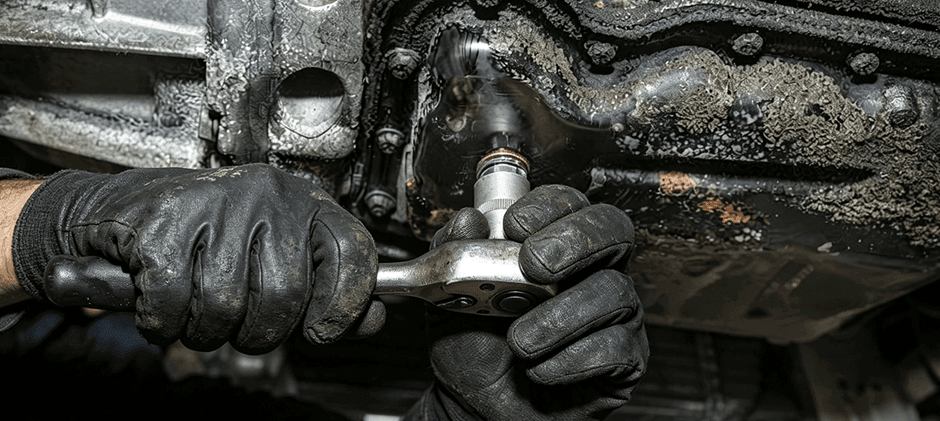
- Locate the Drain Plug: Position a drain pan underneath and remove the oil drain plug with a socket wrench. Let the oil completely drain out.
- Remove the Oil Filter (Optional): Since you’ll be refilling the oil later, it’s often a good idea to replace the oil filter while you’re at it.
Remove the Oil Pan
- Unbolt the Oil Pan: Use your socket set to remove the bolts securing the oil pan to the engine. Keep track of the bolts—they may vary in length.
- Gently Pry the Pan Loose: If the oil pan doesn’t come off easily, use a gasket scraper or plastic putty knife to carefully break the seal. Avoid using metal tools that could damage the mating surface.
Inspect and Clean
- Clean the Mating Surfaces: Remove any remnants of the old gasket from both the oil pan and the engine block. Use a gasket scraper or a plastic putty knife to avoid scratching the surfaces.
- Degrease the Area: Spray brake cleaner or degreaser on the surfaces and wipe them clean to ensure a proper seal.
- Replace the Oil Pan: Replace the pan if it is cracked or heavily corroded
Install the New Gasket
- Apply Sealant (If Required): Some gaskets require a thin layer of sealant on one or both sides. Check the manufacturer’s instructions for your specific vehicle.
- Position the Gasket: Place the gasket on the oil pan, ensuring it lines up with the bolt holes.
Reinstall the Oil Pan
- Position the Oil Pan: Carefully align the oil pan with the engine block and ensure the gasket stays in place.
- Tighten the Bolts: Hand-tighten the bolts first, then use a torque wrench to tighten them to the manufacturer’s specifications. Tighten in a crisscross pattern to ensure an even seal.
Refill the Engine Oil
- Replace the Drain Plug: Reinstall the oil drain plug and tighten it securely. Shop quality oil drain plugs here.
- Add Oil: Pour in the correct amount and type of oil specified for your vehicle. Check the dipstick to ensure proper levels.
Check for Leaks
- Inspect the oil pan for any visible leaks
- Reconnect the negative battery cable
- Start the engine and let it idle
- Check again for leaks after the oil circulates
When to Turn to A Pro?
While fixing an oil pan leak can be a DIY job, there are situations where you need to seek professional help:
- If the Oil Pan is Hard to Access: In some vehicles, removing the oil pan requires lifting the engine or dropping the subframe, which can be complicated for beginners
- If the Leak Persists: Persistent leaks may indicate issues with other engine seals or improper installation of the gasket
Oil Pan Repair vs Oil Pan Replacement
A properly repaired oil pan might last the rest of the service life of your vehicle, but a repaired oil pan lacks the structural integrity of a new one. If you want to keep your vehicle running for an extra five years or more, an oil pan replacement is a wiser option. Although it costs much more to replace the oil pan in the short run than repairing it, it’s recommended to have a new replacement for the long-term benefits. A new oil pan replacement at a store costs between $150 and $700 with extra installation costs of $200 to $400. Replacing the oil pan is much easier than repairing and a DIYer can buy the oil pan and gasket from reliable aftermarket suppliers for budget-saving purposes.
Final Thoughts
Never ignore even the smallest oil pan gasket leak. If left uncontrolled, it can escalate into bigger issues. costing you arms and legs. Always refer to your owner’s manual for the replacement yourself. If the oil leaks persist, it’s time to go for a seasoned pro. At FridayParts, you can explore a vast selection of quality oil pans, oil pan gaskets, oil drain plugs and other engine spare parts to keep your vehicle running at its peak performance.
