

Forget heaviest and priciest. The best skid steer grapple comes down to three things: what you’re handling, what you’re running it on, and what your work week looks like. Brush and storm debris want different spacing and lid behavior than rock or concrete. The goal of this guide is simple — help you land on the right type, sidestep the mistakes buyers make most often, and catch the small details that only show their value after the first week on the job.
Pick The Right Grapple First
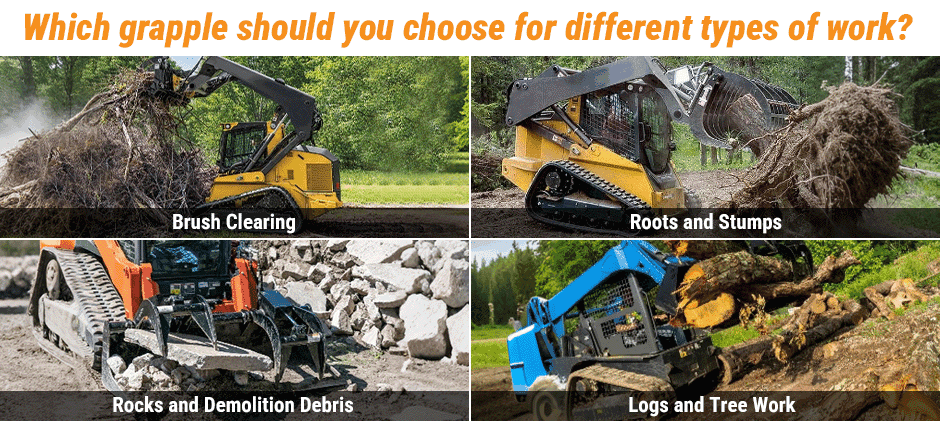
Any honest skid steer grapple buying guide starts with the job itself. Choose the wrong type, and no amount of frame strength will make it feel right.
| Main Job | Best Starting Type | Typical Spacing | Main Advantage | Main Tradeoff |
|---|---|---|---|---|
| Brush and limbs | skid steer brush grapple | 6 to 8 in. | sheds dirt and carries bulky loads | drops small material |
| Roots and clearing | skid steer root grapple | 4 to 7 in. | digs and sorts well | can get heavy fast |
| Rocks and broken concrete | skid steer rock grapple | 2 to 4 in. | holds smaller pieces better | adds weight |
| Logs and firewood | log or brush style | varies | grips long material well | may not sort rock well |
| Mixed farm chores | medium-duty general skid steer grapple | 4 to 6 in. | flexible across many jobs | not perfect at one task |
That table explains something operators notice in the field all the time. Two grapples on identical machines can feel completely different — one productive, the other a slog. Tighter spacing earns its keep with rock. Wider spacing shines with brush. And when a single attachment has to cover a bit of everything, the middle ground usually wins.
Shoppers often arrive with a list of names already in mind: Jenkins, Construction Attachments Inc, CID Extreme, Quick Attach, Titan grapple, Tomahawk grapple, Blue Diamond skid steer grapple, and CAT skid steer grapple bucket options. Fair enough — those brands are useful reference points. But the smarter comparison has always been type, spacing, weight, and lid design.
Match The Lid To The Load
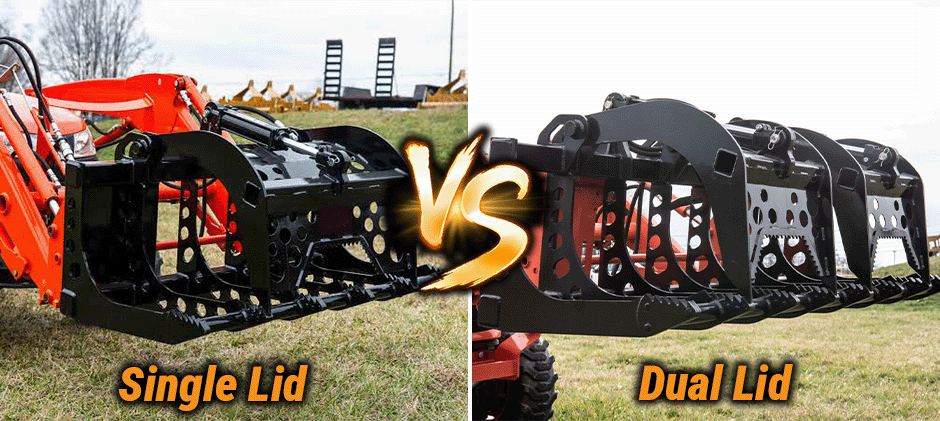
Single Lid Or Dual Lid
Lid layout quietly shapes how a grapple handles real-world, uneven material.
In practice, a dual-lid grapple tends to shine with:
- crooked brush piles
- root balls
- rock loads riding high on one side
- mixed debris with irregular shape
A single-lid grapple, on the other hand, usually handles these well:
- centered brush loads
- uniform logs
- lighter cleanup
- straightforward farm use
Does Single Lid Mean Stronger
Not necessarily.
A single lid can feel rock-solid in a straight clamp — the structure is simpler, after all, and that simplicity is a big part of its appeal among brush operators. Fewer moving parts tend to mean easier service, too.
But simple isn’t automatically better for every load. A dual lid often gets a firmer grip on twisted or uneven piles. When one side of the load sits higher, that second lid holds it down instead of letting an edge float free.
So the rule of thumb holds up: mostly centered brush and logs? A single-lid skid steer grapple is a sensible fit. Uneven material? Dual lids typically save time and cut down on re-grabs.
Focus On The Specs That Matter
Tine Spacing
Tine spacing belongs near the top of your checklist — and it’s far easier to underestimate than people expect.
| Spacing | Best Use | What You Give Up |
|---|---|---|
| 2 to 3 in. | rocks, broken concrete, smaller chunks | more weight, less dirt shedding |
| 4 to 6 in. | mixed chores, roots, general cleanup | middle-ground performance |
| 7 to 8 in. | brush, limbs, bulky debris | small pieces fall through |
Current product lines illustrate this range well. Some root grapples run 8-inch spacing, while tighter rock-oriented designs do a far better job of holding smaller material. Wider spacing lets dirt fall away — a genuine advantage in brush and root work. Tighter spacing keeps rock inside the attachment rather than scattered on the ground.
This is where bargains often turn into daily headaches. Spacing that’s too wide doesn’t cost you a few stray pieces — it costs you rocks on the ground, backed-up passes, second attempts, and sometimes running over debris before cleanup even starts. Every dropped piece adds a pass and drags the whole job down.
Weight And Width
Treat weight as a first-order decision, not a footnote. Attachment weight eats into usable lift every time you leave the yard, and published specs reveal just how wide the range can be.
A practical width guide looks like this:
- 60 to 66 inches for smaller machines and tighter spaces
- 72 inches for a strong all-around fit
- 78 to 84 inches for larger machines and bulky material
Protection And Visibility
A grapple can look impressive on paper and still disappoint in the field if the hoses, cylinders, and pivots are left exposed.
Worth looking for:
- hose routing that avoids pinch points
- cylinder guards
- grease points at pivots
- coupler fittings positioned to reduce damage risk
- open sight lines to the tips
Blue Diamond’s current severe-duty designs, for example, emphasize protected hoses, no-pinch routing, cylinder covers, and grease zerks at the pivots, with some models using 90-degree fittings at the couplers to lower the chance of breakage. CAT industrial grapple buckets similarly stress cylinder protection and reinforced structure.
These aren’t cosmetic details. They translate directly into less downtime and easier routine service — which is also where dependable grapple hydraulic hose replacement, grapple cylinder seal kit options, and well-matched hydraulic cylinder parts start to matter over the life of the attachment.
Compare Price With Real Use
Price matters, but only in the context of actual workload.
| Price Range | What You Often Get | Best Fit |
|---|---|---|
| around $1,000 | simple frame, fewer refinements, lighter use focus | occasional cleanup and budget-conscious work |
| around $3,000 to $4,000 | stronger pivots, better protection, more balanced design | regular farm and acreage work |
| upper premium range | heavier construction, stronger dealer support, severe-duty focus | daily commercial use |
One common assumption deserves pushing back on: that a low price automatically means a short service life. Not always. A straightforward single-cylinder grapple in the $1,000 range can stay in service for years if the work suits the tool and the machine isn’t pushed past its limits all day. That’s worth remembering next time someone claims every good skid steer grapple has to sit near the premium end.
That said, spending more can buy genuinely meaningful upgrades — better hose protection, stronger lid pivots, cleaner welds, better balance. This is often where Construction Attachments Inc., a Blue Diamond skid steer grapple, or a CAT skid steer grapple bucket pull ahead. Jenkins, CID Extreme, and Quick Attach tend to compete in the mid-market, while budget searches usually surface Titan grapple and Tomahawk grapple models.
The takeaway stays simple: buy to the job, not to the badge.
Farm Work Changes The Best Choice
Farm and acreage work gets labeled light duty far too often, and that framing misses the point. The attachment may not run every hour of every day — but it usually faces the widest variety of jobs of anything in the barn. This changes the whole buying logic.
For farm work, the best option usually isn’t the most specialized grapple. It’s the one that keeps pulling its weight across shifting chores without robbing the machine of too much lift.
A well-chosen farm setup typically offers:
- moderate attachment weight
- medium tine spacing
- strong sight lines
- easy service access
- enough lid travel for brush and logs
The top frame shape is a detail that deserves far more attention than it gets. A flat top frame can be a genuine asset in log work: clamp one log in the jaws, lay additional material across the top for a short haul, chain it down — and in some cases cut your trips in half. That’s not a brochure line. It’s a real workflow advantage when you’re moving firewood, limbs, or storm-fall timber more than once a season.
This is exactly where a practical skid steer grapple buying guide needs to go beyond surface comparisons. Two grapples can look nearly identical in a product photo while differing enough in small design choices to change how many trips a job takes.
New, Used, Or Rental
Buying new isn’t the only sensible route.
A used grapple can represent excellent value — provided you inspect the wear points with a careful eye:
- straight tines
- tight lid pivots
- clean cylinder rods
- no major twist in the quick-attach plate
- clean hose routing
- welds that look controlled, not rushed
This matters most when you come across a used Jenkins, Quick Attach, or CID Extreme unit in genuinely solid shape. On the budget side, if a Titan grapple or Tomahawk grapple is in the running, look closely at lid alignment, tine straightness, and hose condition before letting price do the talking.
Rental deserves a place in the conversation, too. Torn between a skid steer brush grapple and a skid steer rock grapple? A single rental period can settle that question fast. It’s often the easiest way to find out whether your machine actually needs tighter spacing, lower weight, or dual lids.
Final Words
The right skid steer grapple should make the work simpler — not heavier, not slower. Start with material type, then work through spacing, lid layout, protection, and attachment weight. For long-term upkeep, FridayParts offers aftermarket parts with high-quality products at affordable prices, a vast inventory, and wide compatibility across many equipment brands.
Also Read:
Bobcat Hydraulic Hose Diagram Across Popular Skid Steer Models
