

You’ve got a busy workday ahead, and your skid steer is lined up to swap from a bucket to an auger in what should be a seamless, 30-second attachment change. But as you go to plug in the auxiliary lines, you’re met with a stubborn, rock-hard hydraulic lock, a spray of messy fluid, or a coupler that simply refuses to click. All these instantly grind your entire project to a costly, frustrating halt. To get your machine back up and running quickly, replacing a faulty coupler comes down to three essential phases: first, shutting down the system and fully relieving hydraulic pressure; second, cleaning the area and swapping out the old body for the new one; and third, slowly repressurizing the system to check for leaks. Understanding how these small but mighty components work, and knowing exactly when and how to execute this quick replacement, is the key to keeping your workflow moving and your skid steer running at peak efficiency.
What Are Hydraulic Quick Couplers and How Do They Work?
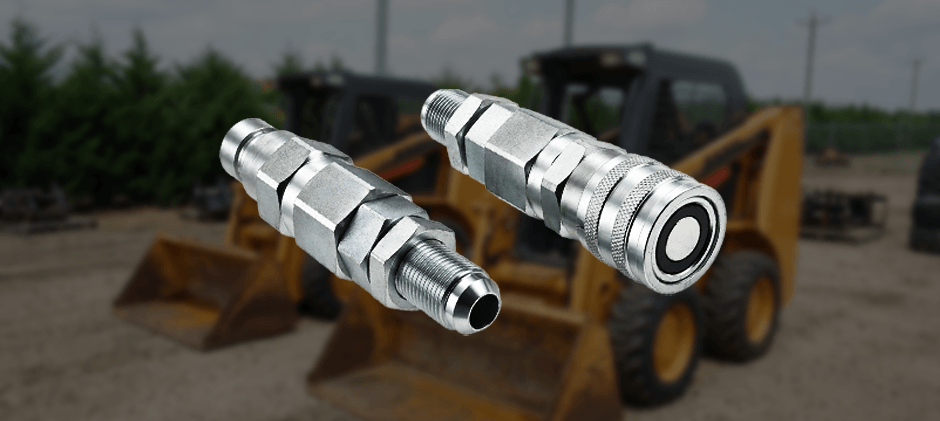
The hydraulic coupling systems on skid steer or utility loader are quite similar across varying makes and models. The hydraulic quick couplers facilitate the quick connection and disconnection of fluid in a quick and convenient way. Used in hydraulic and pneumatic systems, these hydraulic fittings give operators the ability to quickly connect or disconnect hydraulic lines to various types of machinery, equipment and attachments. They allow the proper flow and control of fluid when connected properly.
Hydraulic quick couplings are precisely engineered for specific fluid applications. All couplings have two parts, a male half and a female half. There are different ways these two halves can be coupled with different connection types, such as poppet style, push-to-connect, or thread-to-connect. Another distinguishing factor is the type of valve, whether poppet, ball, or flat face. See how to identify the hydraulic quick coupler here.
Signs Your Hydraulic Coupler Needs A Replacement
Hydraulic quick couplers are essential for the smooth operation of your skid steer hydraulic systems. You may need a hydraulic quick coupler replacement if you notice the common signs of a failing hydraulic coupling:
- Visible hairline body cracks or bends
- Hydraulic fluid leaking from the coupler connection points
- Difficulty in connecting or disconnecting
- Pressure lock symptoms
- A drop in system performance, like reduced hydraulic pressure or slower operation
- Grinding or squeaking noises during connection or operation
How to Replace the Hydraulic Quick Coupler on Your Skid Steer?
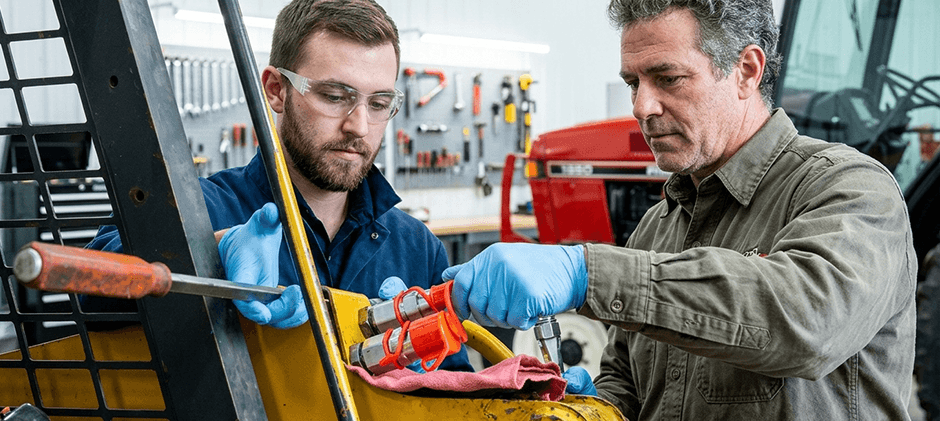
A failing hydraulic coupler can bring your skid steer operation to a sudden halt and thus lead to costly downtime or even safety risks during mid-operation. So, it’s critical to replace the faulty couplers on your skid steer in a timely manner. Here are easy steps for the hydraulic quick coupler replacement:
Prepare for Replacement
- Shut down the hydraulic system and ensure your skid steer is turned off
- Release system pressure completely via the vent valve or pressure relief valve to avoid oil spray and accidents
- Have necessary tools ready for the replacement, including your wrenches, rags, protective gloves, new couplers, impact hammer and lubricants if needed
Disconnect the Old Couplers
- Relieve all residual hydraulic pressure in your skid steer auxiliary line first to prevent oil spray and potential injury
- Clean the coupling areas to prevent any contamination before disconnecting
- Pull back the locking sleeve on the female coupler and carefully remove the male nipple from the female half
Check Components
- Inspect the male and female ends for scratches, dents, or wear.
- Check O-rings or sealing elements and replace them if damaged or aged
- Ensure the replacement coupler matches the pressure rating, size, thread type, and structural type of the system
Install the New Coupler
- Apply a small amount of compatible hydraulic oil or lubricant on the sealing surfaces or O-rings
- Insert the male nipple into the female coupler
- Release the sleeve or locking mechanism so it locks securely
- Ensure the connection is tight and properly aligned, without forcing the parts
Test the Connection
- Slowly pressurize the system and monitor the coupler for leaks
- Operate the system briefly to check for proper flow and sealing
- If there’s any leakage or misalignment, depressurize again and adjust or reinstall
Replacing the hydraulic quick coupler is straightforward with these steps. Here is a YouTube video clip about the Skid Steer Quick Connect Coupler Replacement to help you better understand the process.
Maintenance Tips for Hydraulic Quick Couplers
Regular maintenance is also crucial for the efficient hydraulic system of your Skid Steer.
- Regularly check hydraulic couplings for looseness, wear, cracks or deformation
- Inspect the coupling area for oil seepage, stains or abnormal pressure and replace seals or the coupling when necessary
- Keep the coupling and surrounding area clean to prevent contamination in the hydraulic system during installation, disconnection and operation
- Periodically check seals for aging or wear and replace them promptly to ensure proper sealing
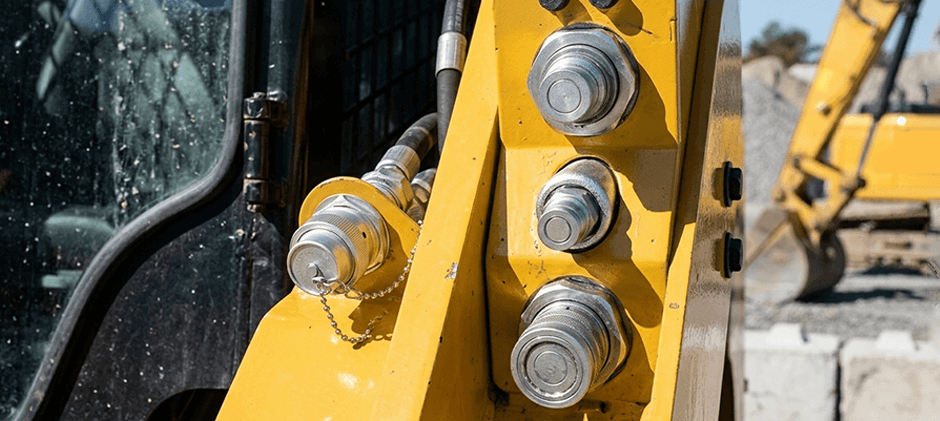
- Apply dust caps and protective covers on couplings when not in use to prevent contamination and mechanical damage
Conclusion
Hydraulic quick couplers are essential fittings for fast, tool-free attachment connections on skid steers. To avoid costly downtime, it is crucial to spot early signs of a stem running at peak efficiency. If your hydraulic couplers refuse to lock up and slow your project down, you may need a replacement. At FridayParts, we provide durable, leak-free couplers compatible with various brands like John Deere, Bobcat, CAT, Komatsu and more. Explore our extensive catalog and keep your machinery performing at its best.
