

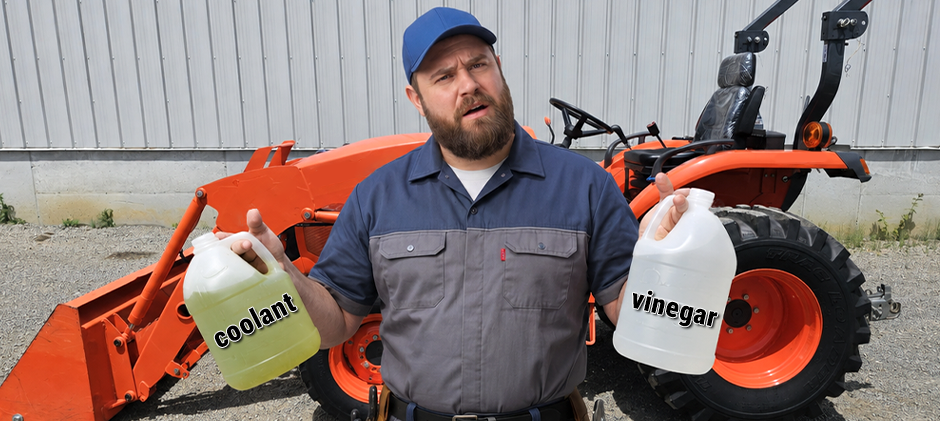
Have you heard of using vinegar or Coca-Cola for a coolant flush on your tractors? Is it actually safe? Or could it damage your engine? With temperatures rising and tractor workloads increasing, now is a good time to get your cooling system right. Here’s what 35 years of tractor experience can teach you about the safest and most effective way to flush your cooling system.
What Is A Tractor Coolant Flush?
A coolant flush or radiator flush is an essential maintenance procedure that removes old, contaminated coolant from your tractor’s entire cooling system and then replaces it with a fresh coolant mixture. This process typically involves draining the old coolant completely, cleaning out rust, sludge and scale buildup from the radiator and engine block, and refilling the system with manufacturer-approved coolant. Done correctly, a coolant flush helps your tractor keep optimal engine temperature and prevents unexpected breakdowns, especially during the high-demand summer working season.
Why Is A Coolant Flush Important?
There are several reasons why a coolant flush is necessary.
Avoid overheating: Old coolant may lose its ability to dissipate heat efficiently, leading to engine overheating under extreme weather conditions and heavy loads.
Prevent corrosion: As coolant ages, the corrosion inhibitors of the coolant may lose, causing rust and corrosion and ruining the radiator, water pump and engine block.
Stop scale buildup: Scale can form in the water and reduce the cooling efficiency.
Extend component service life: Clean coolant helps extend the life of cooling system components, such as the radiators, hoses and water pumps.
Can I Flush the Cooling System With Vinegar or Coke?
It’s a question flooding in tractor forums and the answer from experienced owners is consistent: NEVER do it.
Vinegar or Coca-Cola is seemingly a clever fix, for both are mildly acidic and acid dissolves rust and mineral deposits. Yet the real problem is that the same acidity doesn’t stop at the scale. It can also attach your radiator hoses, water pump seals and other aluminum components. Unlike a specialized flush product, neither vinegar nor Coca-Cola can be fully neutralized and cleared from a cooling system afterward, so the corrosion risk remains.
Experienced tractor owners don’t endorse either method, and neither do professional mechanics. The risk to your water pump and hoses isn’t worth the shortcut.
What Coolant Flush Product Should You Use?
For the vast majority of tractors, plain distilled water is all you need. If your system has serious rust or heavy contamination, a purpose-built product like Prestone Radiator Flush is appropriate for the job. Follow the label instructions, then flush thoroughly with distilled water before refilling. The best long-term advice from veteran owners is even simpler: use distilled water consistently and change your coolant on schedule, and you’ll rarely need a flush at all.
How Often Should You Get A Coolant Flush?
Generally, a tractor coolant flush should be done every 2 years or every 2,000 hours of operation. Always consult your tractor’s owner’s manual for the recommended coolant change interval. Another way to determine is to ask yourself if you’re unsure when the coolant was last changed. You should consider shortening the interval if you notice the following signs.
Signs You Might Need A Coolant Flush
Routine maintenance keeps your tractor running strong. Your tractor will let you know when the cooling system fails. Keep an eye on these common signs that it’s time to perform a radiator flush or full coolant service. These signs include:
- Engine overheating
- Sweet odor from under the hood
- Unusual Steem from the engine
- Murky, brown or sludgy coolant
- Dashboard warning lights (Temperature warning light or check engine light accompanied by other symptoms)
If you notice any of these signs, you need a quick check. Don’t ignore these warning signs. Have your cooling system inspected and flushed if necessary before it snowballs into a bigger problem and brings about costly repairs.
How to Do A Coolant Flush on My Tractor?
A tractor coolant flush is not as difficult as you thought. You can follow the steps to make it yourself. Before you start, allow the engine to cool down to avoid a scald hazard and a burn hazard.
Tools Needed
Before starting the coolant flush, gather the following tools needed.
- Manufacturer-approved Coolant
- Distilled Water
Drain Pan - Wrenches and Sockets
- Hose Clamp Pliers (Optional)
- Funnel
- Gloves
- Safety Glasses
- Radiator Flush Solution (Optional)
- Garden Hose
- Torque Wrench
- Owner’s Manual
Step-by-Step Guide
1. Prepare Your Tractor
Park your tractor on a level surface and engage the parking brake.
2. Locate the Drain Plugs
Generally, you can find the drain plugs on the bottom of the radiator or on the engine block. Always consult your owner’s manual for the exact place
3. Open the Radiator Cap
Remove the radiator cap carefully to relieve pressure.
4. Drain the Old Coolant
Place the drain pan under the plugs to catch old coolant. Then, drain the coolant completely.
5. Flush the Cooling System
Once the coolant has drained, close the drain plug(s) and tighten to the specified torque (consult your manual). Fill the radiator with distilled water. Start the engine and let it run for 10-15 minutes. This will circulate the water and help remove any remaining deposits. Then, shut off the engine and let it cool again. Repeat steps 3 and 4 to drain the distilled water. You may repeat this flushing process several times until the drained water appears clear and free of debris. If you are using a radiator flush solution, follow the instructions on the product label, ensuring it’s compatible with your tractor’s cooling system.
6. Inspect Hoses and Clamps
While the system is drained, inspect the radiator hoses for cracks, leaks, or swelling. Replace any damaged hoses. Check the hose clamps for corrosion and replace them if necessary. FridayParts carries a wide selection of radiator hoses and clamps for various tractor models, including John Deere tractor radiator replacement parts, Case IH tractor radiator replacement parts, and Ford tractor radiator hose replacements.
7. Mix the Coolant
If using coolant concentrate, mix it with distilled water according to the manufacturer’s recommendations. Typically, a 50/50 mix is used, but consult your owner’s manual for the correct ratio. Pre-mixed coolant is also available.
8. Fill the Cooling System
Slowly pour the new coolant mixture into the radiator using a funnel. Fill to the specified level, usually indicated on the radiator or expansion tank.
9. Bleed the System
Air pockets can form in the cooling system, reducing its efficiency. To bleed the system, start the engine and let it run with the radiator cap off. Watch for air bubbles escaping from the radiator. You may need to gently squeeze the radiator hoses to help release trapped air. Continue this process until no more air bubbles appear. See the full guide on How to Bleed Cooling System here.
10. Top Off Coolant Level
Once the system is bled, turn off the engine and let it cool slightly. Check the coolant level and top it off as needed.
11. Check for Leaks
Start the engine and let it run for a few minutes. Inspect all hoses, clamps, and drain plugs for leaks. Tighten any loose connections as needed. See How to Fix a Coolant Hose Leak on Your Off-Road Machine here.
12. Monitor Coolant Level
Over the next few days, monitor the coolant level and top it off if necessary.
13. Dispose of Old Coolant Properly
Coolant can be toxic. It must be disposed of properly. Never pour coolant down the drain or onto the ground. Contact your local recycling center or hazardous waste disposal facility for instructions on proper disposal methods.
Considerations for Specific Brands
The general process is the same for various tractor brands, but here are some factors to consider for popular tractor brands.
John Deere: John Deere specifies Cool-Guard II coolant for most models. Using a non-approved coolant can cause compatibility issues, so always verify the requirement in your manual.
Case IH: Some older Case IH tractor models have multiple drain plugs on the engine block. Make sure you locate and open all of them for complete draining.
Ford/New Holland: Many older models used conventional green coolant, while modern models require extended-life coolant. Confirm the right type of coolant in your manual.
Massey Ferguson: Massey Ferguson tractors usually have a bleeder valve on the thermostat housing. Use it during the refill stage to release trapped air pockets. This saves you extra time during the bleeding process.
Kubota: Kubota tractors typically adopt a long-life coolant. After a flush, pay close attention to the coolant level over the first few days of operation, as air pockets can cause the level to drop unexpectedly. Shop replacement Kubota tractor radiator parts at FridayParts.
For all other brands, including Allis Chalmers, Deutz, International Harvester and Mahindra, drain plug locations, coolant type, and system capacity vary significantly by model. Your service manual is the only reliable reference.
What to Do for Cooling System Maintenance?
Regular maintenance is the key to keeping your tractor’s cooling system at its best performance after a coolant flush. Follow these steps:
- Check the coolant level regularly
- Inspect hoses and clamps for leaks or damage
- Keep the radiator fins clean and free of debris
- Perform a coolant flush according to the manufacturer’s recommendations
- Consider using a coolant filter to remove contaminants.
Coolant Flush vs Coolant Drain
While both involve removing coolant, a coolant flush is more comprehensive than a simple coolant drain. A drain only removes a portion of the old fluid and does not address any buildup or internal contaminants. A coolant drain may suffice for topping off the fluid or performing minor maintenance. However, when you’re experiencing performance issues or nearing recommended service intervals, a full coolant flush is the smarter, more effective solution.
FAQs for Coolant Flush
Is a coolant flush the same as a radiator flush?
The two terms are often interchangeable. Technically, a full coolant flush refers to the entire cooling system flush, including hoses, heater core and engine block, while a radiator flush focuses exclusively on the radiator.
What happens if I skip a coolant flush?
Skipping a coolant flush can lead to many unexpected problems like engine overheating, corrosion, and premature engine failure. Over time, the coolant can become acidic and less effective, risking your engine cooling performance and bringing about costly repairs.
Wrapping up
A tractor’s cooling system is crucial for overheating prevention and optimal engine performance. Coolant ages over time and loses its effectiveness, leading to rust and corrosion in critical components. A regular coolant flush helps protect the engine and radiator properly. FridayParts understands it very much. That’s why we provide a vast selection of quality water pumps, radiators, and other cooling system components for your John Deere, Ford, New Holland, Massey Ferguson, Kubota, CASE and many other brands. You can find top-notch replacement at an unbeatable price so you can keep your tractor running robustly and reliably.
