

A skid steer is one of the most versatile machines on a construction site. It can dig, lift, grade, haul materials, clean up debris, and handle many other jobs with the right attachment. In this guide, we’ll look at the most common skid steer applications in construction and the attachments that make them possible.
What Can a Skid Steer Do on a Construction Site?
Skid steers look small, but they’re tough, hardworking machines that handle all kinds of jobs to keep construction sites running smoothly. Thanks to their zero-turn ability, they can spin right in place and work in tight spots where bigger machines can’t fit at all. Here are the most common jobs a skid steer does:
Material Handling
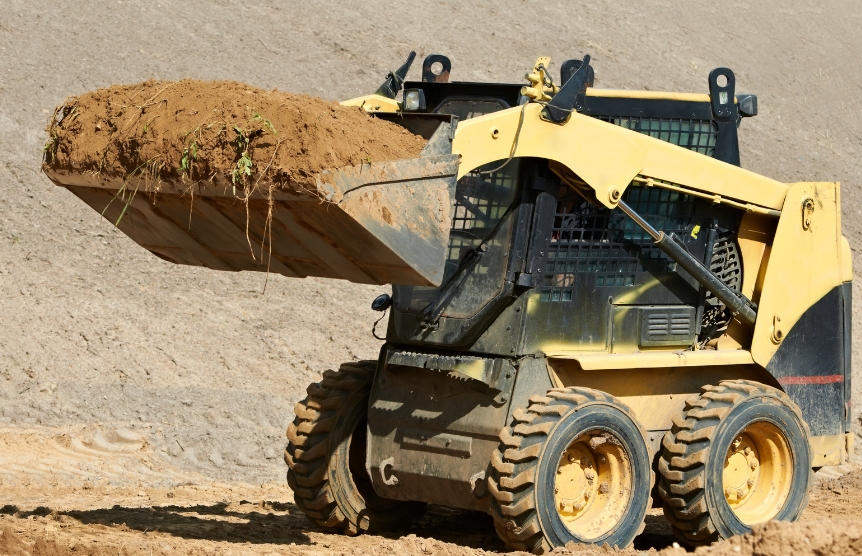
This is the skid steer’s main job. Fitted with a standard bucket or pallet fork, it easily moves dirt, gravel, sand and other loose materials. It can also lift and shift pallets of bricks, sod or cement bags right from the truck to where they’re needed on site, saving tons of manual work.
Excavation & Trenching
It can’t replace a full-size excavator for big digging jobs, but it’s perfect for small-scale work. With a backhoe or trencher attachment, it digs utility trenches, creates footings for small buildings and retaining walls, and helps with plumbing and electrical site prep.
Light Demolition
Skid steers are good at light demo work. Add a hydraulic hammer, and it can break up concrete slabs, walkways and old foundations. Use a grapple bucket to tear down small wooden structures, remove old fencing, and haul away all the debris.
Backfilling & Grading
After digging trenches or laying foundations, you need to level the ground. Skid steers are great for backfilling holes with loose soil and grading the ground flat or sloped as needed. Using a standard bucket or grading blade, operators can quickly prep the site for landscaping, concrete work and more construction.
Site Cleanup
A tidy job site is safer and more efficient. At the end of each workday or after a project, a skid steer with a sweeper attachment quickly clears dirt, dust and small debris off hard surfaces. You can also use a regular bucket to pile up all scrap material for fast removal.
You can switch from trenching to sweeping in just minutes — and that’s what makes skid steers so versatile. Their real power comes from quick-swappable attachments.
Best Skid Steer Attachments for Construction
- Bucket: It is the most common and widely used attachment, available in different capacities and shapes to suit various job requirements.
- Grading Blade: The grading blade allows you to adjust the height and angle of the loader’s bucket to achieve the desired levelness and slope during backfilling and grading operations.
- Dozer Blade: They can adjust the blade angle and height of the loader, allowing for quick leveling and smoothing of large areas.
- Rake: Rake attachments are used to adjust the uniformity and compaction of the soil.
- Clamp: Clamp attachments grip and move various materials, such as pipes, timber, stones, etc.
Benefits of Using a Skid Steer in Construction
The construction site is filled with dangers, and transporting heavy objects manually can be a challenging task. With skid loaders, you can safely and easily move goods to their intended locations. Here are the reasons to invest in them:
- Versatile attachments and functions: Skid loaders offer a wide range of attachments and functionalities to adapt to different job requirements flexibly.
- Efficient: It has fast loading and unloading capabilities, allowing for efficient operations and increased productivity.
- Adaptability to various terrains and conditions: Skid steers can handle narrow workspaces, crowded job sites, and uneven terrains, making them suitable for diverse working conditions.
- Lower Fuel Consumption and Maintenance Costs: It has lower fuel consumption compared to other heavy machinery, leading to cost savings. Additionally, the costs of maintenance are relatively lower.
- Easy operation: They are operated through joystick or lever controls, making them user-friendly. The controls enable precise movement and functionality of the loader.
All in all, by investing in skid steers, you can enhance the speed and efficiency of your construction projects.
Skid Steer vs. Compact Track Loader
Skid steers and compact track loaders (CTLs) do a lot of the same work, but their bottom parts are totally different. CTLs use rubber tracks instead, while skid steers run on wheels.
- Skid steers generally cost less and are simpler to haul around. They also perform great on hard ground like concrete, asphalt and gravel.
- Compact track loaders grip soft, muddy or bumpy ground way better. The downside is they’re pricier to buy and upkeep.
Stick with a skid steer if you mostly work on solid flat ground. Go for a compact track loader if your job sites are wet or rough.
Final Words to Say
If you’re still deciding on the right loader equipment for your construction project, consider a skid steer first. It can independently operate the front and rear wheels, making it more flexible and easier to maneuver in narrow work areas. If you need assistance in selecting a loader, you can get ideas from this article: Tricks To Buy Skid Steer Loader.
By the way, if you plan to upgrade parts for the old loader, welcome to get compatible aftermarket loader parts here. And, various brands and models are available. Professional and high-quality are among the reasons why customers choose FridayParts. We look forward to working with you.
