

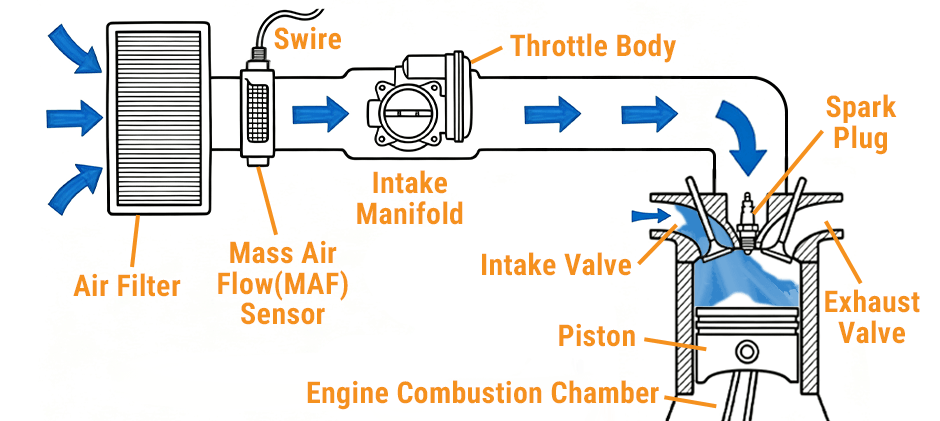
Rough idle, hesitation, and weak low-speed power often send operators and techs down the fuel delivery or ignition path first. But on quite a few machines, the real issue is more straightforward—air getting into the intake where it doesn’t belong. On a gasoline engine, that typically means a vacuum leak. On a diesel—especially a turbocharged one—it’s better described as an intake leak or a boost leak. The terms get tossed around pretty casually in the shop, but tracking down each one takes a different approach. Before you start throwing parts at it, take a step back and look at the full range of vacuum leak symptoms and what they’re actually telling you.
What Are the Most Common Vacuum Leak Symptoms?
What do operators usually notice first? The engine might idle roughly, stumble just off idle, or feel flat at low speeds. Cold starts might drag out longer than normal, too. On gasoline engines, the root of it is usually unmetered air slipping into the intake and leaning out the mixture.
Common signs include:
- Rough or unstable idle
- Hard starting, especially when cold
- Hesitation when the throttle is applied
- Stalling at low speed
- Hissing near the intake area
- Higher fuel use than normal
- Backfire or popping through the intake on gasoline engines
- Airflow- or mixture-related trouble codes on electronically managed machines
These vacuum leak symptoms do not always appear at the same time. Some machines show only one or two early on. A small intake-side leak may start as a mild idle problem and become a more noticeable drivability issue once the machine is working under load.
Rough or Unstable Idle
This is often one of the first signs. When air enters after the normal metering point, idle quality can change quickly. The engine may shake, surge, or dip below normal speed.
On a skid steer, this may feel like an uneven idle just after startup. On a compact tractor or forklift, idle may seem normal for a short time and then begin to hunt.
Hard Starting
Hard starting is another common sign, especially on gasoline engines. During a cold start, extra unmetered air can make the mixture too lean and cause longer crank times or a rough initial start.
Hesitation at Low Throttle
A leak can also affect throttle response. You apply throttle, but the engine reacts slowly or unevenly. This often shows up when moving off idle, loading a bucket, or raising engine speed to run attachments.
Hissing and Light Power Loss
A hissing sound around the intake side is a useful clue, especially at idle. Power loss may still be mild at first, which is one reason many operators delay inspection. In practice, that often makes later diagnosis more time-consuming.
What Causes a Vacuum Leak in the Intake System?
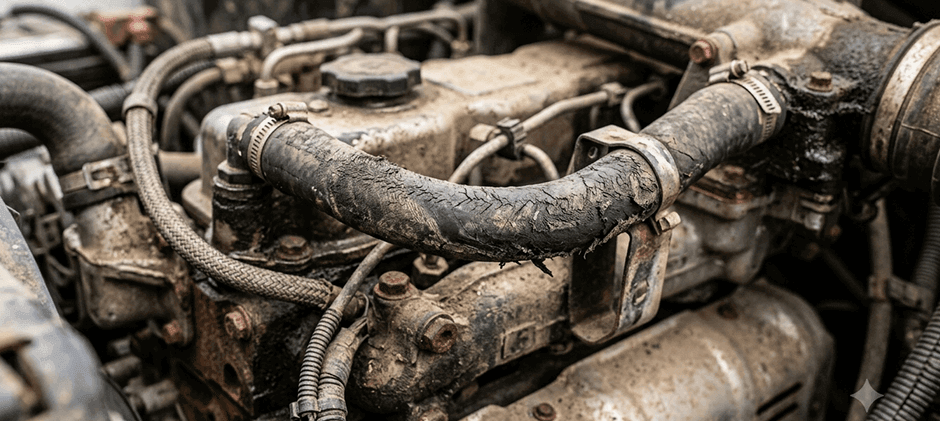
Most leaks begin with age, heat, vibration, or poor sealing. Rubber hardens. Clamps loosen. Gaskets flatten. After enough service hours, the intake path may no longer seal the way it should.
The most common causes are:
- Cracked hoses
- Loose clamps or fittings
- Worn intake gaskets
- Leaking auxiliary valves or small seals
- Split intake boots on turbocharged systems
On many machines, the root cause is simple: a sealing part has aged out.
Common Leak Points
| Cause | How to Identify | Typical Fix | Common On |
|---|---|---|---|
| Split hose | Visible crack, dry rubber, hiss at idle | Replace vacuum hose | Compact tractors, forklifts, and older utility machines |
| Loose clamp | Dust mark near joint, movement at connection | Tighten or replace the clamp | Skid steers, wheel loaders, excavators |
| Intake gasket leak | Idle surge, response during spray or smoke test | Replace the intake manifold gasket | Tractors, forklifts, older gasoline units |
| Intake boot leak | Soft tear, oil film, weak response under load | Replace the air intake hose | Turbo diesel loaders, excavators, telehandlers |
| Auxiliary valves or seals | Inconsistent idle, intermittent fault behavior | Replace the leaking valve, check valve, or seal | Mixed machine types |
One detail matters here. When this article refers to vacuum leak symptoms, it mainly means gasoline-engine behavior. On many diesel machines, the same field complaint may actually point to an intake leak or boost leak instead.
Is It a Vacuum Leak or a Boost Leak?
This distinction matters because gasoline and diesel engines do not handle intake airflow the same way.
A gasoline engine usually develops intake manifold vacuum because the load is controlled with a throttle plate. That is why a true vacuum leak can directly affect idle, starting, and low-speed response. A naturally aspirated diesel engine, by contrast, usually has little or no intake manifold vacuum because it does not control load in the same way. Strictly speaking, that means diesel machines usually do not have a vacuum leak in the gasoline-engine sense. What they more often have is an intake leak or, on turbocharged models, a boost leak.
On smaller gasoline engines, vacuum leak symptoms usually come from unmetered air entering the intake side. That tends to affect idle quality, cold starting, and low-throttle response first.
On turbo diesel machines, operators may use the same term, but the leak may be in the charge-air path. In that case, the more common signs are:
- Weak pull under load
- Slower turbo response
- More smoke than normal
- Air noise near boots or clamps
- Reduced power when climbing, pushing, or working under a heavier load
So the same complaint can point to different fault areas depending on engine type.
When Is Each One More Likely?
Use this quick guide:
- Gasoline machine + rough idle + stalling at low speed = a true vacuum leak is likely
- Turbo diesel + weak pull under load + air noise = check for an intake or boost leak
- Older machine + brittle rubber + mixed symptoms = inspect both sealing points and hose condition
This step helps avoid replacing the wrong part too early.
How Can You Diagnose a Vacuum Leak?
Once the symptoms are clear, the next step is to confirm the leak. Start with the simple checks first. Many common problem points can be found without advanced tools.
What Should You Check First?
If time is limited, use this order:
- Inspect hoses and clamps
- Check intake joints and gasket areas
- Listen for hissing at idle
- Confirm with smoke if needed
- Replace the failed sealing part
- Test the machine again under normal load
This sequence works well because it starts with the faults most often seen in service.
Start With a Visual Check
Look over the full intake path before doing anything else.
Check for:
- Hard or cracked rubber
- Loose clamps
- Oil-stained joints
- Dust tracks around a connection
- Flattened gasket edges
- Hoses that collapse or twist with movement
If a hose is brittle or split, replacing the vacuum hose is often the first repair step on a gasoline engine. If the leak appears near a manifold joint, a new intake manifold gasket is often the better fix.
Listen for a Hiss
Start the engine and listen carefully around the intake side. A steady hiss often points to a small opening that becomes more noticeable at idle. Use care around moving parts and hot surfaces.
A short piece of hose can help focus the sound if access is limited.
Use a Smoke Test
A smoke test is one of the most effective ways to confirm a small leak. Smoke introduced into the intake path will escape where sealing has failed. This works well for fine cracks and gasket leaks that are hard to spot by eye.
For readers less familiar with the method, a smoke test should be done with a low-pressure smoke machine, typically around 0.5 to 2 psi. Too much pressure can force open a good seal and create a false leak point.
If the machine is turbocharged and power drops mainly under load, inspect the larger intake plumbing as well. A worn air intake hose or split boot can create similar symptoms, even when the issue is not a classic vacuum leak.
A good diagnosis usually follows a simple rule: inspect first, confirm second, replace third.
Try a Spray Test Carefully
Some technicians use a spray test around suspected leak points while the engine idles. Common test media include carburetor cleaner, starting fluid, or propane. This method can help locate a leak if engine speed changes, but it also carries a clear fire risk.
Carburetor cleaner and starting fluid are flammable. If they contact a hot exhaust component or another ignition source, they can ignite. Propane is often considered a safer option when used properly, and a smoke test is usually safer still. If you are not fully comfortable with the risks, skip the spray method and use smoke testing instead.
Read Data if the Machine Supports It
On electronically managed engines, scan data can help confirm what inspection already suggests. Fuel-trim readings on gasoline engines, for instance, can offer useful clues. MAF or MAP data from either gasoline or diesel electronic systems can also support the diagnosis. With older mechanical diesel machines, however, you won’t get that information—physical inspection remains the primary approach.
Why Should a Vacuum Leak Be Repaired Early?
A leak that starts small rarely stays small. Once unwanted air enters the system, running quality becomes less stable, and nearby parts may see added stress.
Early repair matters for three main reasons:
- Idle and throttle response usually get worse over time
- Fuel use can increase as the engine runs less efficiently
- Nearby hoses, clamps, and seals may wear faster if the leak is ignored
This is also the right time to replace the parts that restore proper sealing, not just the failed piece itself. For example, a fresh vacuum hose, intake manifold gasket, or air intake hose can help restore stable airflow and reduce the chance of repeat issues when matched to the true leak point.
What Can Happen if You Wait?
If the problem is ignored, you may see:
- More frequent stalling
- Slower response during work
- Harder cold starts
- Extra downtime during busy operating periods
- More time spent tracing a problem that was once easy to fix
That is why vacuum leak symptoms should be checked early. The first signs are often the lowest-cost point to act on.
Conclusion
Vacuum leak symptoms are usually easiest to correct when found early. Whether the repair involves a small hose, a gasket, or an intake boot, using quality replacement parts can help reduce repeat issues. That is where FridayParts comes in, with aftermarket parts that offer broad compatibility and a large inventory for many machine brands.
