

Every hydraulic system generates heat during operation and this is even more severe in the scorching summer. If left uncontrolled, that heat silently ruins seals, degrades fluids and shortens your machine’s life. A hydraulic oil cooler is the frontline defense. Understanding how it works helps you protect your hydraulic system and save you arms and legs. Let’s explore now!
What Is A Hydraulic Oil Cooler?
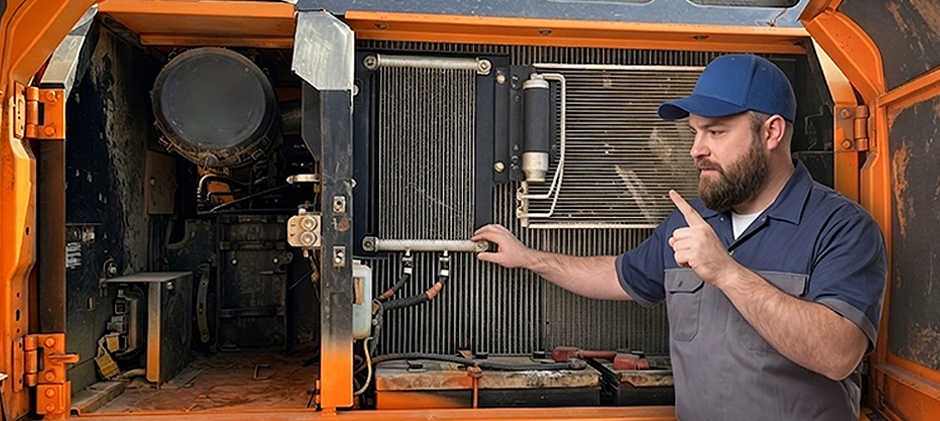
A hydraulic oil cooler is a heat exchanger designed to remove excess heat from the hydraulic oil. It is essential to protect your machinery’s hydraulic system. When the hydraulic system powers cylinders, motors, valves and pumps, the fluid absorbs heat from internal friction and pressure drops. The oil cooler transfers heat from the hydraulic oil to the surrounding air, ensuring the optimal temperature. In a simple word, a hydraulic oil cooler does for your hydraulic system what a radiator does for an engine. Without it, that heat accumulates rapidly, leading to costly repairs. Shop high-quality radiators here.
Key Components of a Hydraulic Oil Cooler
| Component | Function |
|---|---|
| Heat exchanger core | Tubes and fins where heat transfer occurs |
| Cooling fan | Drives airflow across fins in air-cooled units |
| Inlet/outlet ports | Connect the cooler to the hydraulic circuit |
| Bypass valve | Prevents over-cooling during cold starts |
| Cooling fins | Increase surface area for faster heat dissipation |
| End headers | Distribute oil flow evenly across the tube bundle |
How Does A Hydraulic Oil Cooler Work?
A hydraulic oil cooler operates on the principle of heat exchange, transferring thermal energy from hot hydraulic oil to a cooler medium (air or water). During normal system operation, hydraulic oil absorbs heat from multiple sources, including internal friction between moving components, fluid movement within the circuit, and ambient temperature. As oil temperature rises, its viscosity increases, leading to reduced system efficiency, accelerated wear on seals and components, and the risk of eventual system failure. The oil cooler addresses this by continuously removing excess heat to keep the fluid within its optimal operating temperature range.
The general steps are as follows:
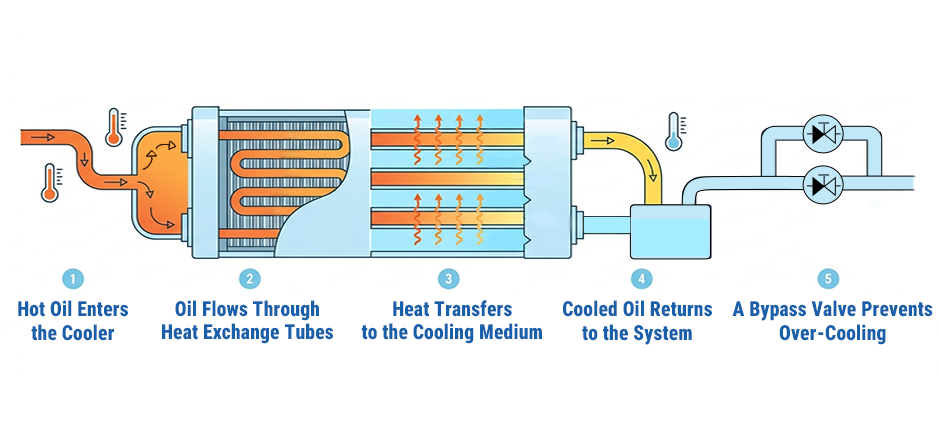
The process begins when hydraulic fluid returning from actuators and motors enters the cooler through the inlet port, typically at temperatures of 70°C to over 90°C. The oil then travels through narrow aluminum or copper tubes, where heat passes through the tube walls into the surrounding medium. In air-cooled systems, a fan drives ambient air across metal fins to carry heat away. In water-cooled systems, chilled water circulates around the tubes in a closed loop, absorbing the thermal energy. Once through the exchanger core, the oil exits via the outlet port at a noticeably lower temperature — typically 20°C to 30°C cooler than at entry — and returns to the hydraulic circuit ready for the next cycle. A thermostatic bypass valve further protects the system by diverting cold oil around the cooler during start-up, preventing over-cooling until the system reaches its optimal operating temperature.
Significance of Hydraulic Oil Cooler
A hydraulic oil cooler plays a critical role in maintaining hydraulic system stability. Without effective cooling, the oil temperature rises beyond its safe operating range, triggering a chain of consequences.
- Viscosity drops: Hot oil becomes too thin to properly lubricate pumps, motors, and valves, accelerating wear.
- Seal failure: Seals and O-rings harden, swell, and crack when exposed to sustained high heat, causing leaks.
- Fluid breakdown: Above 60°C, hydraulic oil begins to oxidize. Fluid life can drop by up to 50% for every 10°C rise beyond that threshold.
- Reduced efficiency: Overheated systems lose power precision, causing sluggish response and inconsistent performance.
- Component damage: Prolonged overheating can warp pump housings, score cylinder bores, and lead to full system failure.
Warning Signs Your Hydraulic Oil Cooler Is Failing
Catching these early signs of a faulty cooler can save you from unexpected hydraulic problems and costly repairs.
- Oil temperature consistently above 60°C during normal operation
- Sluggish actuator response or reduced power output
- Foaming, darkened, or burnt-smelling hydraulic fluid
- Visible fin clogging or physical damage on the cooler core
- Frequent seal failures or fluid leaks
If you notice any of these symptoms, you must do a quick cooler inspection.
Practical Maintenance Tips
A well-maintained hydraulic oil cooler can last for years. Here are practical tips for cooler maintenance:
- Check and replace your hydraulic fluid: Look for discolored or burnt fluid. Replace the hydraulic fluid according to the recommended intervals in your owner’s manual or sooner if contamination is detected. See How to Check the Hydraulic Fluid in your John Deere tractor.
- Clean the cooling fins regularly: Dust, debris, and chaff clog fins and block airflow. You can use compressed air or a soft brush.
- Inspect hoses and connections: Check for cracking, abrasion, or weeping fittings. Even a small leak introduces air into the system and reduces cooling efficiency.
- Monitor operating temperature: Install a hydraulic temperature gauge if one isn’t already fitted. Log baseline readings so you can spot rising trends early.
- Test the bypass valve: A stuck-open bypass valve means oil permanently bypasses the cooler. Replace it if it fails to close at operating temperature.
Final Words
Hydraulic oil coolers are essential components of your hydraulic systems. They function by removing excessive thermal energy and help extend the life of your hydraulic components. At FridayParts, you can not only get high-quality hydraulic oil coolers and other hydraulic replacement parts, but also acquire a great deal of knowledge about equipment troubleshooting, maintenance and repairs. Stay tuned to our websites and you will enjoy an unparalleled operating experience.
