

Your machine won’t start, or maybe it feels stuck in the wrong gear. Why? The fault code P0705 will give you answers.
The scanner shows code P0705? Don’t worry, code P0705 always points to an electrical problem that stops the computer from knowing if you’re in Park, Reverse, Neutral, or Drive. This simple guide explains what the code means, why it happens, and how to fix it safely—without guessing or wasting money.
What Does Code P0705 Mean?
Code P0705 – Transmission Range Sensor Circuit Malfunction (PRNDL Input)
Your machine’s computer (called the TCM or ECM) can’t read the correct signal from the Transmission Range Sensor.
This sensor — sometimes called the Neutral Safety Switch — tells the system which gear the shifter is in.
It sends a small voltage signal for each gear:
- Park / Neutral: lets the engine start
- Reverse: turns on reverse lights and alarms
- Drive: allows forward movement
When the computer gets a signal that doesn’t make sense, like “Drive” and “Reverse” at the same time, it triggers Code P0705.
5 Common Symptoms of P0705
Watch for these warning signs before your machine stops working completely:
- Engine won’t start: The safety system blocks starting because it can’t confirm you’re in Park or Neutral. This is one of the most commonbad starter symptoms.
- No Reverse Lights or Alarm: The sensor isn’t telling the system you’ve shifted into Reverse.
- Limp Mode: The transmission locks into one gear (usually 2nd or 3rd) to protect itself. This may also be indicated by an “Engine Power Reduced” warning.
- Wrong Gear Display: The dash may show the wrong gear, flash, or go blank.
- Hard or Harsh Shifting: The transmission may slam into gear because the computer can’t match the gear speed smoothly. This is one of the classic early signs of transmission problems.
What Causes P0705 in Heavy Equipment?
Tough job sites are hard on wiring and sensors. The most common causes include:
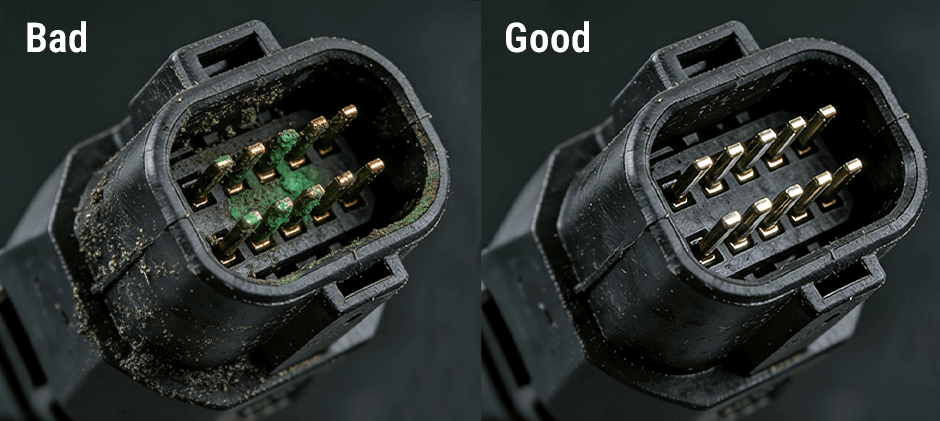
- Dirty or Corroded Connectors: Mud, water, and salt can get into the wiring plug. Since the sensor sits outside the transmission, corrosion is very common.
- Loose or Misaligned Shift Linkage: Vibration or impact can move the shifter cable or lever out of position so the physical gear doesn’t match the sensor.
- Damaged Wiring: Heat, sharp edges, or rodents can cut or rub wires, breaking the signal line.
- Worn‑Out Sensor: The internal contacts wear down over time after thousands of shifts between Drive and Reverse.
4 Steps to Diagnose P0705
You don’t have to replace the sensor right away — follow these steps first.
Safety First: Before crawling under the machine, always chock the wheels and engage the parking brake. Adjusting the shift linkage can cause the machine to roll unexpectedly.
1. Try the “Wiggle Test.”
Try starting in Neutral instead of Park.
If it starts in Neutral or works when you move the shifter slightly, the sensor is probably loose or out of adjustment, not broken.
2. Inspect the Connector
Find the sensor on the side of the transmission.
Unplug it and check for green corrosion, water, or bent pins.
A simple cleaning sometimes fixes the issue right away.
3. Check the Shift Linkage
Make sure the lever on the transmission moves fully into each position.
If it feels sloppy or doesn’t line up with the shifter inside, tighten or realign it.
4. Check for Voltage
Use a multimeter to check for power and ground at the connector.
If power and ground are okay, but no signal comes out, the sensor itself has failed.
How to Fix Code P0705
Once you find what’s wrong, repair is usually quick and affordable.
Step 1: Clean and Adjust
Use an electronic contact cleaner on the plug, then apply a little dielectric grease to protect it.
If the linkage is off, adjust it so the dash gear indicator matches the shifter exactly.
Step 2: Repair Wiring
Fix any broken wires or damaged insulation.
Keep the harness clear of hot exhaust parts or moving components.
Step 3: Replace the Transmission Range Sensor
If cleaning and adjusting don’t solve it, replace the sensor.
It’s a simple bolt‑on repair that usually takes less than an hour.
Step 4: Align the New Sensor
This is the most critical step after replacement and is often missed. A new sensor that is not aligned will cause the same P0705 code. The sensor’s electrical position must match the transmission’s mechanical gear position.
- Consult your service manual for the specific alignment procedure.
- Typically, you will need to put the transmission shift lever in Neutral.
- Loosely install the new sensor, then rotate it slightly until the alignment marks on the sensor and the transmission case line up.
- Once aligned, tighten the mounting bolts to the specified torque.
- Failure to perform this alignment will result in incorrect gear signals being sent to the computer, making the replacement ineffective.
Is This Repair Expensive?
Not really — most fixes are simple.
| Repair Option | Typical Cost | Notes |
|---|---|---|
| Clean/Adjust | $0–$20 | Contact cleaner & grease |
| New Sensor | $50–$250 | Depends on the model |
| Ignore It (leads to rebuild) | $3,000+ | Damage from long‑term shifting problems |
Fixing it early prevents clutch wear and transmission failure, which can cost thousands later.
Final Thoughts
Code P0705 is usually an electrical issue, not a sign of total transmission failure. In most heavy off‑road machines, the cause is something simple — dirt, corrosion, or a loose cable.
Keep your machine clean, check wiring after muddy jobs, and protect connectors with grease to prevent the problem from recurring. During this inspection, if you find any part to be replaced, FridayParts is your backup. We offer a wide selection of high-quality connections, sensors, switches, and more.
