

Are you ready for the summer heat wave? For equipment operators living in the southern parts of the US, we are not strangers to the scorching summer. A functioning A/C system isn’t just about comfort; it’s about maintaining focus and productivity in demanding work environments. When your equipment starts heating up, the A/C compressor often comes to mind first. Knowing the common signs of a bad A/C compressor can save you from downtime and costly repairs. In this guide, you’ll learn the signs and causes, helping you determine if it’s time for a replacement.
Don’t know how to replace the compressor? Check the EASY Steps to change the AC compressor!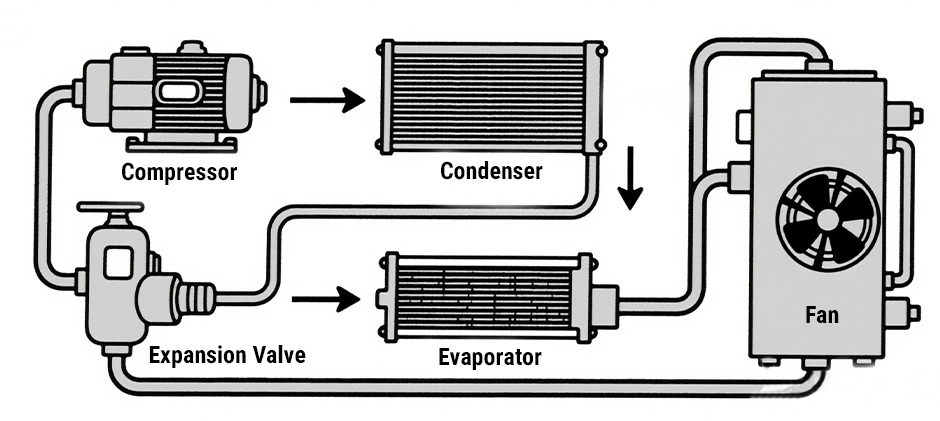
Understanding A/C Compressor
Let’s quickly review how an a/c compressor works first. Think of it as the heart of your heavy equipment’s air conditioning system. Its main job is to compress the refrigerant gas, increasing its temperature and pressure. This compressed refrigerant moves through the system, releases heat outside the cab and absorbs heat from inside. Then, cooling air is produced. Without a good AC compressor, the refrigerant cannot circulate properly, and your AC won’t cool.
How Does An A/C Compressor Work?
The process of ac compressor involves:
- The compressor takes in low-pressure cool refrigerant gas.
- As the gas enters the compressor, its pressure and temperature increase significantly.
- This now-hot gas moves to the condenser where it loses the heat and transforms into an extremely cold high-pressure liquid that absorbs heat from the cabin.
- This liquid then passes through the expansion valve, turning back into a low-pressure gas, and the cycle starts over.
How to Tell If AC Compressor Is Bad?
Here are several bad ac compressor symptoms you should watch for.
No cool air or warm air from vents
This is arguably the most obvious sign. If your AC is blowing air that feels warm, or simply not as cold as it used to be, the compressor is likely failing to pressurize the refrigerant effectively. The system might be running, and the fan might be blowing, but the crucial cooling process isn’t happening.
Unusual noise from the A/C unit
A healthy AC compressor operates with a consistent, low hum. Any sudden changes in sound should raise a red flag. Listen for:
- Grinding or Rattling: These noises often suggest internal damage to the compressor’s components, such as worn bearings or pistons.
- Clicking or Clunking: While a single click is normal when the compressor clutch engages, continuous clicking or loud clunking can indicate issues with the clutch itself or significant internal problems.
- Hissing: A hissing sound might point to refrigerant leaks, particularly if heard around the compressor seals or hoses.
Reduced airflow from vents
Even if some cool air is coming out, if the airflow seems weaker than usual, your compressor might be struggling. A failing compressor can’t adequately move the refrigerant, which impacts the overall system pressure and airflow.
AC compressor clutch not engaging
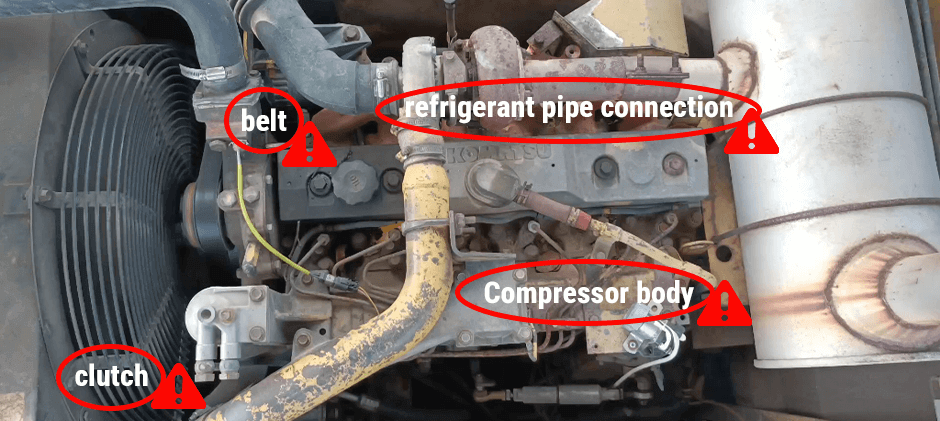
The compressor clutch is a critical part that connects the compressor to the engine’s power. When you turn on the AC, you should hear a distinct click as the clutch engages and see the outer part of the pulley spin with the inner part. If the clutch doesn’t engage at all, the compressor isn’t receiving power or is internally seized. If it engages but then disengages quickly, or makes a screeching sound upon engagement, it could be a sign of low refrigerant (which triggers a safety shut-off) or a failing clutch bearing.
Frequent tripping of the circuit breaker
Heavy equipment AC systems are robust, but a failing compressor can draw excessive electrical current. This overload can cause the circuit breaker protecting the AC system to trip repeatedly. If you find yourself constantly resetting the breaker when you try to use the AC, it’s a strong indicator of an electrical issue within the compressor.
Visible leaks around the compressor
Inspect the compressor and the surrounding hoses for any oily residue or wet spots. Refrigerant often contains a small amount of oil, so a leak will leave a visible mark. A small leak in your AC system can quickly turn into a major compressor failure if ignored. Regular inspections are key.
Increased fuel consumption
While not always immediately obvious, a failing compressor can make your engine work harder to maintain the desired cabin temperature. This added strain can lead to a noticeable increase in fuel consumption, particularly in heavy machinery where engine load is already high.
Common Causes of A/C Compressor Failure
Knowing what causes AC compressor failure can help prevent future issues and guide your troubleshooting.
- Normal Wear and Tear: Like any mechanical component, compressors have a lifespan. Years of continuous operation in dusty, vibrating heavy equipment environments will eventually wear down internal parts.
- Refrigerant Leaks: Low refrigerant levels force the compressor to work harder, leading to overheating and premature failure. Leaks also allow moisture and air into the system, causing corrosion.
- Contamination in the Refrigerant System: Debris, metal shavings from worn components, or moisture can circulate within the refrigerant, causing blockages and damaging the compressor’s internal parts.
- Improper Charging or Maintenance: Incorrect refrigerant levels (over or under-charged) or using the wrong type of refrigerant or oil can severely damage the compressor. Failing to replace the drier/receiver or properly evacuate the system during service also introduces contaminants.
- Electrical Issues: Problems with wiring, relays, fuses, or the compressor’s electrical windings can prevent it from starting or cause it to overheat.
- Clutch Failure: A worn or damaged compressor clutch can lead to the compressor not engaging, or it can put undue stress on the compressor itself.
How Do I Know If My AC Compressor Needs Replacement?
The table below helps you determine whether you should replace your AC compressor.
| Symptom Category | Specific Indicators | Implication | Replacement Likely? |
|---|---|---|---|
| Cooling Performance | No cool air, blowing warm air, very reduced cooling | Compressor not circulating refrigerant effectively or has completely failed. | High |
| Noises | Loud grinding, clunking, constant clicking | Severe internal damage, worn bearings, seized components. | High |
| Electrical | Repeated circuit breaker trips, compressor won’t start | Internal electrical short, severe overload. | High |
| Physical Damage | Visible cracks, large refrigerant leaks (oily residue) | Structural integrity compromised, significant internal issue. | High |
| Clutch Issues | Clutch won’t engage, makes a screeching noise | Could be clutch repairable, but often signals an underlying compressor issue. | Moderate to High |
How Much Does It Cost to Replace Your A/C Compressor?
Now, you’ve identified the signs of a bad a/c compressor and determined to replace it. Let’s look at the cost of replacing it. The A/C compressor is a very important component in your equipment and the replacement cost for the AC compressor is not cheap. Generally, it will cost you $800 to $1,500. And the labor will cost about $200. For saving purposes, you can choose high-quality a/c compressors from reliable suppliers like FridayParts. The average cost of the compressors we carry ranges from $150 to $250. See the full guide on the AC compressor replacement cost of different types here.
Conclusion
Don’t let a bad Air Conditioning compressor keep you down! Early recognition of the bad part could give you back a nice and comfortable operating cabin. By paying attention to the signs like warm air, strange noises, reduced airflow, and electrical issues, you can quickly pinpoint the problem. At FridayParts, we offer high-quality aftermarket AC compressors at affordable prices, with a vast inventory and wide compatibility for many heavy equipment brands. Don’t let a failing AC slow you down – browse our selection today and get your cab cooling efficiently again!
Related Articles
A/C Compressor Not Turning on? A Complete Guide
