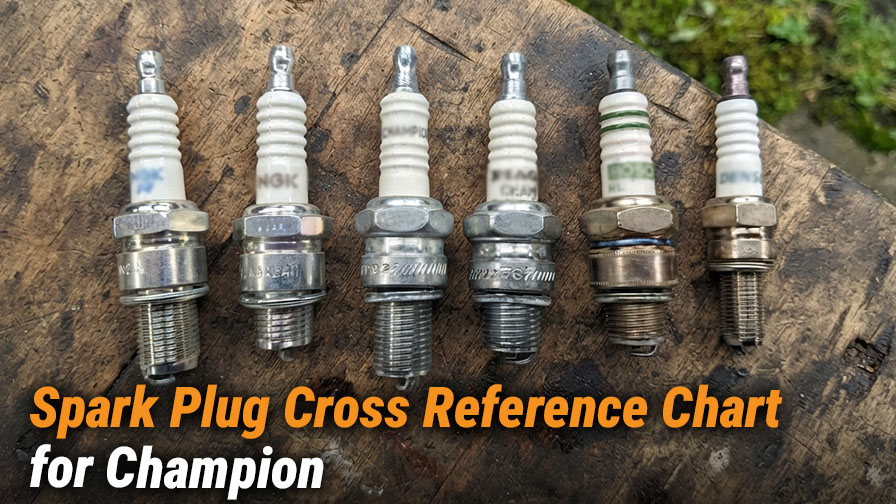
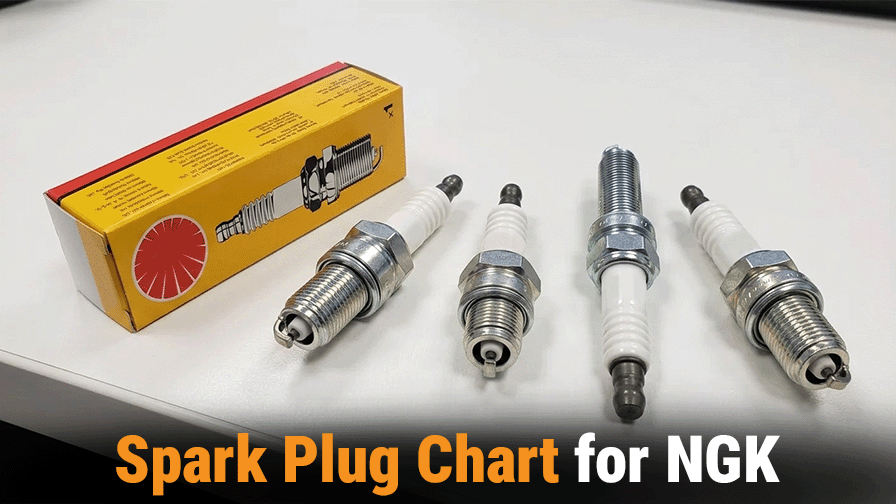
Champion spark plug cross reference chart. A number match alone is not the whole answer. Some replacements look correct and still cause hard starting, fouling, or poor performance because the reach, seat, or heat range is off. The chart matches Champion numbers to NGK, Denso, Autolite, and Bosch. But you still need to confirm thread diameter, reach, seat type, resistor design, and gap before installing. Heat range numbering moves in different directions across brands. NGK numbers get colder as the number gets larger. Champion numbers in these families get colder as the number gets smaller. Read the old plug before replacing it. Light tan means normal combustion. Dry black soot means a rich mixture or a weak spark. Wet fouling means incomplete combustion. Oily deposits mean oil entering the chamber. A white blistered tip means overheating or lean operation.